Why this ranking matters in 2025
The world of work is shifting quickly. Since 2010, the percentage of global senior leaders and entrepreneurs on LinkedIn with an MBA has risen by 32% and 87%, respectively. More professionals are utilizing MBAs to develop in-demand skills, expand their networks, and advance into leadership roles. This year’s LinkedIn Top MBA Programs list focuses squarely on outcomes—how graduates land jobs, advance, and connect—so candidates can see which schools reliably convert tuition and time into career momentum. LinkedIn also released a custom LinkedIn Learning path that’s free for all members until October 15, offering a no-cost way to refresh core business skills while you evaluate programs.
The 2025 global Top 10 (and what they signal)
- Stanford GSB — Top 5 for advancement and leadership potential, with many alumni in co-founder/CEO and product roles.
- Harvard Business School — Top 5 for advancement and leadership; strong strategy and deal execution skill signals.
- INSEAD — Global footprint across Europe, Asia, Middle East; Top 5 for leadership.
- Wharton (UPenn) — Top 5 for job placement and leadership; deep finance and venture networks.
- Indian School of Business — Top 5 for advancement; strong product and program management outcomes.
- Kellogg (Northwestern) — Top 5 for job placement and advancement; notable brand and strategy strengths.
- MIT Sloan — Top 5 for advancement; strong LLM/AI, venture capital, and impact investing skills.
- Tuck (Dartmouth) — Concentrated alumni community with strong placement in PMM and IB.
- Columbia Business School — Heavy NYC nexus across IB, venture, and valuation skills.
- London Business School — Global reach with private equity and venture strengths.
Across the full Top 100, schools are highlighted for distinctive strengths, such as networking (e.g., IIM Calcutta, IIM Ahmedabad, IIM Lucknow, IIFT) and leadership (e.g., IMD), as well as gender diversity (e.g., Pepperdine Graziadio, Trinity Business School, Zicklin, GW, Johns Hopkins Carey). Job placement standouts include Booth, Rutgers, and Pace Lubin. The list is global, with strong U.S. representation and meaningful European and Asian presence.
How LinkedIn built the ranking (what’s measured—and how it’s weighted)
Five pillars (career outcomes + parity):
• Hiring & demand (weight 1.0): recent cohorts’ job placement and labor market demand (2019–2024), based on hiring and recruiter InMail outreach data.
• Ability to advance (weight 1.0): promotions among recent cohorts and speed to director/VP for all alumni, based on standardized job titles.
• Network strength (weight 1.0): alumni network depth (intra-program connectivity), quality (connections to director+ profiles), and growth (pre- vs. post-MBA).
• Leadership potential (weight 1.0): share of alumni with post-MBA entrepreneurship or C-suite experience.
• Gender diversity (weight 0.5): gender parity within recent graduate cohorts.
Eligibility and scope:
• Full-time MBAs only; accredited by AACSB or EQUIS.
• ≥1,500 total alumni and ≥400 graduates in the 2019–2024 cohort.
• Excludes executive MBAs, part-time MBAs, certificate MBAs.
• Excludes programs based in mainland China due to data coverage.
• Analysis uses anonymized, aggregated LinkedIn member and connection data; some metrics cover all alumni, others focus on the 2019–2024 cohort.
Why this matters to you: inputs (brand, selectivity) don’t always reflect your outcomes. This methodology prioritizes what you’ll likely care about after graduation: getting hired, moving up, building a powerful network, and stepping into leadership.
Decoding the signals: what the list tells you about outcomes
1) Roles and skills you’ll see post-MBA
Top programs show strong pipelines into Product Manager, Investment Banking Associate, Strategy/Management Consultant, and Founder/CEO tracks. Skill clusters—Go-to-Market Strategy, Product Strategy/Road-mapping, Venture Capital, Private Equity, Valuation, Stakeholder Management, and emerging areas like Large Language Models—appear frequently among early post-MBA roles.
2) Network that accelerates careers
Network depth (how tightly alumni connect), quality (links to director+ decision-makers), and growth (pre- vs. post-MBA) correlate with faster opportunities and better mobility. Programs called out for networking (e.g., several IIMs and IIFT) can be high-leverage for candidates targeting India/APAC or global roles touching those markets.
3) Advancement and leadership
Schools spotlighted for advancement and leadership (e.g., Stanford, Harvard, MIT Sloan, IMD) indicate strong promotion velocity and a higher likelihood of entrepreneurship/C-suite outcomes—useful if your goal is founder, GM, or executive track.
4) Diversity as a competitive advantage
Gender parity is explicitly weighted. Programs noted for gender diversity (e.g., Graziadio, Trinity, Zicklin, GW, Johns Hopkins Carey) can provide broader perspectives, inclusive networks, and access to role models—all of which compound over a career.
5) Job placement and market demand
Programs excelling in job placement (e.g., Booth, Rutgers, Pace Lubin) show stronger near-term hiring demand. If your priority is fast time-to-offer in specific functions or geographies, weight this pillar more heavily.
A practical decision playbook (use the five pillars to choose your MBA)
Step 1 — Clarify your goal in one sentence.
Example: “Move from engineering to PM at a top tech firm in California,” or “Switch from audit to IB in NYC,” or “Launch a climate-tech venture in Europe.”
Step 2 — Weight the pillars for your goal.
• Tech PM pivot: Hiring & demand + Network strength + Ability to advance.
• IB/PE track: Hiring & demand + Leadership potential (entrepreneurial acumen helps deal judgment) + Network strength (alumni in finance hubs).
• Founder path: Leadership potential + Network strength + Ability to advance (GM roles build operating range).
• Global mobility: Network strength + Hiring & demand across your target regions.
• Inclusive culture focus: Gender diversity + Network strength.
Step 3 — Map programs to your weights.
Use the Top 100 to shortlist 5–8 schools: include at least one with standout job placement in your region, one with exceptional network depth/quality, and one recognized for leadership outcomes.
Step 4 — Validate with role-level evidence.
Search recent alumni by job title + location (e.g., “Product Manager, Bay Area”; “IB Associate, NYC”; “Founder, London”). Look for density and recency (2019–2024 grads), plus skill tags that match your target role.
Step 5 — Pressure-test ROI.
Model tuition + opportunity cost vs. likely post-MBA comp and time-to-promotion. A school that’s slightly lower in brand prestige but higher in your outcome metrics can deliver better lifetime ROI.
Using program “profiles” to refine your shortlist
Product/Tech acceleration: Stanford, MIT Sloan, Berkeley Haas, Kellogg, Wharton, Tuck, Columbia, NYU Stern, McCombs, Foster, Merage. Look for PM/TPM outcomes and LLM/AI, GTM, A/B testing skills.
Finance/Deals tracks: Wharton, Booth, Columbia, Stern, Tepper, Goizueta, Simon, McDonough, Smith (Queen’s), Ivey, Rotman. Prioritize valuation, venture capital, private equity signals and NYC/London placement.
Global mobility & multi-campus networks: INSEAD, LBS, IESE, HEC Paris, IMD, Esade, SDA Bocconi, Cambridge Judge, Oxford Saïd, RSM, ESCP, EDHEC.
India/APAC depth: ISB; IIM Ahmedabad/Calcutta/Lucknow/Indore; NUS; HKUST; AGSM. Networking call-outs and regional hiring density matter here.
Leadership & entrepreneurship tilt: Stanford, Harvard, INSEAD, IMD, MIT Sloan, LBS, Oxford Saïd.
Gender diversity leaders: Pepperdine Graziadio, Trinity Business School, Zicklin (Baruch), George Washington, Johns Hopkins Carey.
Quick FAQ
Is a “Top 10” always the best choice?
Not automatically. If a school outside the Top 10 is top-tier in your pillar weighting (e.g., job placement in your city, or networking in your industry), it can beat a higher-ranked brand for your goals.
Do part-time/EMBA programs count?
No. LinkedIn’s 2025 list evaluates full-time MBAs only, with AACSB/EQUIS accreditation, and specific alumni thresholds.
What about programs in mainland China?
They’re excluded due to data coverage limitations in LinkedIn’s dataset.
How current is the data?
Recent cohort analysis focuses on 2019–2024 graduates, with additional metrics spanning all alumni to assess leadership trajectories.
Your next steps (weekend sprint)
- Define your one-sentence goal and pillar weights.
- Pick 6–8 schools from the Top 100 that align with those weights.
- For each school, collect 12–15 recent alumni examples matching your target role/location.
- Estimate ROI with conservative salary and promotion assumptions.
- Use LinkedIn’s free Learning path (through October 15) to build targeted skills now—and to test your interest before you invest.
Source: LinkedIn News — written by Senior Managing Editor Ashley (Peterson) Botarelli, with methodology by LinkedIn data scientists Alejandra Budar and Maureen Hadisurja in partnership with editors Juliette Faraut, Sarah McGrath, Siobhan Morrin and McKinley Strother.
Context: LinkedIn’s annual data-backed ranking identifies the 100 best full-time global MBA programs for long-term career success, drawn from aggregated, anonymized LinkedIn member data.







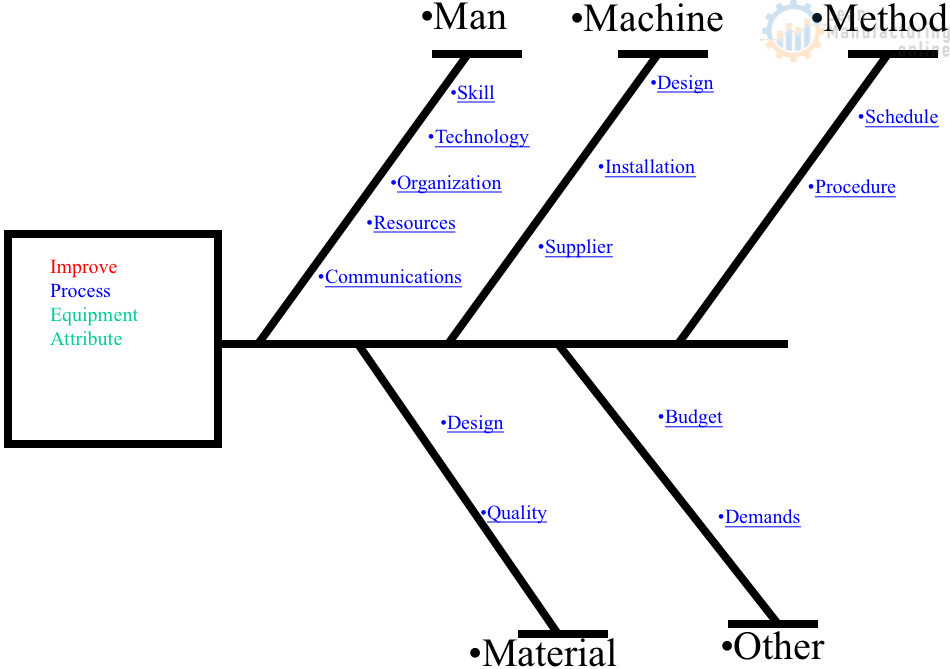
4M Analysis Process: Root Cause Guide for Manufacturing
Learn how to use 4M Analysis to find manufacturing root causes across People, Machine, Method, and Material with diagrams, examples, and checklist.