Kaizen is not only a toolset. It is a way of thinking that changes how leaders, supervisors, engineers, and frontline teams respond to problems. A Kaizen mindset turns daily issues into learning, action, and better standards.
Lasting change happens when improvement becomes normal behavior. People see problems earlier, speak up faster, test smaller changes, learn from mistakes, and protect gains through standard work. The 24 mindsets below help make that shift practical.

Why Kaizen mindsets matter
Many improvement programs fail because the tools are used without changing the management behavior around them. Teams can create boards, forms, checklists, and action logs, but nothing lasts if leaders still blame people, ignore barriers, skip follow-up, or make decisions far from the work.
A strong Kaizen mindset connects directly to the Kaizen process: identify the loss, understand the current condition, analyze causes, test countermeasures, verify results, standardize, and choose the next improvement.
The 24 Kaizen mindsets
The original list is useful because it shows that Kaizen is both technical and human. The points below keep the 24 principles but organize them into practical leadership behavior.
| Mindset | What it means in daily improvement |
|---|---|
| 1. Never waste a good crisis | Use urgency to focus attention, remove excuses, and make the problem visible. |
| 2. Challenge the status quo | Ask why the current method exists and whether it still serves the customer, process, and team. |
| 3. Blame the process, not the people | Look for unclear standards, weak training, poor design, missing support, or system barriers. |
| 4. Frontline ideas matter | The people doing the work often see waste, friction, and risk first. |
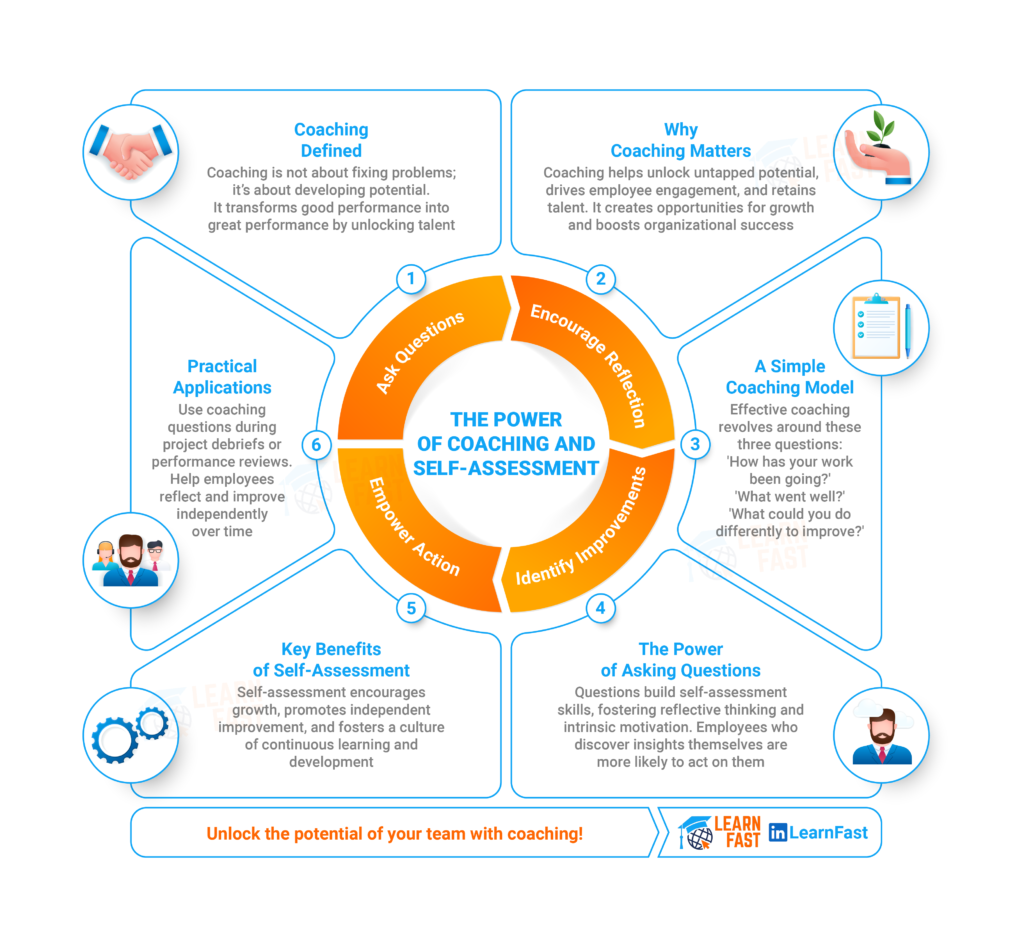
| 5. Experts become coaches | Capability grows faster when experts teach thinking, not only answers. |
| 6. No blame, just learning | Mistakes become data when people feel safe enough to tell the truth. |
| 7. Simplicity wins | Simple countermeasures are easier to teach, audit, repeat, and sustain. |
| 8. Data shows what; people explain why | Use numbers and conversations together. One without the other is incomplete. |
Mindsets that build problem-solving capability
| Mindset | Practical behavior |
|---|---|
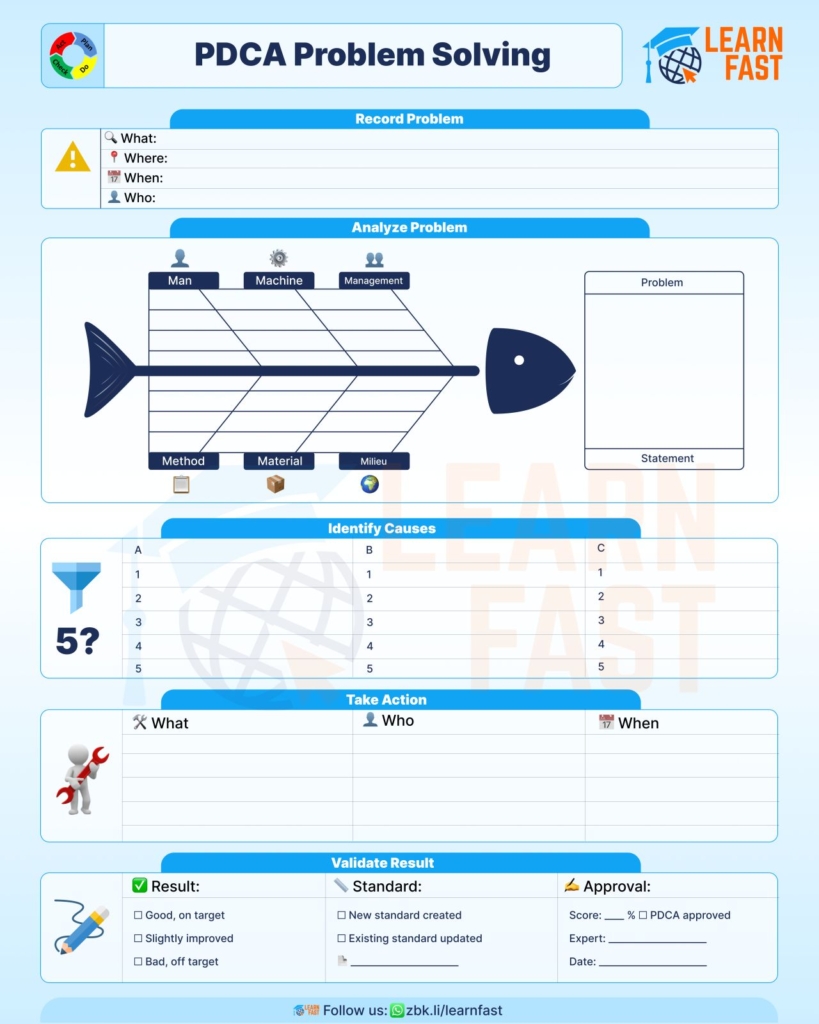
| 9. Problem-solving is non-negotiable | Every level should know how to define a problem, check facts, and test action. |
| 10. Gemba never lies | Go see the work. Assumptions fade when the process is observed directly. |
| 11. Psychological safety protects Kaizen | Teams will not surface problems if every issue becomes personal blame. |
| 12. Small experiments beat big plans | Test quickly, learn quickly, and reduce the risk of large untested changes. |
| 13. Mechanisms beat good intentions | Use routines, owners, due dates, standards, and follow-up to make change real. |
| 14. Yesterday’s best practice can become today’s bottleneck | Review standards when products, people, equipment, layout, or demand changes. |
| 15. Resistance is feedback | Pushback may show unclear purpose, weak communication, poor timing, or missing support. |
| 16. Slow down to implement faster | Understanding the cause prevents repeated rework and superficial fixes. |
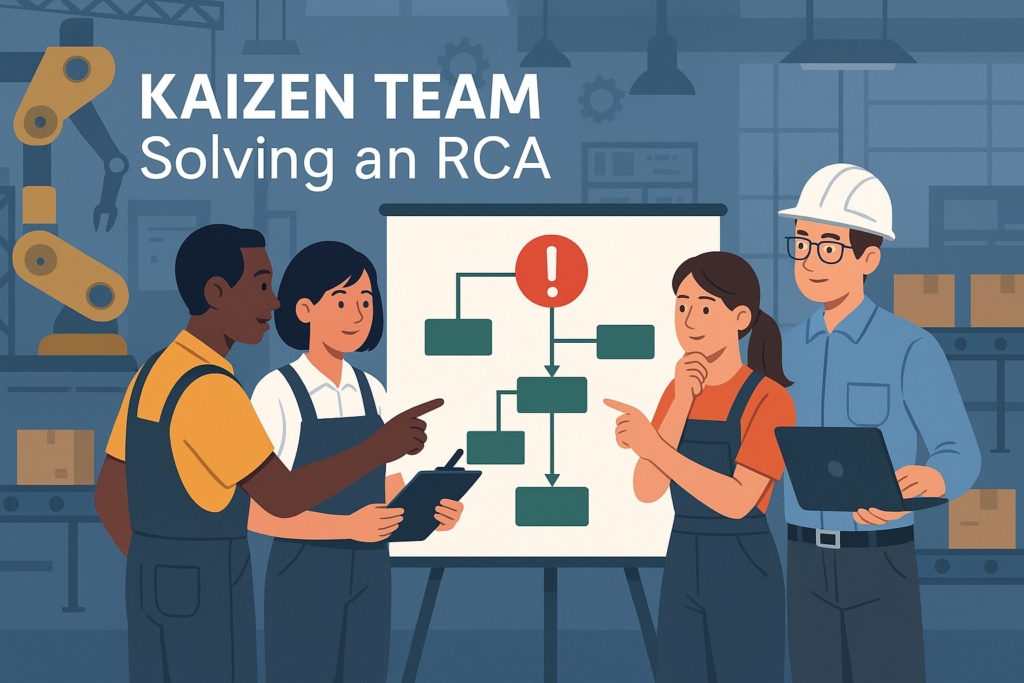
These mindsets connect strongly with Gemba walks, root cause analysis, 4M Analysis, and practical DMAIC thinking.
Mindsets that sustain change
| Mindset | How it protects the gain |
|---|---|
| 17. Defects teach what competitors may not know | Repeated defects reveal process knowledge that can become advantage. |
| 18. See invisible waste | Normalized waiting, motion, rework, searching, and workarounds deserve attention. |
| 19. Let others grow | A leader should create space for people to own improvement, not depend on one expert. |
| 20. Culture must match strategy | Strategy fails when daily behavior rewards firefighting over prevention. |
| 21. Frontline credibility is an asset | Trust is built by consistency, fairness, listening, and removing real barriers. |
| 22. Sustaining is harder than implementing | Use standards, audits, visual checks, training, and reaction plans after the change. |
| 23. Timing matters | Know when to act, when to observe, and when to coach the team through the problem. |
| 24. Count barriers removed | Improvement leadership is measured by friction removed, not meetings attended. |
Make the mindset visible
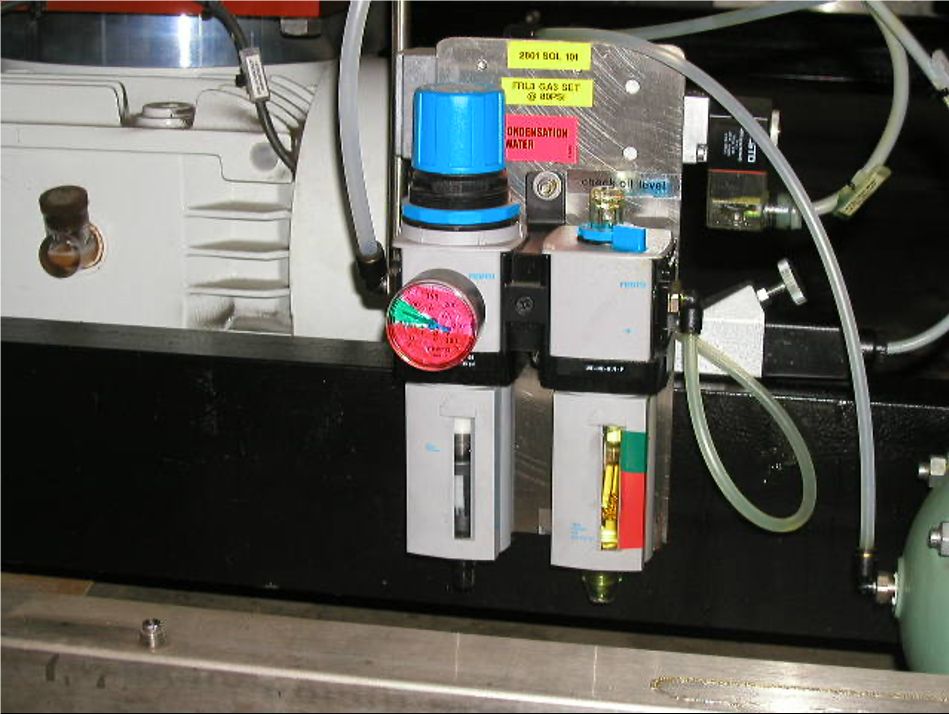
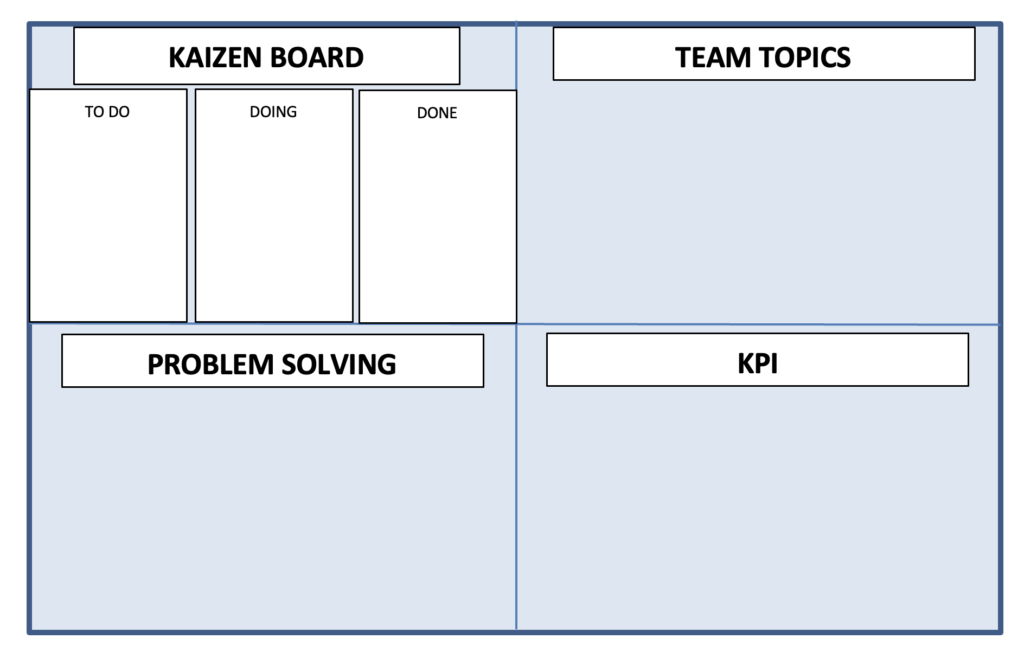
Mindsets are invisible until they become routines. Use visual management, activity boards, and manufacturing KPIs to show which problems are being solved, which barriers are open, and which gains are being sustained.
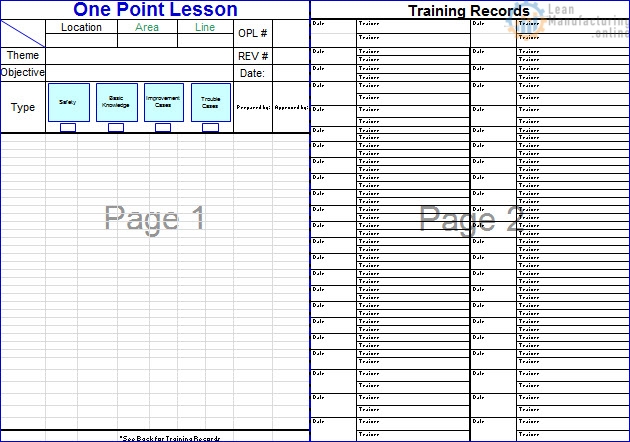
When a lesson is small but important, convert it into a One Point Lesson. When a new workplace condition is required, connect it to a 5S standard. When the issue repeats, use structured problem solving instead of reminding people harder.
Leadership behaviors that make Kaizen last
- Ask what barrier must be removed before asking why the action is late.
- Go to the process before deciding the solution.
- Coach people to define the problem clearly.
- Recognize learning, not only successful outcomes.
- Close the loop on every action you assign.
- Use standards to protect improvement, not to control people.
- Review whether the new method is still working after the excitement fades.
Kaizen mindset checklist
| Question | What to look for |
|---|---|
| Are people comfortable surfacing problems? | Operators raise abnormalities before they become major issues. |
| Are leaders removing barriers? | Open actions have owners, support, and follow-up. |
| Are improvements standardized? | Updated standards, OPLs, training, and visual controls are in place. |
| Are problems solved at the right level? | Small issues use Kaizen; complex issues use deeper project methods. |
| Are KPIs tied to action? | Performance gaps lead to problem solving, not only reporting. |
| Are gains sustained? | Audit results, daily checks, and follow-up show the new method is still used. |
Build the culture one behavior at a time
Kaizen mindsets become culture when they are repeated in daily management. The strongest signal is not a slogan on the wall. It is what leaders do when a problem appears: go see, listen, remove barriers, test countermeasures, standardize the better method, and keep learning.
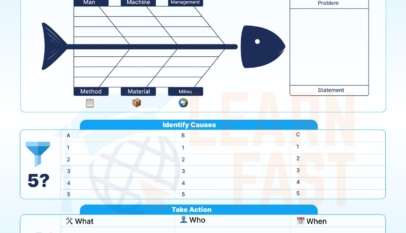



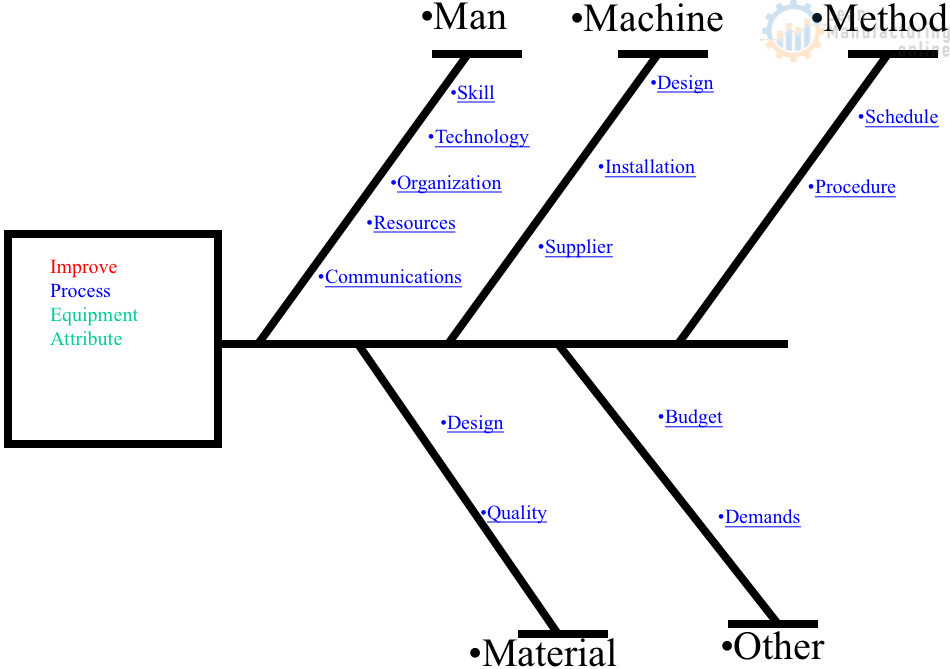
4M Analysis Process: Root Cause Guide for Manufacturing
Learn how to use 4M Analysis to find manufacturing root causes across People, Machine, Method, and Material with diagrams, examples, and checklist.