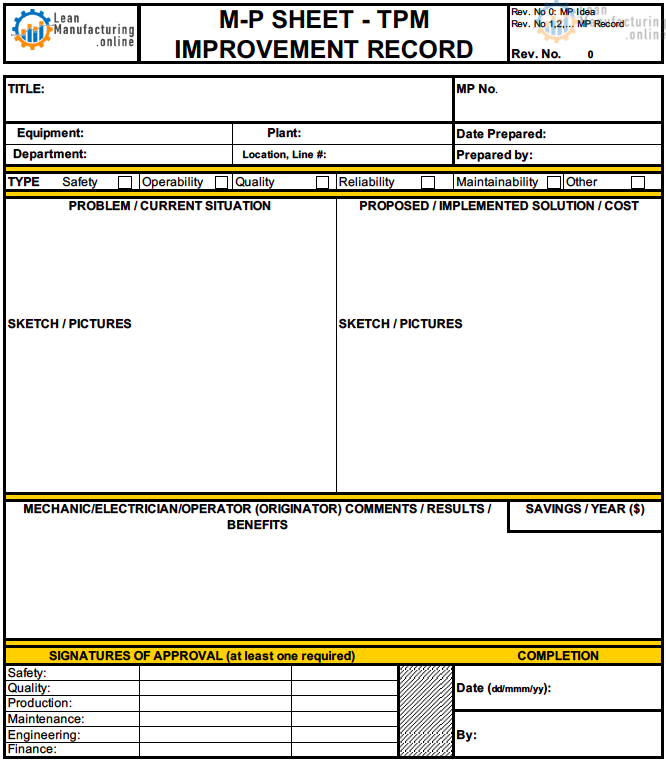
An M-P Sheet, also called a Maintenance Prevention Sheet, is a practical document used in Early Equipment Management to capture maintenance, operation, safety, quality, and reliability requirements before new equipment is purchased, built, installed, or handed over.
The goal is simple: do not wait until after launch to discover that a machine is difficult to clean, hard to inspect, unsafe to access, expensive to maintain, or missing the information needed for Planned Maintenance.
In a strong TPM system, the M-P Sheet becomes a bridge between engineering, maintenance, operations, quality, safety, and continuous improvement. It converts past losses into future design requirements.
Template link: the original M-P Sheet template reference is preserved here: download the M-P Sheet template from LearnFast.
What is an M-P Sheet?
An M-P Sheet is used to record maintenance-prevention knowledge and convert it into design, installation, commissioning, and handover requirements. It should capture what the team already knows about equipment failures, cleaning problems, inspection difficulties, lubrication points, spare parts, changeover issues, safety risks, quality losses, and startup problems.
The sheet is most useful when it is completed before equipment decisions are locked. If it is created after the machine is already running poorly, it becomes a lessons-learned record instead of a prevention tool.
What is Early Equipment Management?
Early Equipment Management, or EEM, is the TPM pillar that helps teams design, buy, install, and launch equipment with fewer early-life losses. It uses maintenance history, operator experience, engineering review, and life-cycle thinking to improve reliability, maintainability, operability, safety, and cost.
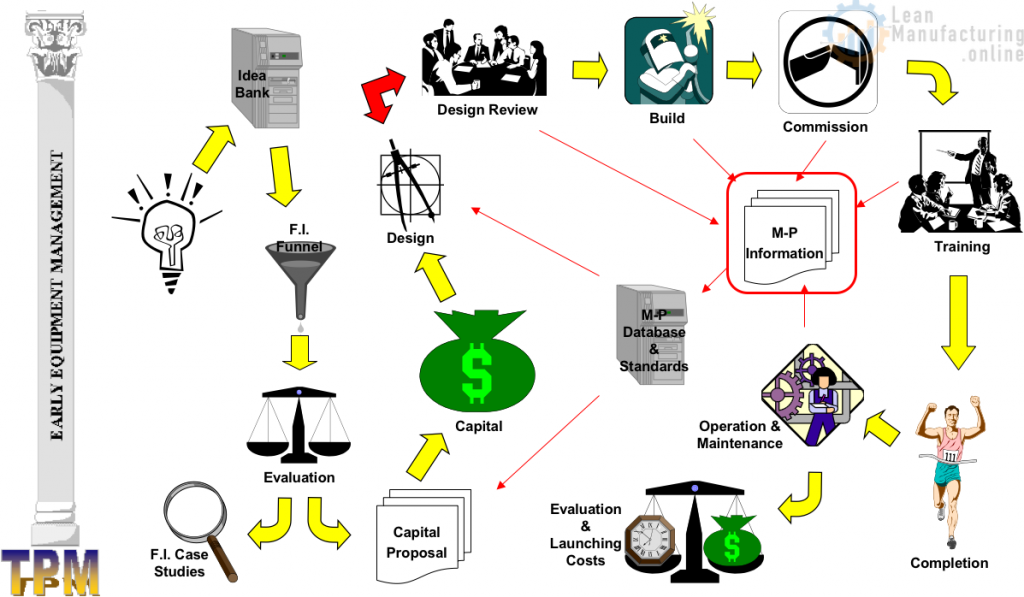
Where the M-P Sheet fits in EEM
The M-P Sheet supports EEM by making experience visible. A breakdown, defect, changeover problem, access issue, cleaning problem, or safety concern should become a design question for the next equipment project.
| EEM stage | M-P Sheet purpose | Typical question |
|---|---|---|
| Concept and specification | Turn past losses into equipment requirements. | What failures or losses must the new design prevent? |
| Design review | Check reliability, access, cleaning, inspection, safety, and maintainability. | Can the team operate and maintain this design safely and easily? |
| Build and installation | Confirm requirements are included before startup. | Were the agreed maintenance-prevention items actually built in? |
| Commissioning | Capture startup issues and stabilize early operation. | What problems appeared during testing and launch? |
| Handover | Transfer standards, skills, spare parts, PM tasks, and documentation. | Is the site ready to own the equipment? |
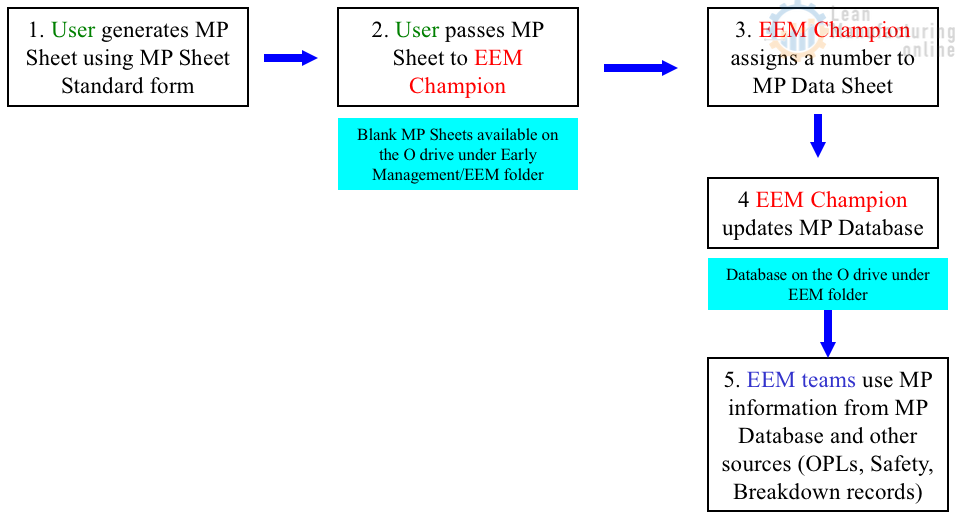
Typical M-P Sheet sections
A practical M-P Sheet does not need to be complicated. It needs to capture the information that prevents repeated losses. Useful sections include:
| Section | What to capture | Why it matters |
|---|---|---|
| Equipment and area | Machine, line, component, project, owner, supplier, and date. | Creates traceability for future design review. |
| Past loss or risk | Breakdown, defect, safety concern, cleaning issue, changeover loss, or access problem. | Connects the sheet to real experience, not opinion. |
| Required design feature | Guarding, access, visibility, lubrication point, inspection window, sensor, or material change. | Converts learning into a specification. |
| Maintenance standard | Cleaning, inspection, lubrication, spare parts, PM task, or condition check. | Supports stable ownership after handover. |
| Verification | Who checks, when, acceptance criteria, and evidence. | Prevents requirements from being forgotten. |
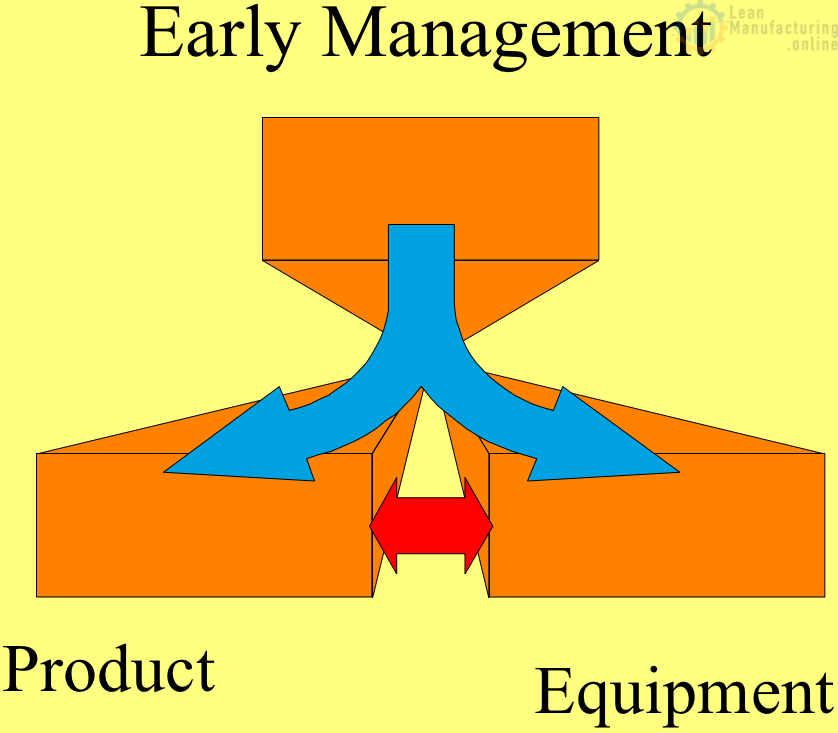
Design review questions for Maintenance Prevention
Use the M-P Sheet during design review to ask practical questions before the equipment is approved:
- Can operators clean the equipment without creating safety or quality risk?
- Can normal inspection points be seen without unnecessary disassembly?
- Are lubrication points accessible, labelled, and protected from contamination?
- Can common wear parts be replaced safely and quickly?
- Are sensors, belts, chains, filters, valves, guards, and panels easy to access?
- Are failure modes known from similar equipment?
- Are spare parts defined before startup?
- Are PM tasks, AM tasks, and training needs clear before handover?
- Can the team collect useful data for manufacturing KPIs and reliability review?

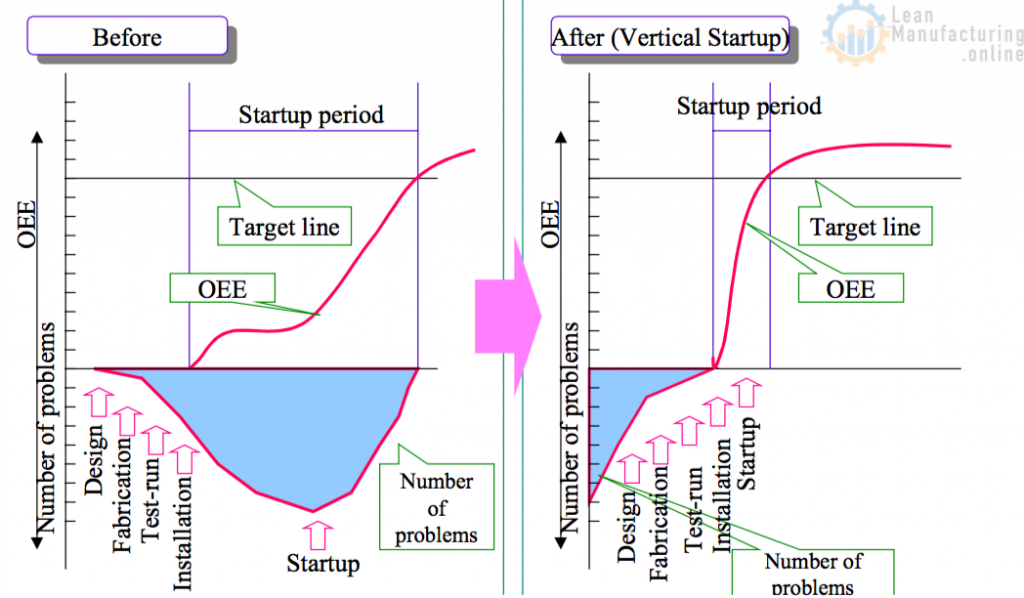
Vertical startup and launch loss reduction
One of the strongest reasons to use an M-P Sheet is to support vertical startup. A vertical startup means the equipment reaches stable safety, quality, speed, and availability quickly instead of struggling through a long period of hidden defects, repeated adjustments, and early breakdowns.
The M-P Sheet helps reduce startup loss because it forces the team to review known risks before production pressure takes over.
Handover from project to operations
Many equipment launches fail at handover. The project team finishes installation, but operations and maintenance inherit missing standards, unclear PM tasks, incomplete spare parts, weak training, poor access, or unresolved punch-list items.
A strong handover should include operator training, maintenance training, cleaning standards, inspection standards, lubrication standards, spare-parts lists, drawings, manuals, safety reviews, PM tasks, acceptance checks, and open issue ownership.

Connection to Autonomous Maintenance and Planned Maintenance
An M-P Sheet should support both Autonomous Maintenance and Planned Maintenance. For AM, it should make cleaning, inspection, access, abnormality detection, and basic condition restoration easier. For PM, it should define maintainable components, inspection points, spare parts, frequencies, and failure-mode knowledge.
This is also where the M-P Sheet links to forced vs natural deterioration. If the new equipment design makes cleaning, lubrication, inspection, or access difficult, the site may create forced deterioration from day one.
Use problem solving to strengthen the sheet
The M-P Sheet should be fed by real problems. If a repeated breakdown occurred on an older machine, use 4M Analysis and Why-Why Analysis to understand the cause. Then convert the learning into a design or maintenance-prevention requirement.
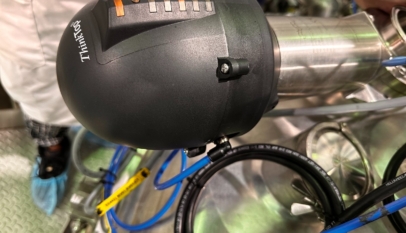
For example, if a sensor repeatedly fails because product dust enters the housing, the new equipment requirement may include better protection, easier cleaning access, improved location, visual inspection standard, and spare-parts definition.

Life-cycle cost thinking
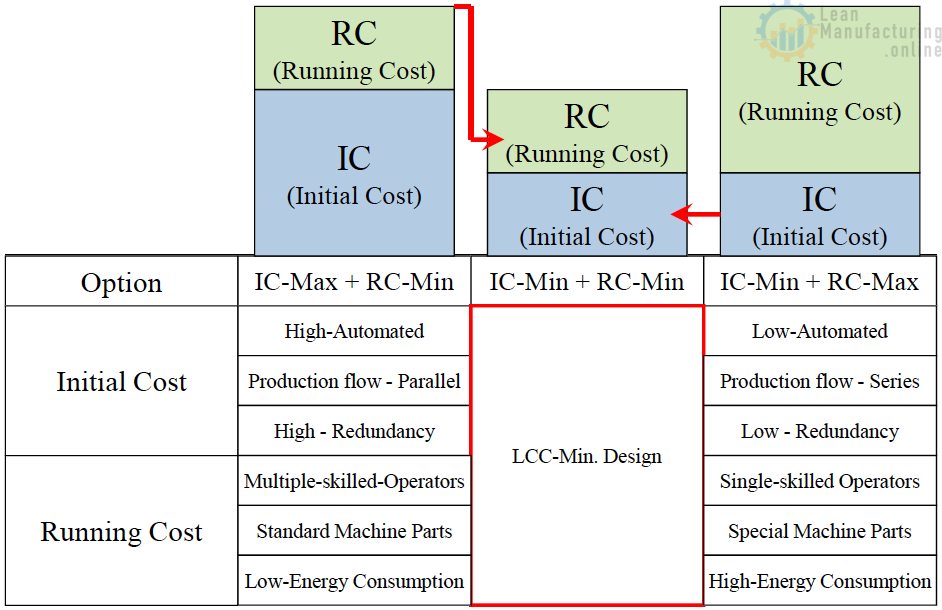
The lowest purchase price is not always the lowest equipment cost. A machine that is hard to clean, difficult to inspect, unsafe to access, or expensive to repair may create years of losses. EEM uses life-cycle cost thinking to compare purchase cost with downtime, maintenance, quality loss, energy, labor, spare parts, safety risk, and improvement effort.
Training and skill readiness
People must be ready before the equipment is handed over. The M-P Sheet should identify who needs training, what skill is required, what standards are needed, and how competence will be confirmed. This connects well with a manufacturing skill matrix.
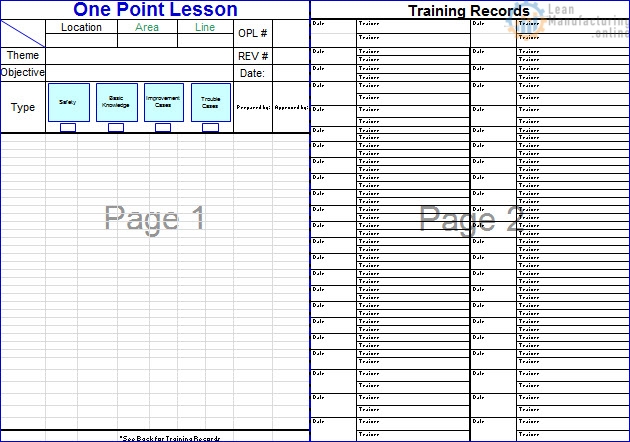
For short visual training, create One Point Lessons and store examples in the OPL library. If abnormalities are found during launch or early operation, capture them with F-tags or Safety F-tags as appropriate.
Common mistakes
- Creating the sheet too late: design decisions are already fixed.
- Using generic questions: the sheet does not reflect real loss history.
- No owner: actions are written down but not assigned.
- No verification: requirements are discussed but never checked.
- Ignoring operators: cleaning, access, changeover, and usability issues are missed.
- Ignoring maintenance: spare parts, PM tasks, and maintainability issues appear after launch.
- No visual follow-up: open items are not reviewed on an activity board.

M-P Sheet checklist
- Was the sheet started before equipment specification was finalized?
- Were maintenance, operations, engineering, quality, and safety involved?
- Were past breakdowns, defects, cleaning issues, and changeover losses reviewed?
- Are cleaning, inspection, and lubrication points visible and accessible?
- Are safety access and isolation requirements clear?
- Are spare parts, PM tasks, and AM tasks defined?
- Are startup losses and commissioning issues captured?
- Does every open item have an owner and due date?
- Are acceptance criteria clear before handover?
- Will the learning be reused on the next project?
Reuse lessons on the next equipment project
The M-P Sheet is valuable because it turns experience into prevention. Instead of repeating the same maintenance, safety, cleaning, inspection, startup, and reliability problems on every new project, the team captures the learning and builds it into the next equipment decision.
Used well, the M-P Sheet supports Early Equipment Management, Maintenance Prevention, TPM, vertical startup, lower life-cycle cost, stronger handover, and more reliable equipment from day one.

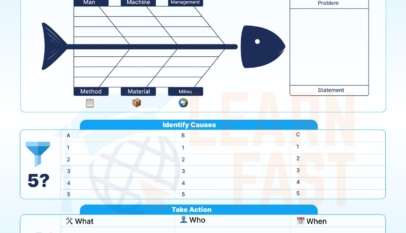





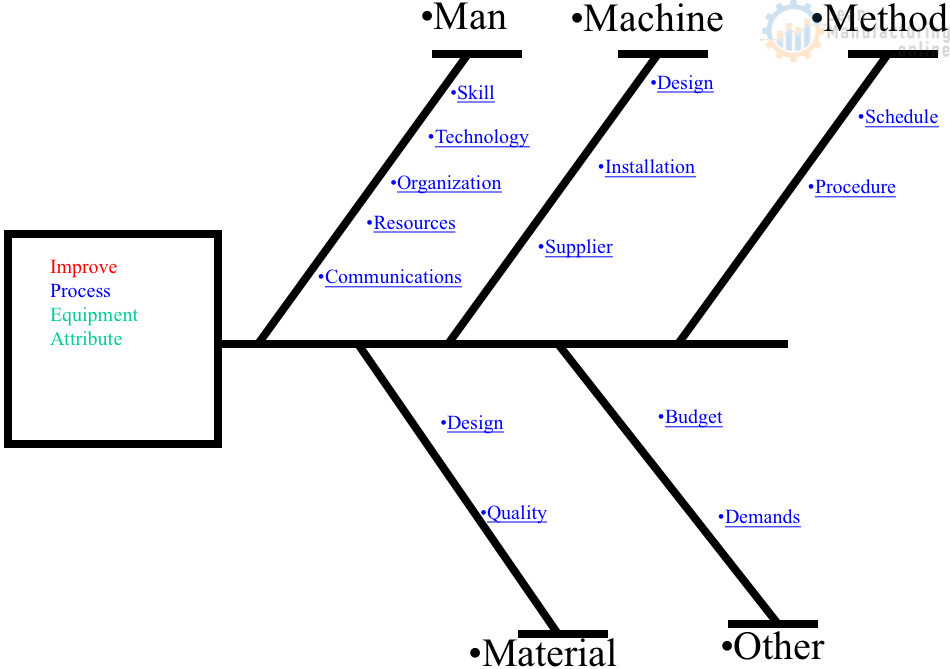
4M Analysis Process: Root Cause Guide for Manufacturing
Learn how to use 4M Analysis to find manufacturing root causes across People, Machine, Method, and Material with diagrams, examples, and checklist.