Unlocking the Power of OEE with a Standard Template
Overall Equipment Effectiveness (OEE) is one of the most widely used metrics in manufacturing, yet it is often misunderstood. Too many organizations treat OEE as a single number to report, rather than a lens to uncover improvement opportunities. The key to making OEE meaningful is to use a standard template that clearly shows where time and performance are being lost.
Step 1: Start with Total Available Time
Every OEE calculation begins with Total Available Time — the full amount of time your equipment is expected to be available in a given period. This forms the foundation for all other calculations.
Without a structured template, teams often debate whether to use calendar hours, shift hours, or machine hours. By standardizing the input, everyone speaks the same language from the start.
Step 2: Subtract Planned Shutdowns
The next step is to remove Planned Shutdowns — activities such as scheduled maintenance, breaks, or holidays. What remains is the Scheduled Operating Time, which is the actual productive window.
This is where many plants first notice a gap. A simple subtraction makes it clear how much time is consumed by planned activities versus true operating potential.
Step 3: Account for Downtime Losses
Once you know your Scheduled Operating Time, you need to track the impact of Downtime Losses. These include unplanned breakdowns, setup times, and changeovers.
By recording downtime consistently in a template, leaders can spot patterns: is one machine repeatedly breaking down, or is setup time across the line consistently longer than expected?
Step 4: Consider Speed Losses
Even when machines are running, they may not be running at their designed speed. Speed losses include slow cycles and minor stops that reduce performance.
The OEE template helps quantify these losses, revealing how much capacity is being silently lost. Often, these “hidden factories” of lost performance can be the biggest source of improvement.
Step 5: Capture Quality Losses
The last element is Quality Losses. Scrap, rework, or defects all reduce the effective output. Without tracking quality in the same structured template, it’s easy to overlook how much yield issues contribute to low OEE.
The best practice is to record both good units and defective units directly in the calculation sheet. This creates transparency and ensures quality losses are given equal weight alongside downtime and speed.
Step 6: Combine the Factors
The OEE formula is simple:
OEE = Availability × Performance × Quality
However, the simplicity conceals a powerful truth: when you combine these three elements, you obtain more than a percentage. You get visibility into where your biggest opportunities lie.
Why Standardization Matters
Without a template, OEE calculations can vary widely across teams, sites, or even departments. A standard OEE template creates:
⚙️ Clarity — everyone calculates OEE the same way
🛠️ Consistency — data is comparable across shifts and machines
📊 Focus — leaders can pinpoint and attack the most significant sources of loss
By adopting a structured template, you move beyond reporting and start using OEE as a roadmap for improvement.
OEE is far more than a number to put in a report. When calculated through a structured template, it becomes a mirror that shows precisely where efficiency is being lost. By breaking down time into availability, performance, and quality, leaders can focus their attention on the areas that matter most.
The takeaway is simple: stop debating the math, start standardizing the calculation, and let OEE guide your improvement efforts.
The template can be downloaded here: https://zbk.li/RcNgJ
This spreadsheet was created by Nilson Rodrigues da Silva, follow them for more content.



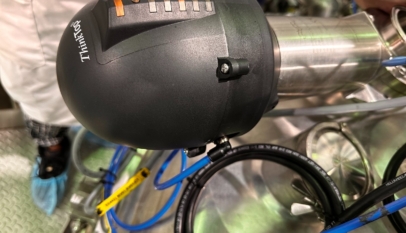
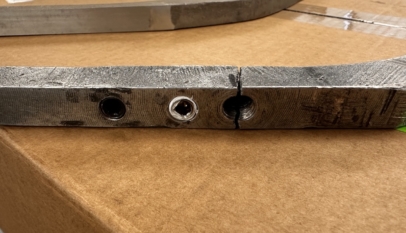






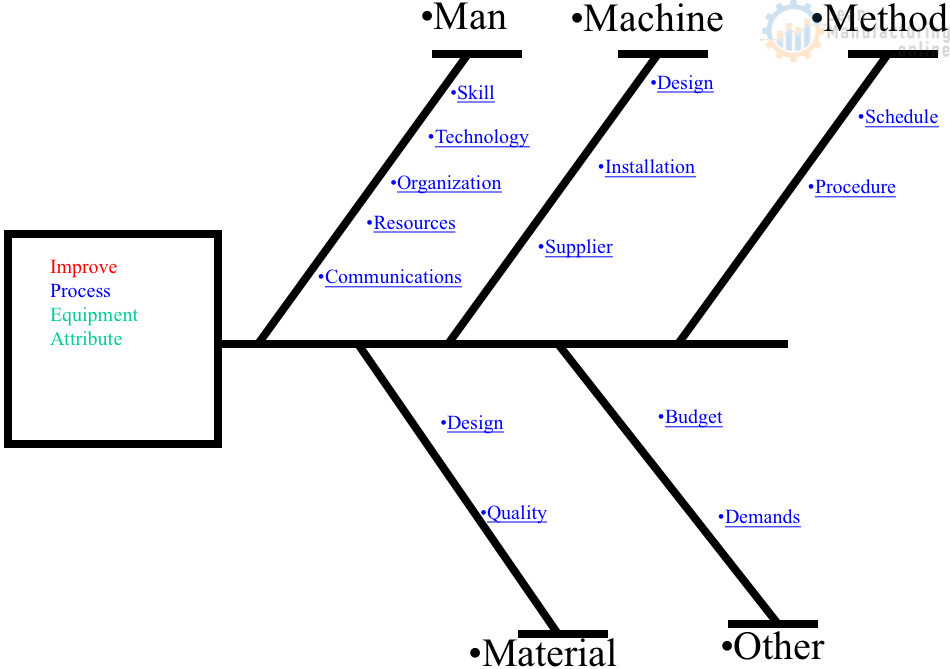
4M Analysis Process: Root Cause Guide for Manufacturing
Learn how to use 4M Analysis to find manufacturing root causes across People, Machine, Method, and Material with diagrams, examples, and checklist.