ISO 9001:2026 has officially arrived, bringing the first major revision of the world’s most widely used quality management system standard in more than a decade.
Published on 16 September 2026, the new edition does not throw away the familiar ISO 9001 framework. Instead, it strengthens several areas that have become increasingly important to modern organizations.
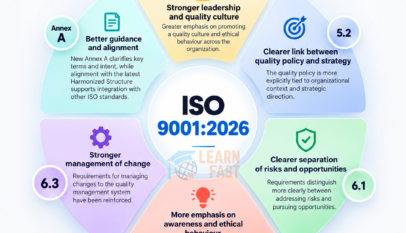
Leadership is expected to play a more visible role. Quality culture receives greater attention. Ethical behaviour becomes more explicit. Risks and opportunities are treated more clearly. Management of change is strengthened, and the relationship between quality policy and business strategy becomes more direct.
For organizations already certified to ISO 9001:2015, this is not a reason to panic or immediately rebuild the entire Quality Management System.
It is, however, a very good reason to ask whether the QMS is truly connected to how the organization is managed.
That distinction matters.
A company can have procedures, forms, audits and certificates while still treating quality as something owned primarily by the Quality department.
ISO 9001:2026 points organizations toward something broader.
Quality needs to become part of leadership decisions, organizational culture, strategic direction and everyday behaviour.
Let’s look at the major changes and what they mean in practice.
1. Stronger Leadership and Quality Culture
One of the most significant areas highlighted in ISO 9001:2026 is Clause 5.1.1, with stronger emphasis on leadership and quality culture.
This is more important than it may initially sound.
Quality culture is not created by putting a quality policy on the wall.
It is created by what leaders repeatedly encourage, tolerate, question and reward.
Imagine two organizations with almost identical procedures.
In the first organization, production problems are openly discussed. Employees can stop a process when something looks wrong. Leaders ask questions before assigning blame. Corrective actions are followed through, and recurring problems are treated seriously.
In the second organization, employees know that stopping production will create uncomfortable questions. Problems are sometimes hidden until the end of the shift. Supervisors focus primarily on output. Quality problems become something for the Quality department to solve.
Both organizations may have documented systems.
Only one has a strong quality culture.
ISO 9001:2026 places greater emphasis on promoting that culture throughout the organization.
The revision also connects this subject with ethical behaviour.
That means leadership should consider not only whether employees know the requirements, but whether the environment encourages people to make responsible decisions when pressure increases.
A useful leadership question is:
Would an employee feel comfortable reporting a quality problem if reporting it delayed an important shipment?
The answer can tell you more about quality culture than many dashboards.
2. A Clearer Link Between Quality Policy and Business Strategy
Clause 5.2 strengthens the connection between quality policy and organizational strategy.
For many organizations, the quality policy has traditionally been treated as a compliance document.
It is approved.
It is communicated.
Employees may be asked about it during audits.
Then normal business decisions continue somewhere else.
That separation is exactly what organizations should reconsider.
A quality policy should reflect where the organization is going and how quality supports that direction.
Consider a manufacturer pursuing aggressive growth.
If production volume is expected to double, the QMS should consider what that strategy means for supplier capability, equipment capacity, workforce competence, process controls and customer expectations.
Or consider a company moving from conventional manufacturing toward highly automated production.
That strategic decision introduces questions involving data integrity, process validation, maintenance capability, technical competence and change management.
Quality policy should not exist independently from those business realities.
ISO 9001:2026 makes the connection more explicit.
A useful test is simple:
Take your organization’s current quality policy and compare it with the current business strategy.
Do they clearly support one another?
If the strategy has changed dramatically while the quality policy has remained untouched for years, that deserves attention.
3. Clearer Separation of Risks and Opportunities
Clause 6.1 provides clearer distinction between risks and opportunities.
This is a subtle change with important practical consequences.
Organizations often discuss “risks and opportunities” as though they are two sides of exactly the same activity.
They are related, but they are not identical.
Risk thinking asks:
What could prevent us from achieving the intended result?
Opportunity thinking asks:
What could help us achieve a better result?
Imagine a packaging process with repeated minor stoppages.
The risk might be that increasing downtime affects delivery performance.
The opportunity might be to redesign the process, introduce condition monitoring or improve changeover methods to increase capacity beyond the current level.
Reducing the risk protects performance.
Pursuing the opportunity improves performance.
Those require different thinking.
Another example involves suppliers.
A supply-chain risk might involve dependence on a single critical supplier.
The organization could reduce that risk through dual sourcing.
But an opportunity could involve collaborating with the supplier to redesign a component, reduce defects and lower total cost.
One activity protects the organization.
The other creates additional value.
ISO 9001:2026 encourages organizations to make this distinction more clearly.
When reviewing your current risk registers, management reviews or strategic planning process, ask whether opportunities receive genuine attention.
If the “opportunity” section simply contains positive wording attached to existing risks, the organization may be missing the intent.
4. Greater Emphasis on Awareness and Ethical Behaviour
Clause 7.3 expands the discussion around awareness.
Traditionally, awareness has often been demonstrated through familiar questions:
- Do employees know the quality policy?
- Do they understand their responsibilities?
- Do they understand how their work contributes to quality?
Those questions remain useful, but ISO 9001:2026 goes further by explicitly addressing quality culture and ethical behaviour.
This shifts the conversation from simply knowing the system to understanding how people behave within the system.
An operator may know the correct inspection procedure.
The more important question is what happens when production is behind schedule.
Does the operator still complete the inspection properly?
A technician may understand calibration requirements.
What happens if equipment is urgently needed and its calibration status is questionable?
A supervisor may understand the nonconformance process.
What happens when documenting the nonconformance could hurt the department’s monthly performance metric?
These moments reveal the real QMS.
Ethical behaviour matters because employees constantly make small decisions that affect quality.
Organizations therefore need to think beyond awareness as a training record.
Awareness should translate into judgement and behaviour.
Leaders can reinforce this by discussing real situations, explaining why controls exist and making it clear that meeting production targets never justifies hiding or bypassing quality requirements.
5. Stronger Management of Change
Clause 6.3 strengthens requirements around managing changes to the Quality Management System.
This is particularly relevant because organizations are changing faster than ever.
- New equipment is installed.
- Software is introduced.
- Processes are automated.
- Suppliers change.
- Departments are reorganized.
- Experienced employees retire.
- Artificial intelligence tools enter business processes.
- Production is transferred between facilities.
Each change may appear reasonable on its own.
The problem is that changes interact with existing systems.
Imagine replacing a manual inspection process with an automated vision system.
The technology may improve inspection consistency, but the change can affect much more than the inspection itself.
Who maintains the equipment?
Who verifies its performance?
How are inspection parameters controlled?
What happens if the system fails?
Does the control plan need revision?
Do work instructions change?
Are operators trained?
Does the measurement system require validation?
Has the risk assessment been updated?
That is management of change.
A common failure is to manage the technical installation while overlooking the QMS consequences.
ISO 9001:2026 reinforces the need to manage those consequences systematically.
Before implementing significant change, organizations should understand:
- What is changing?
- Why is the change necessary?
- Which processes are affected?
- What new risks might be introduced?
- What controls must change?
- What competence is required?
- How will effectiveness be verified?
Change should not simply be completed.
It should be controlled.
6. Better Guidance Through Annex A
Another important improvement is the new Annex A.
The purpose is to provide greater clarity around key terminology and the intent behind requirements.
This matters because one recurring challenge with management system standards is interpretation.
Two people can read the same requirement and reach different conclusions about what it means operationally.
Additional guidance helps organizations understand the intent without unnecessarily complicating implementation.
This can be particularly valuable for smaller organizations that may not have dedicated ISO specialists or large Quality departments.
Annex A can also help organizations avoid over-engineering their systems.
ISO 9001 is intended to establish effective management practices, not generate unnecessary bureaucracy.
Better explanation of intent can help organizations focus on the outcome required rather than assuming every requirement demands another form, procedure or spreadsheet.
The 2026 edition also aligns with the latest Harmonized Structure used across ISO management system standards.
This is especially useful for organizations operating integrated management systems.
A company using standards such as ISO 9001 alongside environmental, occupational health and safety or other management systems benefits when the standards follow compatible structures and terminology.
Instead of building separate management systems, organizations can increasingly manage common processes together.
- Context
- Leadership
- Planning
- Support
- Operation
- Performance evaluation
- Improvement
The closer those structures align, the easier it becomes to build one management system rather than several competing systems.
The Bigger Message Behind ISO 9001:2026
Looking at the changes together reveals an important pattern.
ISO 9001 is moving further away from the idea that quality management is primarily about documentation.
Leadership, strategy, culture, ethical behaviour, risk, opportunity and change all point toward one conclusion:
The QMS needs to operate as part of the business.
Consider what happens during management review.
A weak management review often sounds like this:
- “We completed 94 percent of audits.”
- “We had 17 customer complaints.”
- “We closed 12 corrective actions.”
- “Our scrap rate was 2.4 percent.”
Those numbers can be useful, but management review should go further.
- What risks threaten future performance?
- What opportunities should the company pursue?
- What strategic changes are coming?
- Does the organization have the competence required for them?
- Is the quality culture supporting the desired behaviour?
- Are changes being implemented in a controlled way?
- Is the QMS helping the company execute its strategy?
Those are management questions, not simply Quality department questions.
That is where ISO 9001:2026 becomes valuable.
ISO 9001:2026 Transition Timeline
Organizations also need to understand the transition schedule.
The timeline provides several important milestones.
31 March 2027
Accreditation bodies are expected to be ready to assess against ISO 9001:2026.
This helps establish the infrastructure required for certification bodies and organizations to move toward the new edition.
31 March 2028
New and initial accredited certifications move to ISO 9001:2026 only.
Organizations seeking an initial certification after this point therefore need to prepare against the 2026 edition rather than starting with ISO 9001:2015.
30 September 2029
Organizations already certified to ISO 9001:2015 must complete their transition to ISO 9001:2026.
At first glance, September 2029 may sound distant.
That can create a dangerous impression that there is plenty of time.
A better approach is to treat the transition as an improvement opportunity rather than an audit deadline.
What Organizations Should Do Now
The first step should not be rewriting procedures.
Start by understanding the changes.
Then compare them with how your QMS actually operates today.
Bring leadership into the discussion early.
Review how the quality policy connects with business strategy.
Evaluate how your organization identifies risks and pursues opportunities.
Look at how significant changes are currently managed.
Examine whether awareness programs actually influence behaviour or simply create completed training records.
Ask how quality culture is demonstrated in everyday decisions.
Finally, review Annex A carefully as part of your gap assessment so that interpretation is based on the intent of the updated requirements.
A practical transition sequence could look like this:
- Understand the revised requirements.
- Perform a structured gap assessment.
- Identify changes that genuinely improve the QMS.
- Assign ownership to process leaders rather than placing everything on Quality.
- Update processes and documentation only where necessary.
- Build awareness across leadership and employees.
- Verify that implemented changes are effective.
- Complete the transition well before the final deadline.
The goal should not be to become “ISO 9001:2026 ready” one week before an external audit.
The goal should be to make the management system better.
Final Thought
ISO 9001:2026 does not change the fundamental purpose of quality management.
Organizations still need to consistently provide products and services that meet requirements, satisfy customers and continually improve.
What has evolved is the environment in which organizations operate.
Businesses are more connected.
Supply chains are more complex.
Technology changes faster.
Employees face different pressures.
Organizations need greater resilience and adaptability.
Quality management therefore cannot remain isolated inside procedures and audit schedules.
It has to connect leadership with culture.
Strategy with quality policy.
Risk with opportunity.
Change with control.
Awareness with ethical behaviour.
And the management system with the way the organization actually operates.
That is the opportunity behind ISO 9001:2026.
The transition deadline may be 2029.
The improvement work can start now.
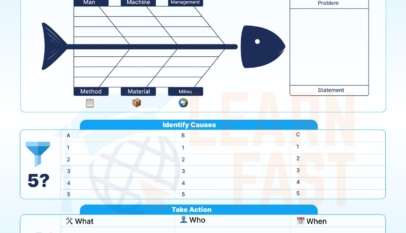





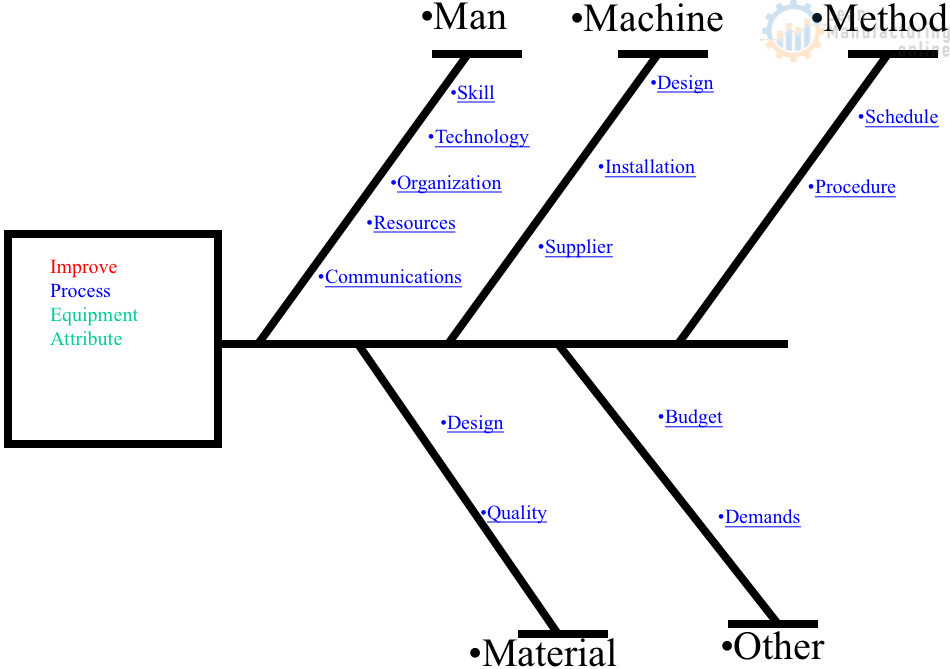
4M Analysis Process: Root Cause Guide for Manufacturing
Learn how to use 4M Analysis to find manufacturing root causes across People, Machine, Method, and Material with diagrams, examples, and checklist.