Enhancing Your Business Performance

  • Enhancing Your Business Performance
  • Home
  • Process Excellence
    • Lean Six Sigma
    • TPM
      • TPM Introduction
      • Change Management
      • Focused Improvement
      • Autonomous Maintenance
      • Education and Training
      • Quality
      • Safety, Health and Environment
      • Planned Maintenance
      • Early Equipment Management
    • TPS
    • Tools
      • Last Minute Travel Deals
      • 5 Why Analysis
      • Cap-Do
      • Kaizen
      • FMEA
      • One Point Lessons Directory
    • Templates
      • Machine Ledger
      • 5S Audit Checklist and Report
      • Cap-Do (PDCA)
      • One Point Lesson
      • FMEA template
      • M-P sheet (EEM) free template download
      • Why-Why Analysis
  • Free Courses
    • Lean Six Sigma White Belt Course
    • Lean Six Sigma Yellow Belt Course
    • Lean Six Sigma Green Belt Exam
    • Lean Six Sigma Black Belt Exam
    • TPM Instructor Course
    • Agile Retrospective: Continuous Improvement and Kaizen with Scrum
    • Autonomous Maintenance Facilitator
    • Planned Maintenance Facilitator
  • Submit a Post
  • Contact
Home TPM Autonomous Maintenance (page 12)

Autonomous Maintenance

  • Autonomous Maintenance Step 3

    sensei February 27, 2018
    5 12,241
    Autonomous Maintenance Blog

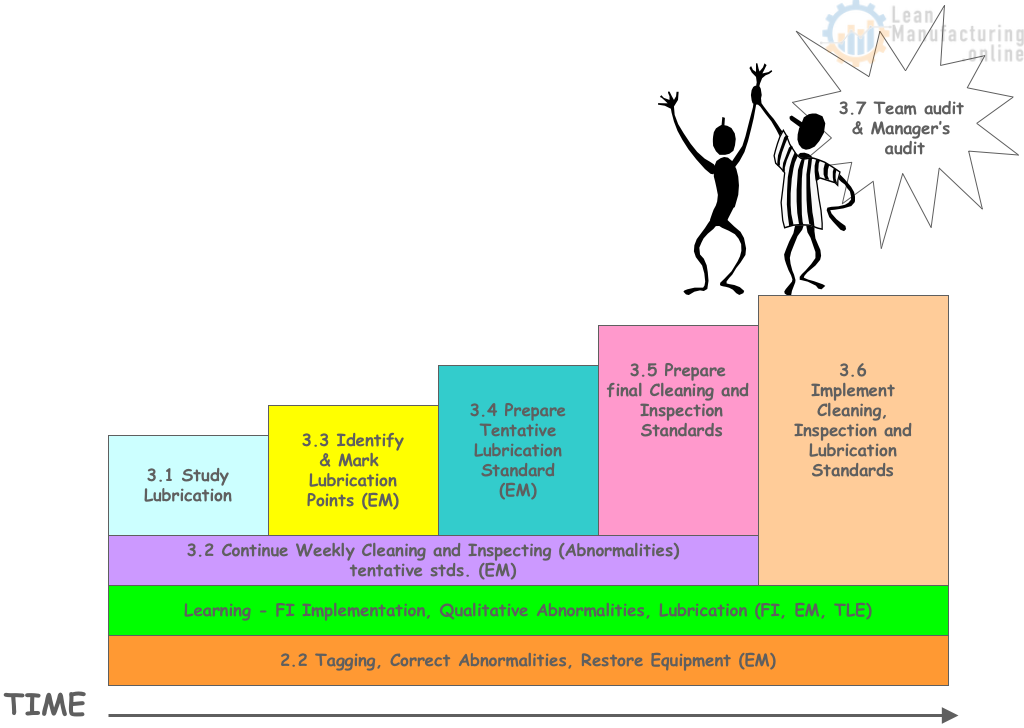
    Objectives What is Autonomous Maintenance Step 3? What are some of the main activities? Prerequisites AM Introduction AM Preparation for F-Tags and OPL’s AM Step 0 (5S and Zero Energy State) AM Step 1 and AM Step 2 Step 1: Learning Defect ID, Basic   5W-1H Clean F-tag Abnormalities 80%…

    Read More »
  • 5 Why Root Cause Analysis (RCA) – One Point Lesson (OPL)

    sensei February 16, 2018
    1 11,796
    5 Why Analysis Autonomous Maintenance Blog OPL Planned Maintenance

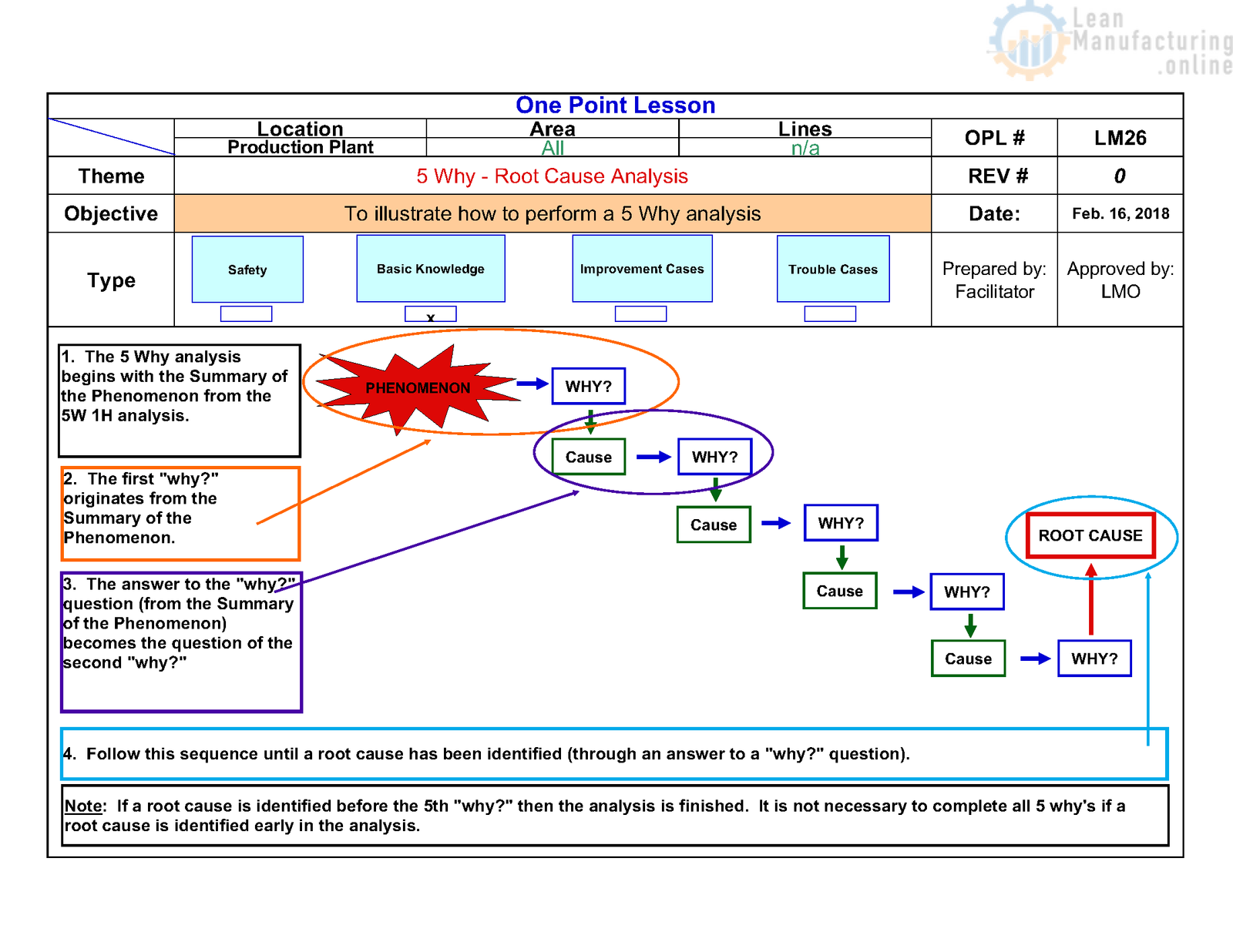
    5 WHY Analysis is the key tool used to determine ROOT CAUSES for the Phenomenon identified in theCHECK Phase of CAP-Do. The 5 Why analysis begins with the Summary of the Phenomenon from the 5W 1H analysis. The first “why?” originates from the Summary of the Phenomenon. The answer to…

    Read More »
  • Basic Hand Tools Safety Module

    sensei February 11, 2018
    0 7,175
    Autonomous Maintenance Blog

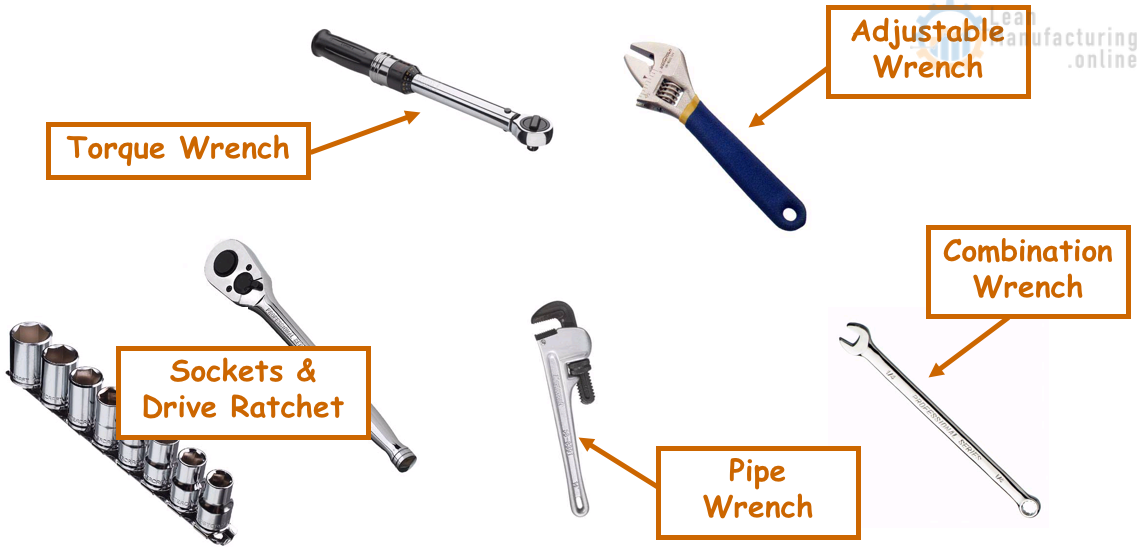
    Training Objectives: Identify basic hand tools used for routine maintenance activities. Provide examples of tool abnormalities to support inspection activities. Demonstrate proper and safe use of hand tools. Hand Tools Held in the “hand” and powered by the person using them Important to be able to identify them Know the…

    Read More »
  • Autonomous Maintenance. Pneumatics training module for operators

    sensei February 6, 2018
    0 4,374
    Autonomous Maintenance Blog

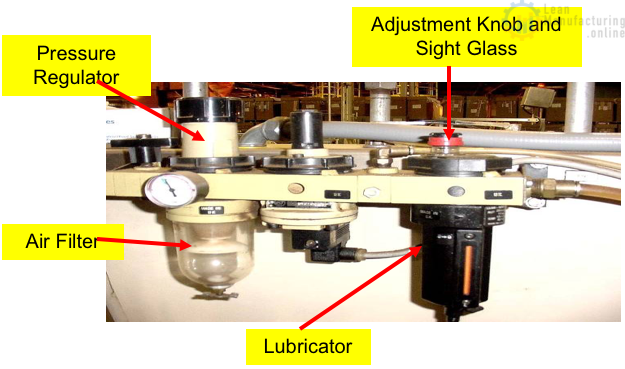
    Basic Pneumatic – Introduction Introduction Overview: Pneumatics is about using compressed air “to make something happen.” The word Pneu is Greek meaning wind, breath or air. Pneumatic equipment refers to those items that use or are driven by air. Air has no definite shape or volume; it takes on the…

    Read More »
Previous page Next page

Most Popular

4M Analysis Process

sensei
August 29, 2018

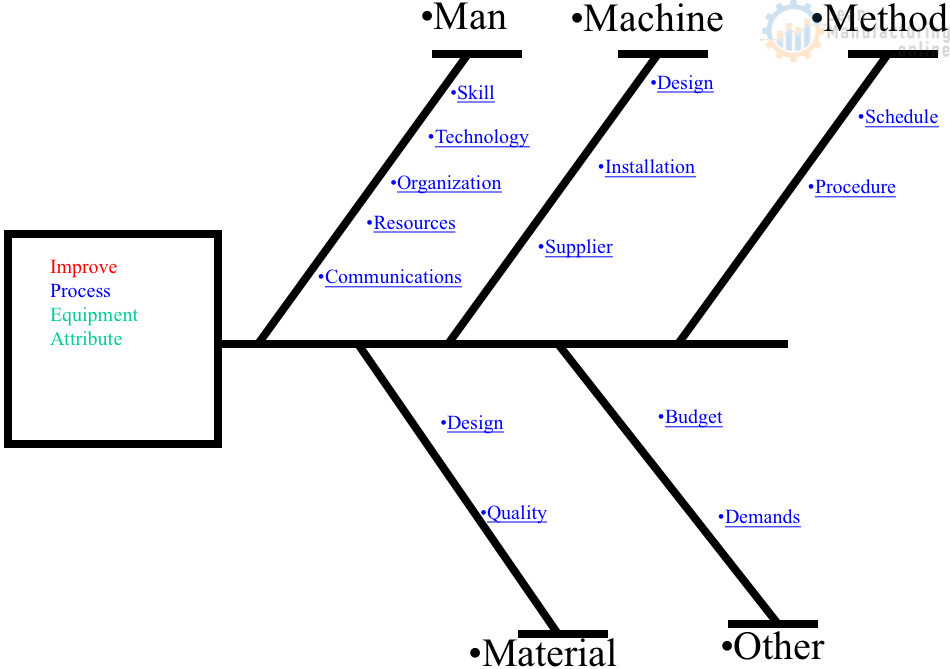
The purpose of this procedure is to define the steps to do a 4M …
OPL – One Point Lesson Template – Free Download

sensei
November 5, 2018

PDCA – A Process Approach

sensei
January 8, 2023
5S - Sort, Set, Shine, Standardize, Sustain

5S Audit Checklist and Report

sensei
April 18, 2022

Why-Why Analysis

sensei
June 10, 2022

Recent

How to Improve Manufacturing Processes with the RIVET Method

Gemba Walk GPT: The Smartest Way to Turn Observations Into Real Improvement

How to Create a Step-by-Step Reveal Animation in PowerPoint

Explore the Best Free Online Libraries in 2025

Blog Search

Lean Manufacturing is a methodology for producing goods that emphasizes minimizing waste and maximizing efficiency. It is a manufacturing philosophy that aims to produce goods with the least amount of resources, time and effort. Lean manufacturing aims to eliminate waste and improve the flow of materials and information throughout the production process. This approach is often used in manufacturing environments where efficiency and cost-effectiveness are critical, such as in the automotive and electronics industries.
Copyright © 2026 leanmanufacturing.online
  • Terms of Use
  • Privacy Policy
  • About Our Ads

Popular Posts

4M Analysis Process

sensei
August 29, 2018

The purpose of this procedure is to define the steps to do a 4M …
OPL – One Point Lesson Template – Free Download

sensei
November 5, 2018

PDCA – A Process Approach

sensei
January 8, 2023
5S - Sort, Set, Shine, Standardize, Sustain

5S Audit Checklist and Report

sensei
April 18, 2022

Most Popular Tools

Toyota Production system. Jidoka and Just-in-Time are two pillars of TPS.

How to Drive Lasting Change with Kaizen Mindsets

Innovation vs. Kaizen Explained

How Kaizen and PMP Work Together

Root Cause Analysis Stacking: A Game-Changer for Problem Solving