Lean Manufacturing

  • Lean Manufacturing
  • Home
  • Process Excellence
    • Lean Six Sigma
    • TPM
      • TPM Introduction
      • Change Management
      • Focused Improvement
      • Autonomous Maintenance
      • Education and Training
      • Quality
      • Safety, Health and Environment
      • Planned Maintenance
      • Early Equipment Management
    • TPS
    • Tools
      • Last Minute Travel Deals
      • 5 Why Analysis
      • Cap-Do
      • Kaizen
      • FMEA
      • One Point Lessons Directory
    • Templates
      • Machine Ledger
      • 5S Audit Checklist and Report
      • Cap-Do (PDCA)
      • One Point Lesson
      • FMEA template
      • M-P sheet (EEM) free template download
      • Why-Why Analysis
  • Free Courses
    • Lean Six Sigma White Belt Course
    • Lean Six Sigma Yellow Belt Course
    • Lean Six Sigma Green Belt Exam
    • Lean Six Sigma Black Belt Exam
    • TPM Instructor Course
    • Agile Retrospective: Continuous Improvement and Kaizen with Scrum
    • Autonomous Maintenance Facilitator
    • Planned Maintenance Facilitator
  • Submit a Post
  • Contact
Home TPM (page 68)

TPM

  • Global Food Safety Initiative – Preparation for FSSC 22000. Part 4 ISO22000 Section 6, Resource Management

    sensei October 1, 2018
    0 2,742
    Blog Quality
    ...but everyone within the factory who has an impact on Food Safety, from the Factory Manager to the Operators on the line

    6.0 Resource Management This clause is about making sure there are enough resources to meet the needs of the FSMS in terms of: People Infrastructure Work Environment 6.2.1 General The food safety team and the other personnel carrying out activities having an impact on food safety shall be competent and shall…

    Read More »
  • Autonomous Maintenance Step 4. Fasteners training module for operators

    sensei September 18, 2018
    3 9,394
    Autonomous Maintenance Blog

    In steps 1 – 3 the main objective was to eliminate FORCED DETERIORATION: Step 1 – Cleaning, Writing F-Tags, Solving F-Tags Step 2 – Eliminating SOC’s & HTA’s Step 3 – Reviewing CI Standards and adding Lubrication Standard Now it’s time to talk about: Autonomous Maintenance Step 4 “General Inspections” Definition Of Step…

    Read More »

  • Gap Analysis and General Findings of Effective Maintenance

    sensei September 14, 2018
    0 4,514
    Blog Planned Maintenance
    Breakdown Analysis Maintenance

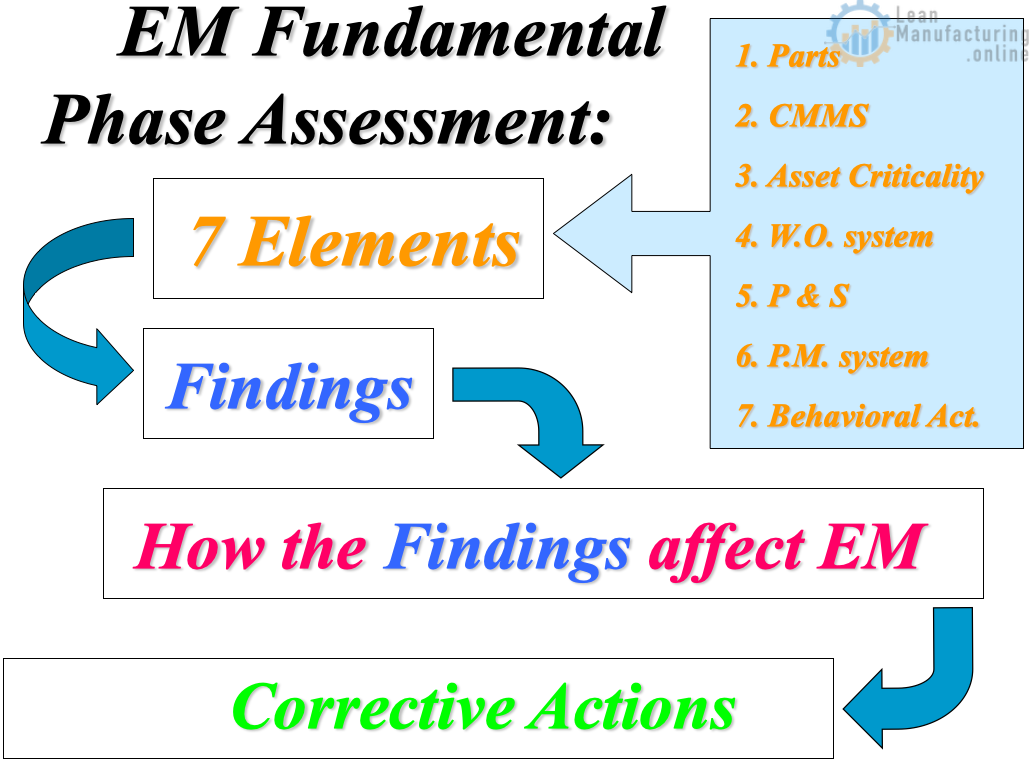
    To perform gap analysis, relative rankings of different facilities (sites) need to be captured: Parts and Materials in Store Room Computerized Maintenance Management Software (CMMS) utilization Criticality of assets ranked and maintained Planning and Scheduled work Work order system Effectiveness of Preventative Program (PM) Maintenance Management Duties, Tactics and Best…

    Read More »
  • Autonomous Maintenance Step 4. Transmission (drive) training module for operators

    sensei September 12, 2018
    0 7,607
    Autonomous Maintenance Blog

    In steps 1 – 3 the main objective was to eliminate FORCED DETERIORATION: Step 1 – Cleaning, Writing F-Tags, Solving F-Tags Step 2 – Eliminating SOC’s & HTA’s Step 3 – Reviewing CI Standards and adding Lubrication Standard Now it’s time to talk about: Autonomous Maintenance Step 4 “General Inspections” Definition Of Step…

    Read More »
Previous page Next page

Most Popular

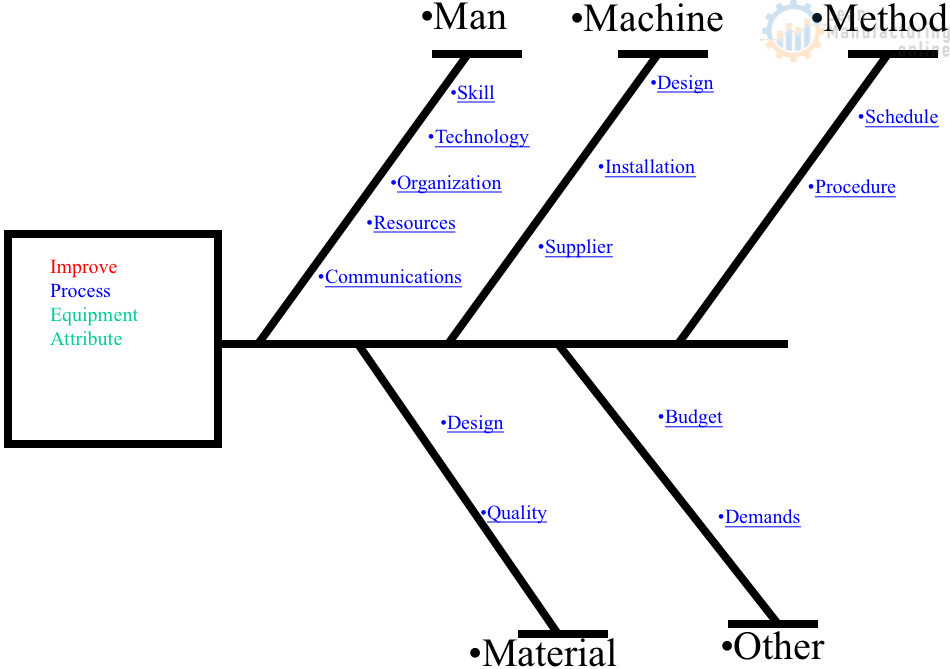
4M Analysis Process

sensei
August 29, 2018

The purpose of this procedure is to define the steps to do a 4M …
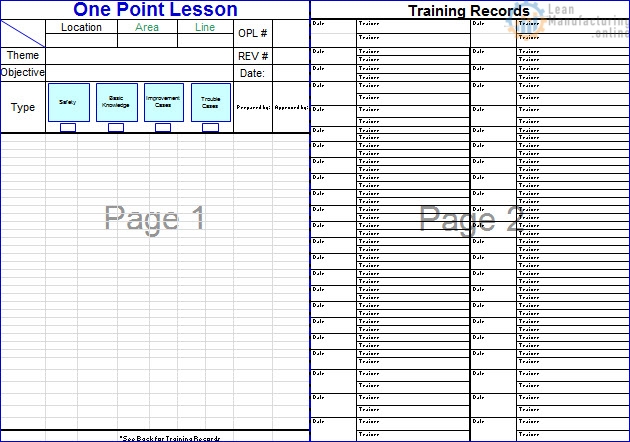
OPL – One Point Lesson Template – Free Download

sensei
November 5, 2018

PDCA – A Process Approach

sensei
January 8, 2023
5S - Sort, Set, Shine, Standardize, Sustain

5S Audit Checklist and Report

sensei
April 18, 2022

Why-Why Analysis

sensei
June 10, 2022

Recent

Industrial Internet of Things in Manufacturing: Uses, Architecture, and Benefits

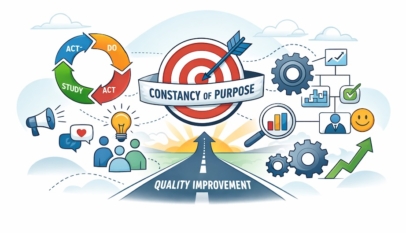
Why Quality Starts With Constancy of Purpose

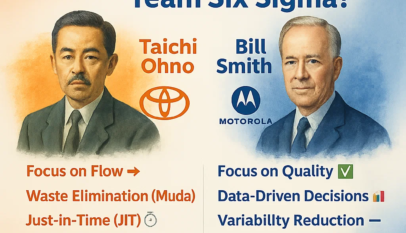
Six Sigma vs Lean Six Sigma: A Practical Guide

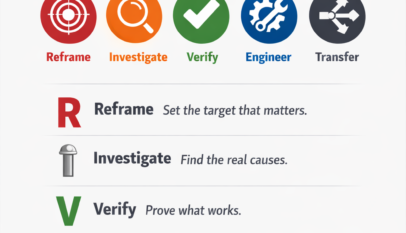
How to Improve Manufacturing Processes with the RIVET Method

Blog Search

Lean Manufacturing is a methodology for producing goods that emphasizes minimizing waste and maximizing efficiency. It is a manufacturing philosophy that aims to produce goods with the least amount of resources, time and effort. Lean manufacturing aims to eliminate waste and improve the flow of materials and information throughout the production process. This approach is often used in manufacturing environments where efficiency and cost-effectiveness are critical, such as in the automotive and electronics industries.
Copyright © 2026 leanmanufacturing.online
  • Terms of Use
  • Privacy Policy
  • About Our Ads

Popular Posts

4M Analysis Process

sensei
August 29, 2018

The purpose of this procedure is to define the steps to do a 4M …
OPL – One Point Lesson Template – Free Download

sensei
November 5, 2018

PDCA – A Process Approach

sensei
January 8, 2023
5S - Sort, Set, Shine, Standardize, Sustain

5S Audit Checklist and Report

sensei
April 18, 2022

Most Popular Tools

Toyota Production system. Jidoka and Just-in-Time are two pillars of TPS.

How to Drive Lasting Change with Kaizen Mindsets

Innovation vs. Kaizen Explained

How Kaizen and PMP Work Together

Root Cause Analysis Stacking: A Game-Changer for Problem Solving