If production is slipping and quality feels inconsistent, the worst move is to jump straight into fixes. A better move is to separate two different problems that often get mixed together: waste and variation. Waste is the work customers would not pay for. Variation is the instability that makes results unpredictable. Lean helps you spot and remove waste, while Six Sigma helps you reduce defects and variation with data. Together, they form Lean Six Sigma, a practical way to make processes faster, more reliable, and easier to manage.
What Six Sigma is really for
Six Sigma is commonly taught as a disciplined approach to reducing defects, delays, and variation in a process. You will often hear the benchmark of 3.4 defects per million opportunities, which is linked to a 99.99966 percent yield definition in many Six Sigma explanations.
Here is the mental model that keeps Six Sigma practical: every output (Y) is a function of inputs (X). If you want a better output, you usually need to change, control, or redesign inputs. That is why process thinking matters. A process can be viewed as inputs, steps, outputs, and feedback. Feedback is what allows you to adjust inputs and keep performance stable over time.
When to use DMAIC
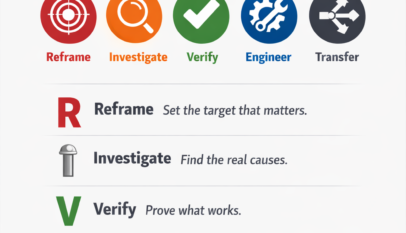
Use DMAIC when you already have a process or product and it is not meeting expectations. DMAIC stands for Define, Measure, Analyze, Improve, Control. The logic is simple: clarify what matters and what success looks like, measure the current performance, find the true drivers of the gap, improve using targeted changes, then control the new method so performance holds.
To make that feel real, think about a production line where output is down and one component has quality issues. DMAIC pushes you to quantify the problem first, then isolate causes with evidence, then implement improvements that directly address what the data proved, and finally sustain the gains so the same issue does not quietly return.
When to use DMADV (DFSS)
Use DMADV when you are creating something new, or when the safest move is to redesign instead of patching an old design. DMADV stands for Define, Measure, Analyze, Design, Verify, and it is often associated with Design for Six Sigma (DFSS). The emphasis shifts from repairing performance to designing performance in from the start, based on customer requirements and measurable specifications.
DFSS is also often taught alongside tools like QFD and FMEA to translate customer needs into design characteristics and to anticipate failure modes before launch.
What Lean adds that most teams miss
Lean keeps you honest about value. It asks a blunt question: if the customer saw this step, would they pay for it? If not, it is a candidate for removal, reduction, or redesign. Lean is also built around the idea of continuous improvement, not a one-time cleanup.
A useful starting point is to learn the common waste categories and train your eye to spot them in daily work. The eight waste types commonly taught are transportation, inventory, motion, waiting, overproduction, extra processing, defects, and unused skills or human potential. Once you can label waste quickly, improvement opportunities stop hiding in plain sight.
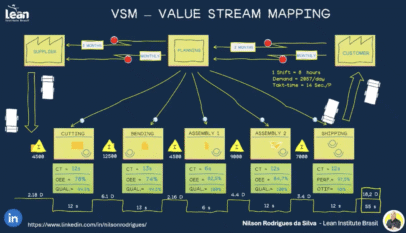
Lean is often summarized in five steps: identify value, map the value stream, create flow, establish pull, and pursue continuous improvement. Read that as a sequence you can apply to almost any workflow, from manufacturing to service to office processes.
Why Lean Six Sigma works in the real world
Lean Six Sigma is not about choosing sides. It is about choosing the right lever for the problem in front of you. If customers are unhappy because delivery is late, Lean helps remove waiting and unnecessary steps, while Six Sigma helps you reduce the variation that makes delivery time unreliable. When you combine both, you get faster flow and more predictable performance, which typically translates into lower cost, better customer experience, and stronger operational control.
A practical way to decide, without overthinking
- If the process exists and it is underperforming, start with DMAIC.
- If you are designing something new or a redesign is the only sensible path, use DMADV (DFSS).
- If the biggest pain is obvious waste, start with Lean to improve flow quickly.
- If the biggest pain is instability and defects, bring in Six Sigma measurement and analysis.
- If you are seeing both, which is common, Lean Six Sigma gives you a single operating system that keeps improvements connected to customer needs and sustained over time.






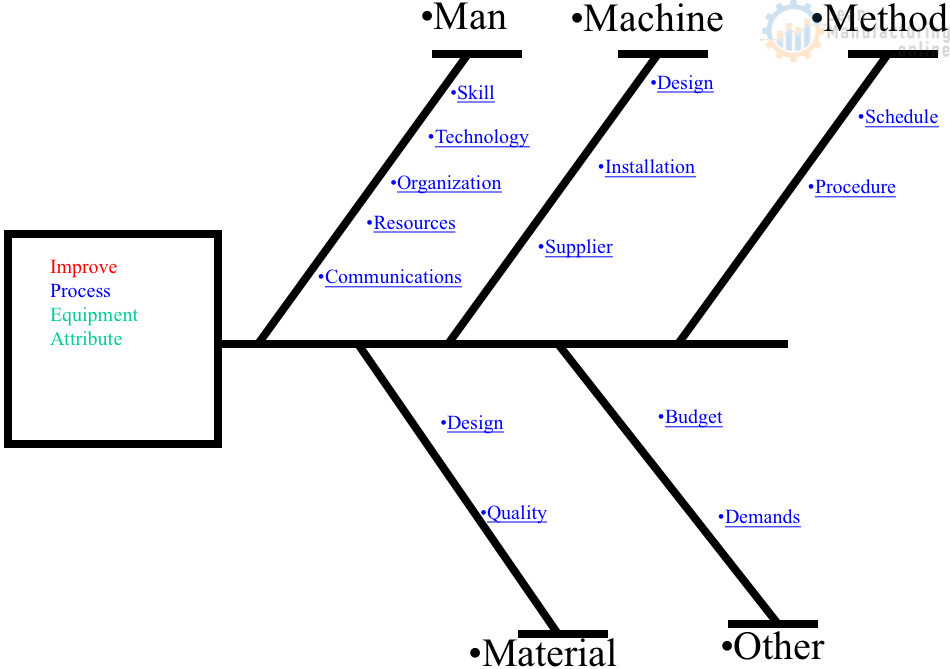
4M Analysis Process
The purpose of this procedure is to define the steps to do a 4M …