Systematic maintenance is preventive maintenance carried out at a defined interval. The interval may be based on calendar time, operating hours, production cycles, distance, quantity produced, or another usage measure that reflects how the equipment deteriorates.
The purpose is simple: perform the right maintenance task before predictable deterioration becomes a failure. In a good TPM system, systematic maintenance is not just a calendar full of tasks. It is a controlled method for protecting basic equipment conditions, reducing breakdowns, and learning whether the preventive plan is working.
Systematic maintenance definition
Systematic maintenance means maintenance performed according to a predetermined schedule or usage-based frequency. The task is planned before a failure occurs, and the frequency is usually set from equipment history, supplier recommendations, commissioning data, overhaul experience, or internal reliability learning.
Examples include daily lubrication checks, weekly inspections, monthly filter replacement, cycle-based component replacement, and annual overhaul tasks. The key point is that the intervention is triggered by a planned interval rather than by a breakdown.
| Trigger | Example | Best use |
|---|---|---|
| Calendar time | Weekly inspection, monthly lubrication route | Simple routines where deterioration is time related. |
| Operating hours | Replace wear part after 2,000 running hours | Equipment with variable operating schedules. |
| Production count | Change tooling after a defined number of pieces | Processes where wear follows production volume. |
| Cycles | Inspect cylinder or actuator after a number of strokes | Machines with repeated motion or duty cycles. |
| Condition feedback | Adjust frequency after trend or inspection data | Systems moving toward predictive maintenance. |
How it fits planned maintenance
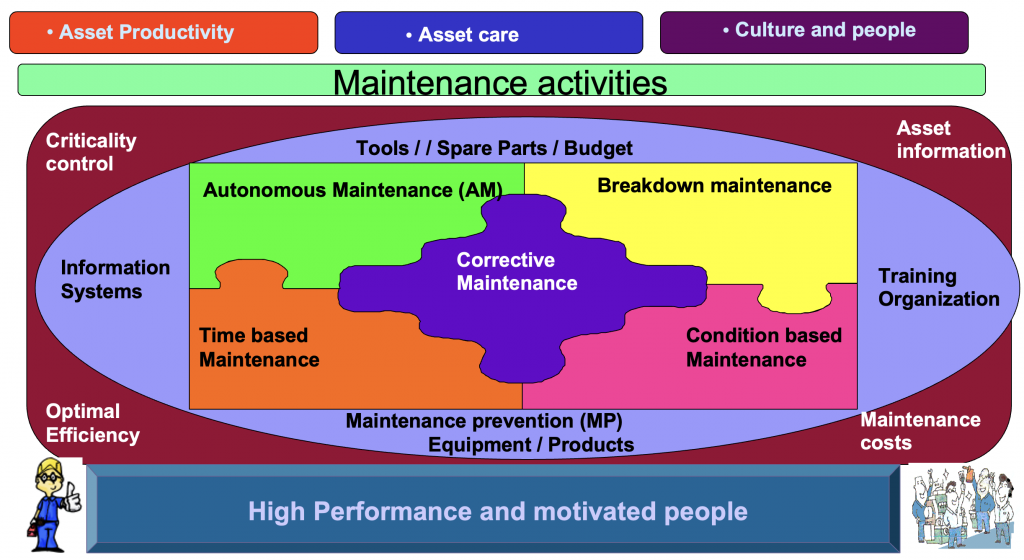
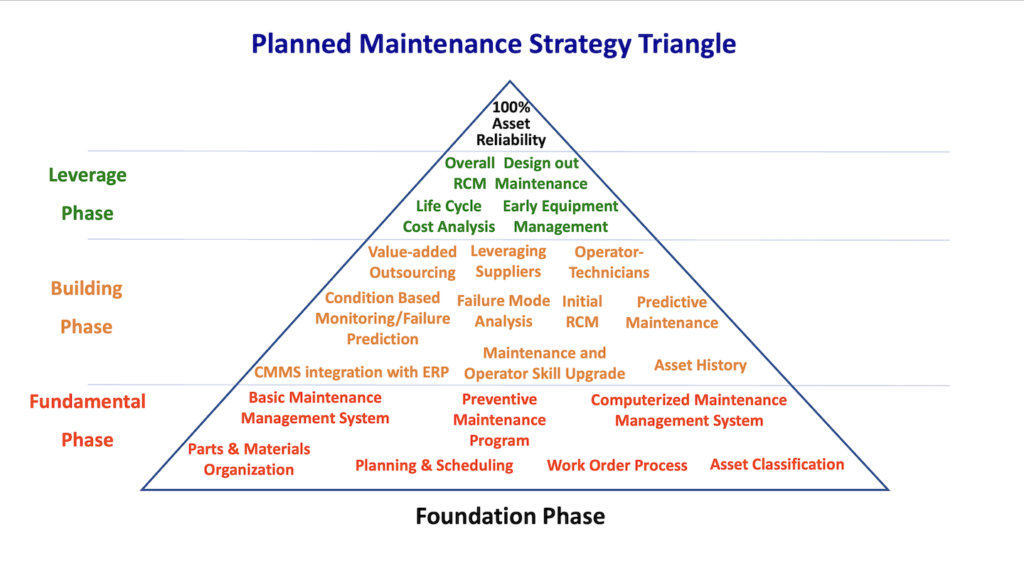
Systematic maintenance is one part of planned maintenance. Planned maintenance also includes corrective work, improvement work, condition-based maintenance, shutdown planning, spare-parts preparation, and technical standardization.
A common mistake is to treat every repeated task as valuable. Repetition alone does not make a PM useful. The task must address a real failure mode, protect a basic condition, or confirm that deterioration is under control.
What information is needed?
Before setting a systematic maintenance frequency, the team should understand the equipment and its degradation pattern. Without that knowledge, PM intervals become guesses. Some tasks will be done too often, wasting labor and parts. Other tasks will be done too late, allowing failures to occur.
| Information needed | Why it matters |
|---|---|
| Equipment function | Clarifies what the asset must do for safety, quality, and delivery. |
| Failure modes | Shows what can deteriorate and how the failure appears. |
| Average time between failures | Helps set an initial inspection or replacement interval. |
| Operating conditions | Explains why the same equipment may need different frequencies in different lines. |
| Maintenance history | Shows repeat failures, emergency work, and PM effectiveness. |
| Skill and access requirements | Determines whether the task belongs to operators, maintenance, or specialists. |
Examples of systematic maintenance tasks
Typical systematic maintenance activities include cleaning, inspection, lubrication, tightening, calibration, standard exchanges, technical visits, revisions, filter changes, belt checks, chain and sprocket inspections, and replacement of known wear items.
Some tasks belong in autonomous maintenance, especially routine cleaning, inspection, and lubrication that operators can perform safely and consistently. More technical tasks stay with maintenance, engineering, or approved specialists.
| Task type | Typical owner | Example control point |
|---|---|---|
| Basic cleaning and inspection | Operator or line team | Abnormality found and tagged. |
| Lubrication | Operator or maintenance | Correct point, lubricant, amount, and frequency. |
| Standard exchange | Maintenance | Wear part replaced before expected failure. |
| Technical visit | Maintenance or engineering | Condition verified against standard. |
| Revision or overhaul | Maintenance project team | Work completed with findings recorded. |
How to set the interval
The first interval is usually a hypothesis. It should be based on failure history, supplier recommendations, equipment criticality, and what the team knows about deterioration. After that, the interval should be reviewed using real data.
If breakdowns still occur before the PM task is due, the interval may be too long or the task may not address the true failure mode. If the team repeatedly replaces parts that still look healthy, the interval may be too short or the task may be better controlled by condition monitoring.
| Observed result | Possible meaning | Follow-up action |
|---|---|---|
| Failure occurs before PM | Interval too long or wrong task | Study the failure mode and adjust the standard. |
| No deterioration found for many cycles | Interval may be too short | Review history before extending frequency. |
| PM is completed but repeat failures remain | Task quality or root cause is weak | Use problem solving and confirm basic conditions. |
| Many overdue PMs | Schedule capacity is unrealistic | Balance workload, risk, and resources. |
Connect systematic maintenance to abnormalities
Systematic maintenance should not be isolated from daily management. When an operator or technician finds an abnormality, it should be captured, prioritized, and closed. F-tags are one way to make small equipment issues visible before they become failures.
The same logic applies to forced versus natural deterioration. If an asset fails because dirt, looseness, misalignment, leakage, or poor lubrication was allowed to continue, the problem is not natural wear. It is a management system gap.
Measure whether the system works
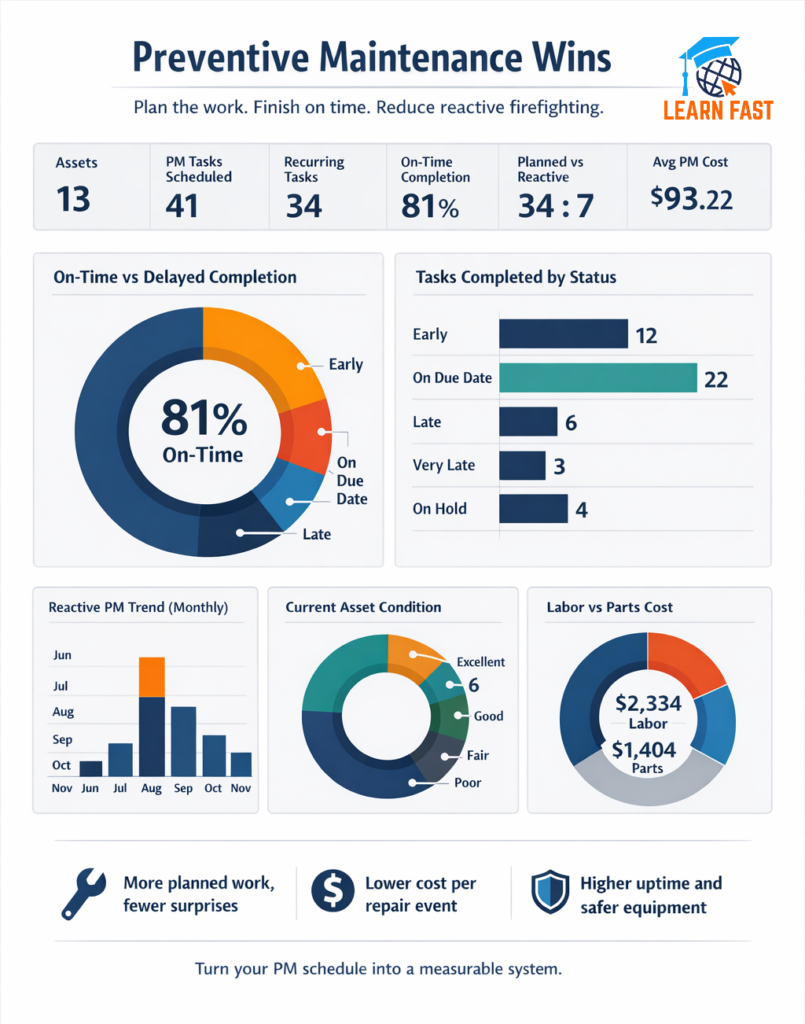
The goal is not to complete PMs for the sake of completion. The goal is fewer breakdowns, stable output, safer work, and lower total loss. That means the review must connect PM compliance to performance indicators.
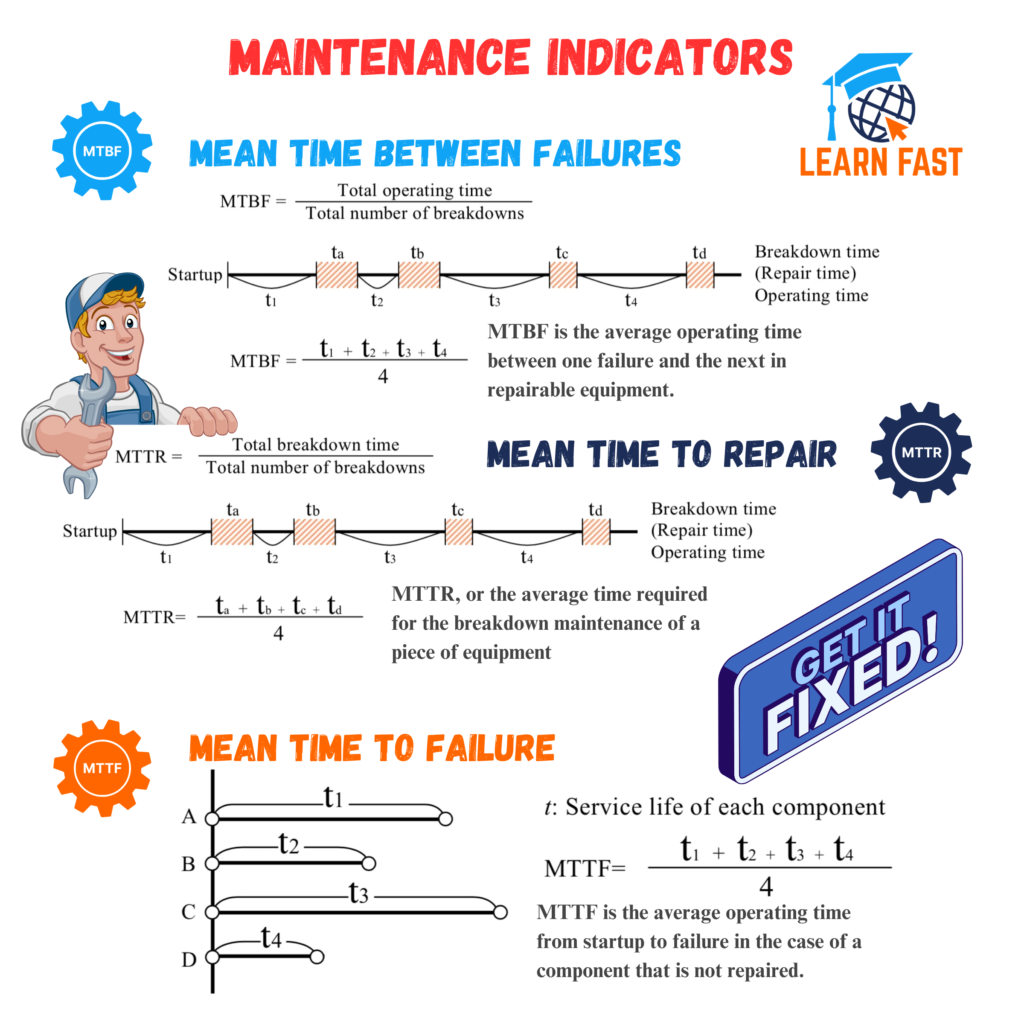
Useful measures include PM compliance, overdue PMs, repeat breakdowns, emergency work percentage, mean time between failures, mean time to repair, open abnormalities, and OEE loss categories. These measures can be connected to a broader manufacturing KPI review.
Common mistakes
The first mistake is copying a generic PM schedule without understanding the equipment. The second is adding more tasks every time a failure happens, without removing weak or unnecessary work. The third is failing to train people on what “good condition” looks like.
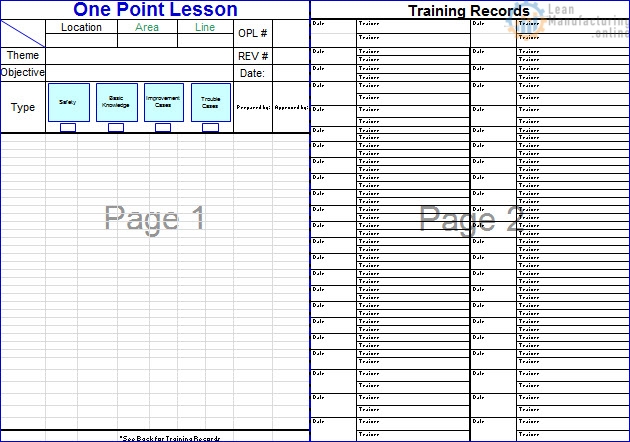
Use skill matrices and one point lessons to make routine tasks repeatable. A good PM standard should explain the point to check, the method, the acceptable condition, the frequency, the owner, and what to do if an abnormality is found.
Treat PM as a learning loop
Systematic maintenance is strongest when it is treated as a learning loop. Plan the task, complete it to standard, record what was found, review the result, and adjust the frequency or method when the data shows a better way. That is how preventive maintenance becomes a reliability system instead of a checklist.

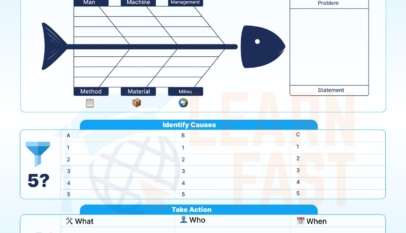






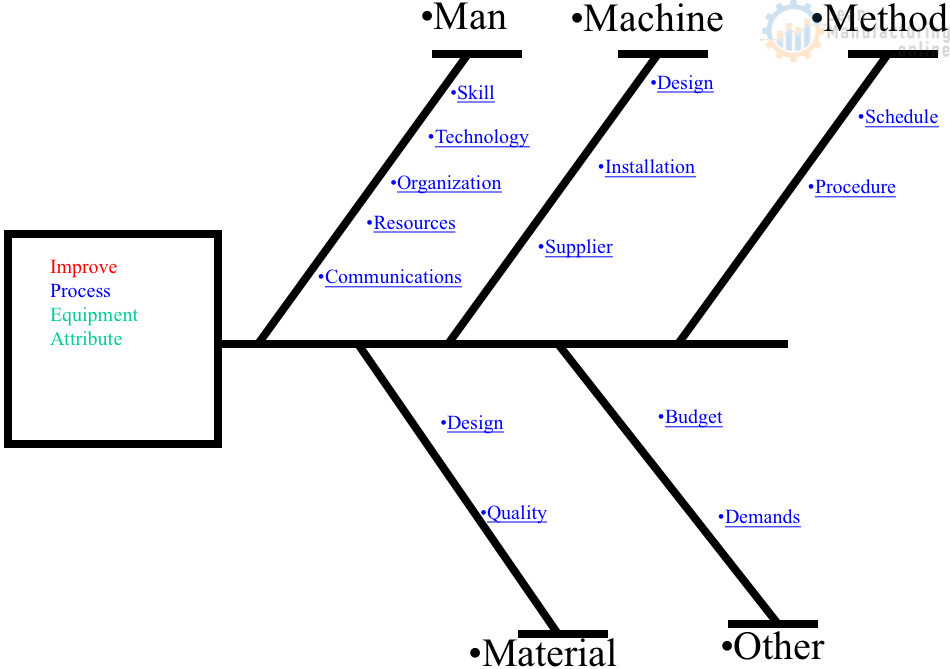
4M Analysis Process: Root Cause Guide for Manufacturing
Learn how to use 4M Analysis to find manufacturing root causes across People, Machine, Method, and Material with diagrams, examples, and checklist.