
Kaizen is practical continuous improvement by the people closest to the work. In manufacturing, the Kaizen process helps teams reduce losses, remove waste, improve quality, simplify work, and protect better standards after a change is made.
A good Kaizen is not a suggestion box item and not a long presentation. It is a structured way to see a problem, understand the current condition, test countermeasures, verify the result, and make the new method repeatable.
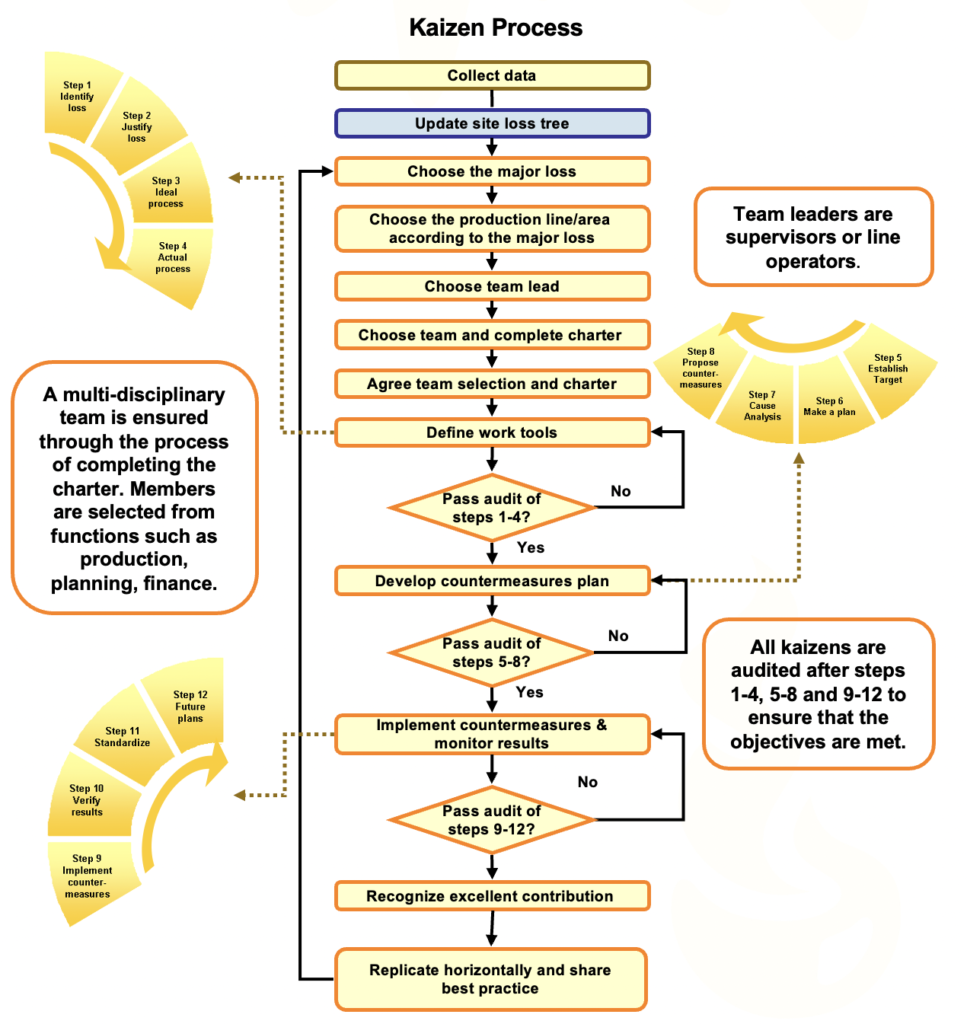
What is the Kaizen process?
The Kaizen process is a step-by-step improvement routine. It begins with a real loss or gap, studies the process where the work happens, identifies causes, tests countermeasures, and standardizes the improved condition.
Kaizen can be small and fast, or it can be organized as a focused improvement project. The key is discipline. The team should not jump from complaint to solution. It should understand the current condition before changing the process.
When should you use Kaizen?
Use Kaizen when the problem is close to the work, the team can study the current condition, and the improvement can be tested without turning it into a large strategic project. Kaizen is especially useful for repeated wastes, small quality problems, setup losses, motion, waiting, minor stops, unsafe conditions, and unclear standards.
| Use Kaizen when… | Use a larger project when… |
|---|---|
| The process owner and team can test a countermeasure quickly. | The issue crosses many departments, sites, systems, or capital decisions. |
| The loss is visible at the Gemba. | The problem requires deep statistical analysis or major engineering work. |
| The current standard is unclear, missing, or not followed. | The solution changes product design, validation, compliance, or customer approval. |
| The team can verify the result with simple data or observation. | The risk is high enough to require formal project governance. |
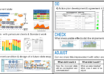
The 12-step Kaizen process
The existing 12-step Kaizen story gives a useful structure. The steps below translate that sequence into practical shop-floor behavior.
- Identify losses. Choose a real loss such as downtime, defects, rework, waiting, motion, changeover loss, or safety risk.
- Select and justify the subject. Explain why the topic matters using safety, quality, delivery, cost, morale, or productivity impact.
- Understand the process and equipment. Go to the Gemba. See the work, the equipment, the material flow, and the standard.
- Grasp the actual situation. Collect facts. Use photos, counts, timing, defect examples, downtime history, or observation notes.
- Establish objectives. Set a clear target that can be checked after the countermeasure.
- Make a plan. Define actions, owners, timing, support needed, and how the result will be measured.
- Analyze causes. Use tools such as 4M Analysis, root cause analysis, 5-Why, Pareto thinking, or process observation.
- Propose countermeasures. Choose changes that address the cause, not only the symptom.
- Carry out countermeasures. Test the change safely and visibly.
- Verify results. Compare before and after performance using agreed data or direct observation.
- Standardize. Update the standard, training, visual control, one point lesson, or maintenance routine.
- Plan the next improvement. Review what was learned and choose the next gap.
Kaizen and PDCA
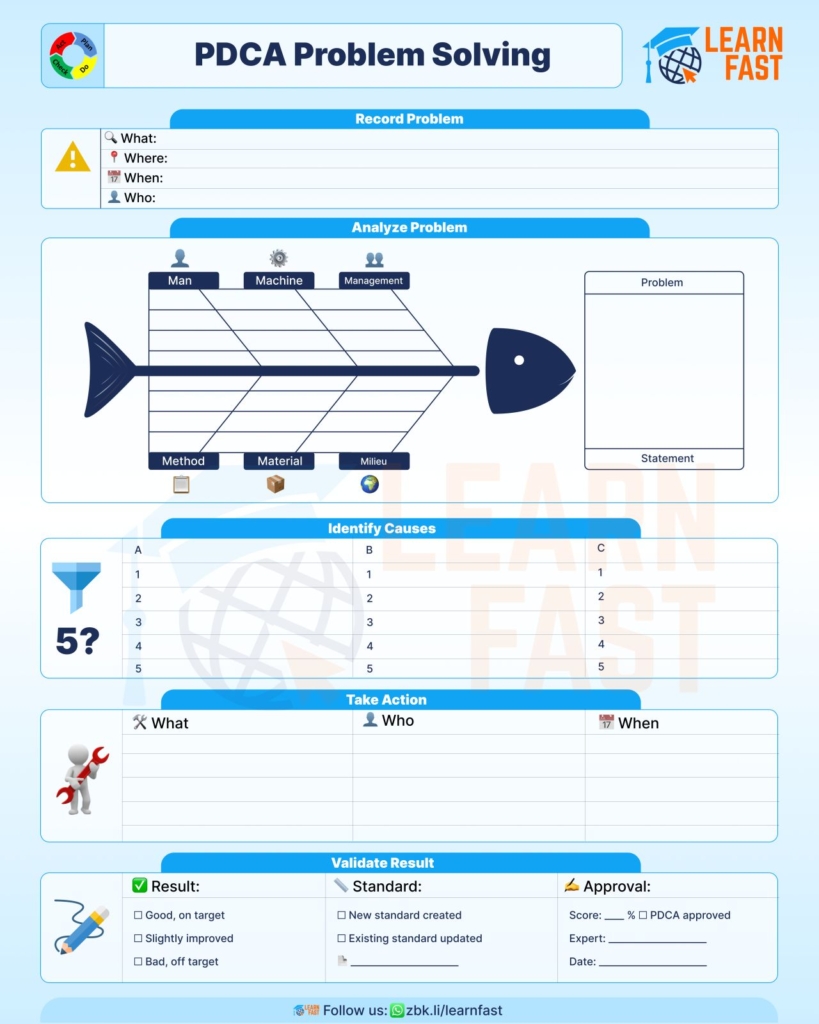
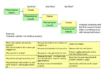
Kaizen and PDCA fit naturally together. Plan means define the problem and choose the countermeasure. Do means test it. Check means verify the result. Act means standardize, train, and decide the next step.
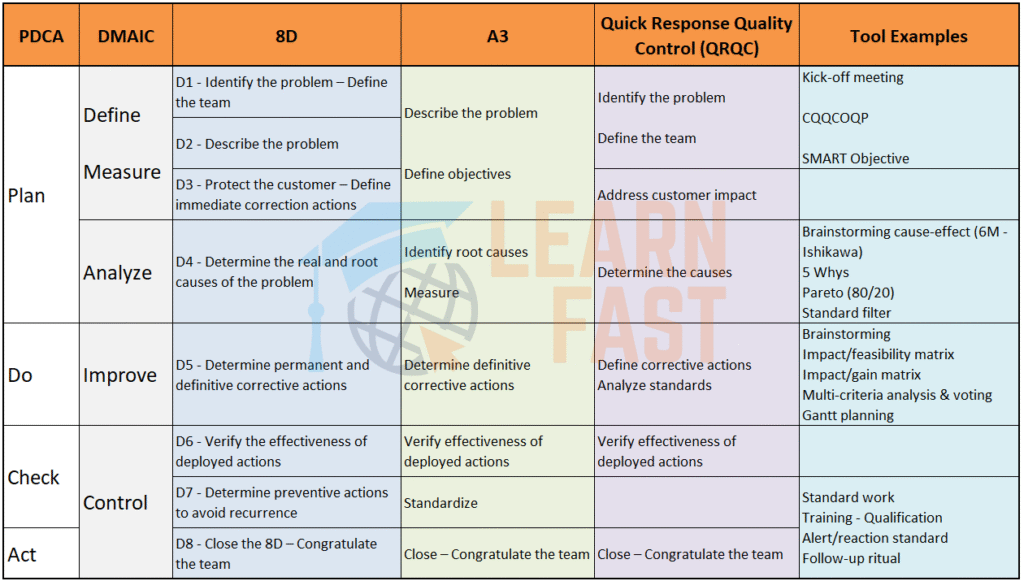
For more complex problems, Kaizen may connect to DMAIC, A3, 8D, QRQC, or other structured methods. The method should match the problem. Do not use a heavy method when a simple standard change is enough, and do not use a quick Kaizen when the cause is unknown and risk is high.
Use the Gemba before choosing a solution
Kaizen starts by understanding the actual work. A meeting room can help organize the plan, but the process must be understood where the work happens. The team should look for the gap between the current condition and the expected condition.
Use Gemba walks, direct observation, operator input, and simple data collection. Ask what is difficult, what repeats, where people wait, where motion is wasted, where defects are detected, and where the standard is hard to follow.
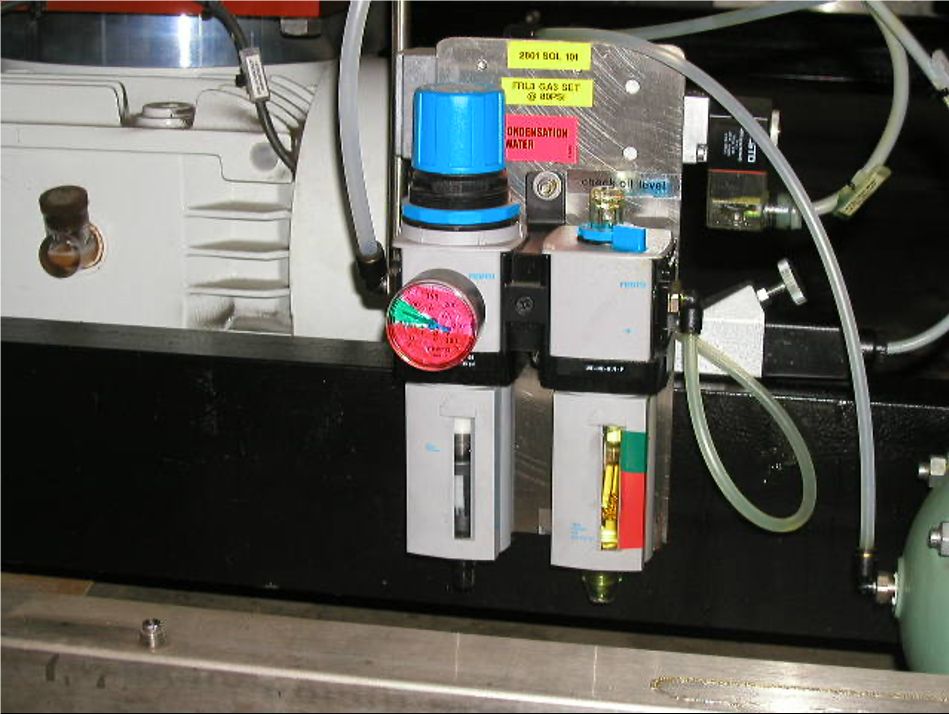
Make Kaizen visible
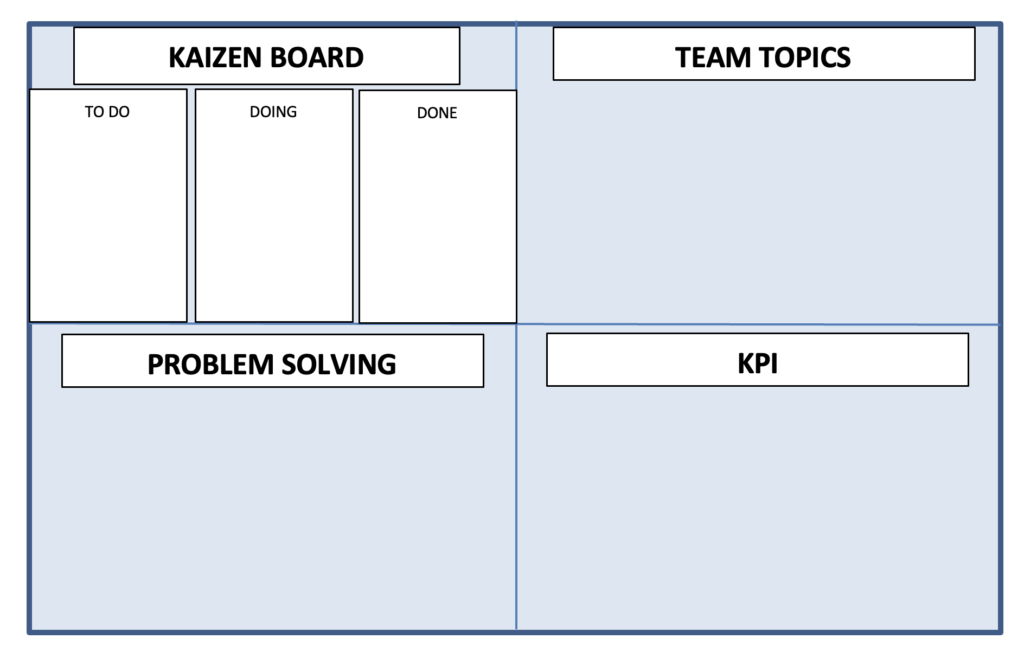
A Kaizen should be easy for the team to follow. Use an action board, problem sheet, A3, activity board, or simple tracker. The board should show the problem, target, owner, current status, countermeasures, evidence, and follow-up.
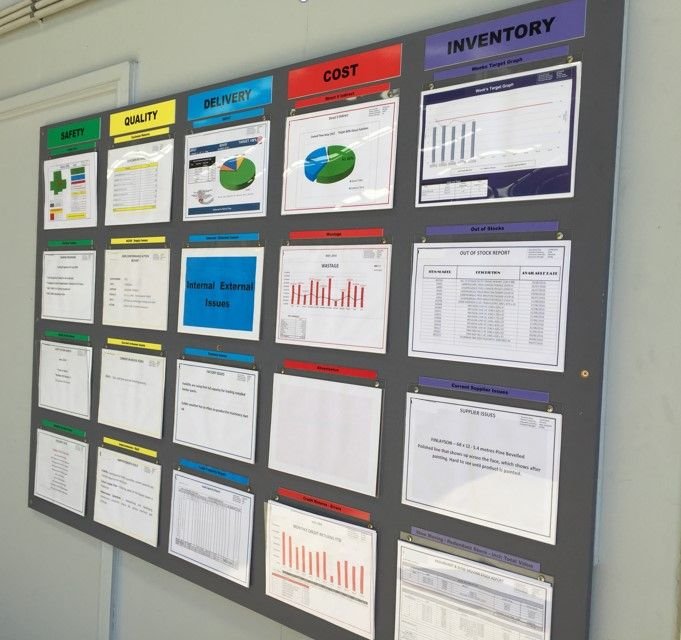
Connect the work to visual management, activity boards, and manufacturing KPIs. If the improvement is not visible in daily management, it is easy for the action to fade after the event is over.
Standardization protects the gain
Kaizen is not complete when the countermeasure is installed. It is complete when the new method becomes the normal way of working. That may require a revised standard, point-of-use visual, training record, work instruction, maintenance task, F-tag follow-up, or One Point Lesson.
Use 5S standards when the improvement depends on workplace condition. Use OPL examples when a small lesson must be taught quickly. Use F-tags when abnormalities need ownership and closure.
Common Kaizen mistakes
- Starting with a solution before studying the current condition.
- Choosing a topic because it is easy, not because it matters.
- Making a one-time change without updating the standard.
- Running a Kaizen event that produces many actions but no verified result.
- Ignoring operator input from the people who live with the process daily.
- Counting activity instead of measuring the loss reduction.
- Closing the Kaizen before training, visual controls, and follow-up are complete.
Kaizen checklist
| Question | Good evidence |
|---|---|
| Is the loss or gap clear? | Baseline data, observation, defect count, downtime record, or safety concern. |
| Was the current condition studied? | Photos, Gemba notes, process map, time study, or sample evidence. |
| Was the cause checked? | 4M, 5-Why, Pareto, fishbone, or direct test of the suspected cause. |
| Was the countermeasure tested? | Before/after result, trial record, feedback, or KPI movement. |
| Was the gain standardized? | Updated standard, OPL, visual control, PM task, audit point, or training record. |
| Is there follow-up? | Owner, due date, review cadence, and reaction if the result slips. |
Where Kaizen fits in continuous improvement
Kaizen is the everyday engine of continuous improvement. It helps teams improve the work they understand best. Bigger methods such as DMAIC, project-by-project improvement, or formal capital projects still have a place, but Kaizen keeps improvement close to the process.
Use Kaizen when the team can learn quickly, test safely, and standardize the better method. The best result is not a beautiful report. It is a safer, clearer, more stable process that people can repeat tomorrow.
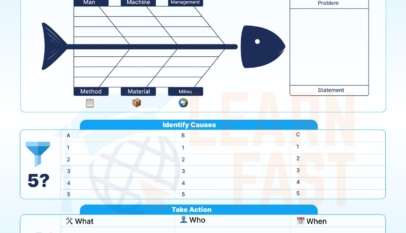


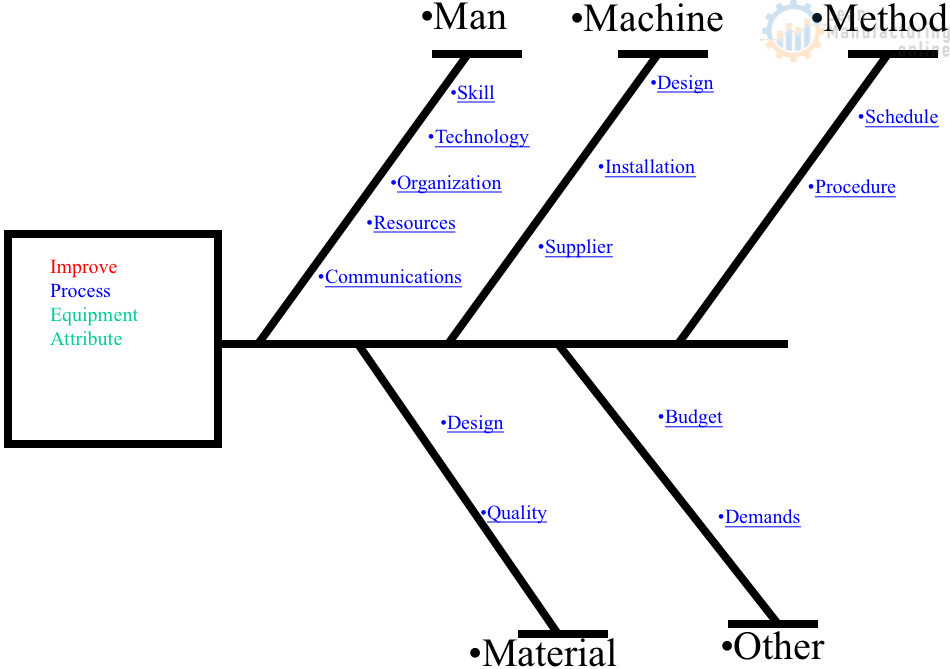
4M Analysis Process: Root Cause Guide for Manufacturing
Learn how to use 4M Analysis to find manufacturing root causes across People, Machine, Method, and Material with diagrams, examples, and checklist.
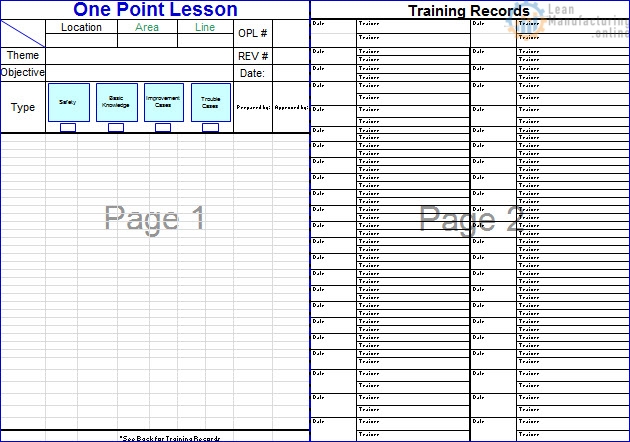


Right on point!