Why AQL Matters in Quality Control
In manufacturing and supply chain operations, ensuring quality without over-inspecting every product is a constant challenge. Acceptance Quality Level (AQL) offers a structured, standardized way to determine how many defects are permissible in a batch of products before it is rejected. By using AQL, organizations can balance inspection costs with customer satisfaction, while keeping risks under control.
What Is Acceptance Quality Level (AQL)?
Acceptance Quality Level is a method defined in ISO 2859-1 as “the quality level that is the worst tolerable.” It is used to set the maximum number of defective items allowed in a sample taken from a batch.
- If the number of defects is within the AQL limit, the batch is accepted.
- If defects exceed the AQL limit, the batch is rejected.
In simple terms, AQL is the acceptable quality limit. It provides a framework for deciding whether a lot meets quality standards based on representative sampling.
Stages of AQL Sampling
The AQL process follows a logical sequence:
- Sampling – A random set of items is taken from a larger batch.
- Inspection – Each item in the sample is carefully checked for defects.
- Counting Defects – The total number of defective items is noted.
- Comparison – The results are compared against the predetermined AQL limit.
- Decision – If the defects are within the limit, the batch passes. If not, it fails.
This structured flow ensures consistency and objectivity in inspection.
Inspection Levels Explained
Not every product or situation requires the same level of scrutiny. AQL provides different inspection levels:
- General Inspection Levels (I, II, III)
- Level I: Least stringent, used for lower-risk items.
- Level II: Standard, most commonly used.
- Level III: Most stringent, applied to critical products.
- Special Inspection Levels (S-1 to S-4)
- Used for smaller sample sizes when full inspection is not critical.
This flexibility allows companies to tailor their inspection rigor to the importance and risk of the product.
Types of Sampling Risks
Like any sampling process, AQL carries risks:
- Producer’s Risk (Alpha Risk): A good lot may be rejected.
- Consumer’s Risk (Beta Risk): A bad lot may be accepted.
Understanding these risks helps companies balance cost and risk tolerance in quality control decisions.
When to Use and Not Use AQL
Best suited for:
- Large production volumes
- Destructive testing
- Supplier quality control
- Managing cost while maintaining reasonable assurance
Not recommended for:
- High-risk or life-critical products
- Small production volumes
- High defect rates or specialized regulatory requirements
Choosing the right context is key to making AQL effective.
Categories of Defects
Defects are not all equal, so AQL classifies them into three categories:
- Critical Defects (Typical AQL = 0%)
Defects that can endanger safety or cause severe failure. Zero tolerance is applied. - Major Defects (Typical AQL = 2.5%)
Defects likely to reduce usability or lead to customer dissatisfaction. - Minor Defects (Typical AQL = 4.0%)
Small issues that don’t affect usability but may reduce product appearance or perception.
By separating defects into categories, AQL ensures proportionate responses to varying severity.
Sampling Methods
There are several methods to apply AQL in practice:
- Single Sampling: One sample size is inspected; decision is made from that.
- Double Sampling: If the first sample is inconclusive, a second sample is tested.
- Sequential Sampling: Each item is inspected in sequence until a decision is clear.
- Multiple Sampling: Combines elements of double sampling with more steps.
- Skip Lot Sampling: Only some batches are inspected at random intervals.
Each method offers a tradeoff between inspection effort and decision accuracy.
Using the AQL Table (ISO 2859)
The AQL table is the backbone of the process. It provides:
- Sample Size Code Letters – Linking lot size with inspection levels.
- Sample Sizes – How many units to check from a batch.
- Acceptance and Rejection Numbers – The threshold for passing or failing a batch.
For example, if the AQL is 2.5% and the table shows an acceptance number of 5 for your sample size, then a batch with 5 or fewer defects passes. Six or more defects mean rejection.
Making AQL Work for You
Acceptance Quality Level is not about achieving perfection but about creating a systematic, fair approach to quality control. By applying AQL correctly, organizations can reduce inspection costs, protect consumers, and maintain supplier accountability. The key lies in selecting the right inspection level, sampling method, and understanding the balance between risks and costs.
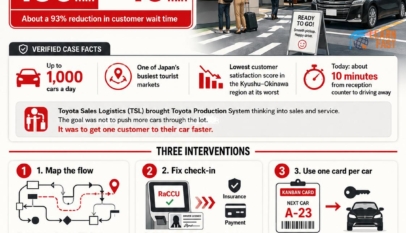
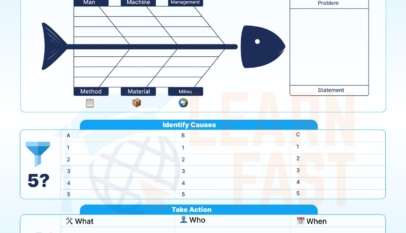

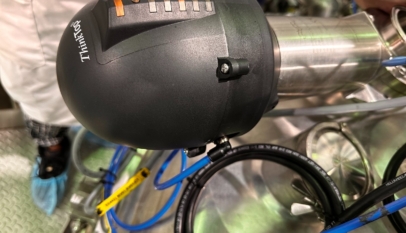
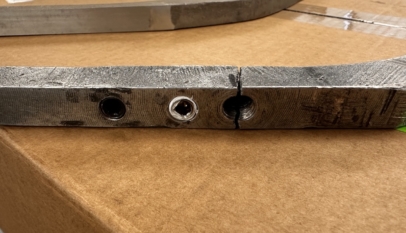




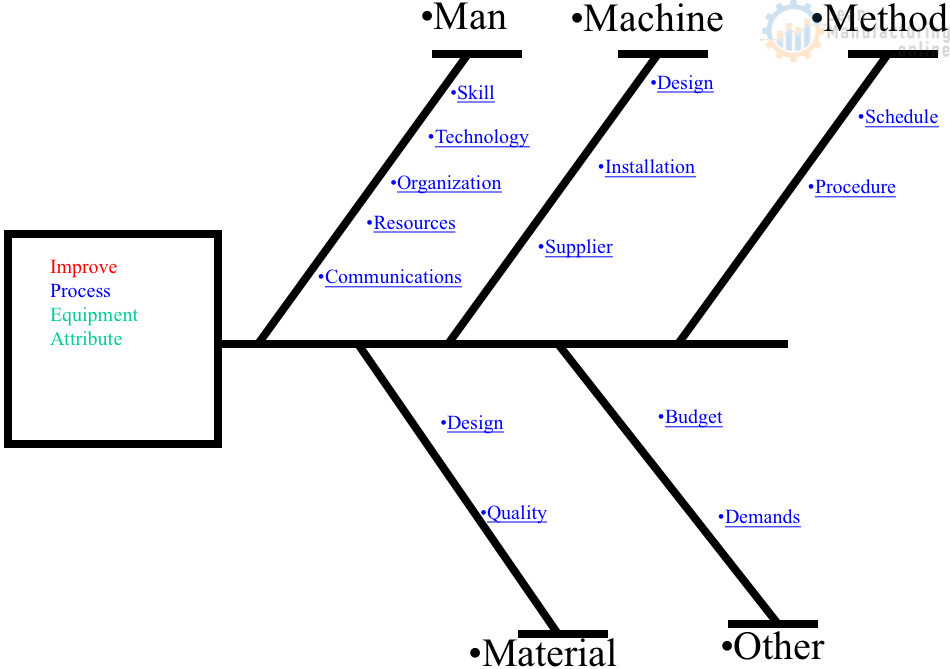
4M Analysis Process: Root Cause Guide for Manufacturing
Learn how to use 4M Analysis to find manufacturing root causes across People, Machine, Method, and Material with diagrams, examples, and checklist.