An Autonomous Maintenance review is a structured coaching session used to confirm that a team understands the AM step they have completed, can explain the purpose of the work, and is ready to move forward. It is not simply a pass-or-fail inspection.
The best AM reviews look at the condition of the equipment, the behavior of the team, the quality of standards, the status of abnormalities, and the support needed from maintenance, engineering, and leadership. The goal is to build capability while improving the equipment.
What is an Autonomous Maintenance review?
In TPM, Autonomous Maintenance develops operators who can clean, inspect, lubricate, tighten, detect abnormalities, and maintain basic equipment conditions. An AM review checks whether that development is actually happening on the shop floor.
The review is usually performed by a higher-level group in the small-group activity structure. That may include team leaders, supervisors, maintenance, engineering, the AM pillar, or senior managers, depending on the step and the maturity of the program.
| Review focus | What to confirm | Weak signal |
|---|---|---|
| Purpose | The team can explain why the AM step matters. | People describe only the checklist, not the goal. |
| Equipment condition | Basic conditions are restored and visible. | Dirt, leaks, looseness, or unsafe access remain. |
| Standards | Cleaning, inspection, and lubrication standards are practical. | Standards exist but are hard to use at the machine. |
| Abnormalities | Problems are tagged, prioritized, and followed up. | Old tags remain open with no owner. |
| Learning | The team understands what changed and why. | Only one person can answer the questions. |
Why AM reviews matter
Without reviews, AM can become a cleaning campaign. The team cleans the machine, takes pictures, and moves on, but the equipment condition does not stay improved. A review prevents that drift by checking whether standards, behaviors, and support systems are strong enough to sustain the gains.
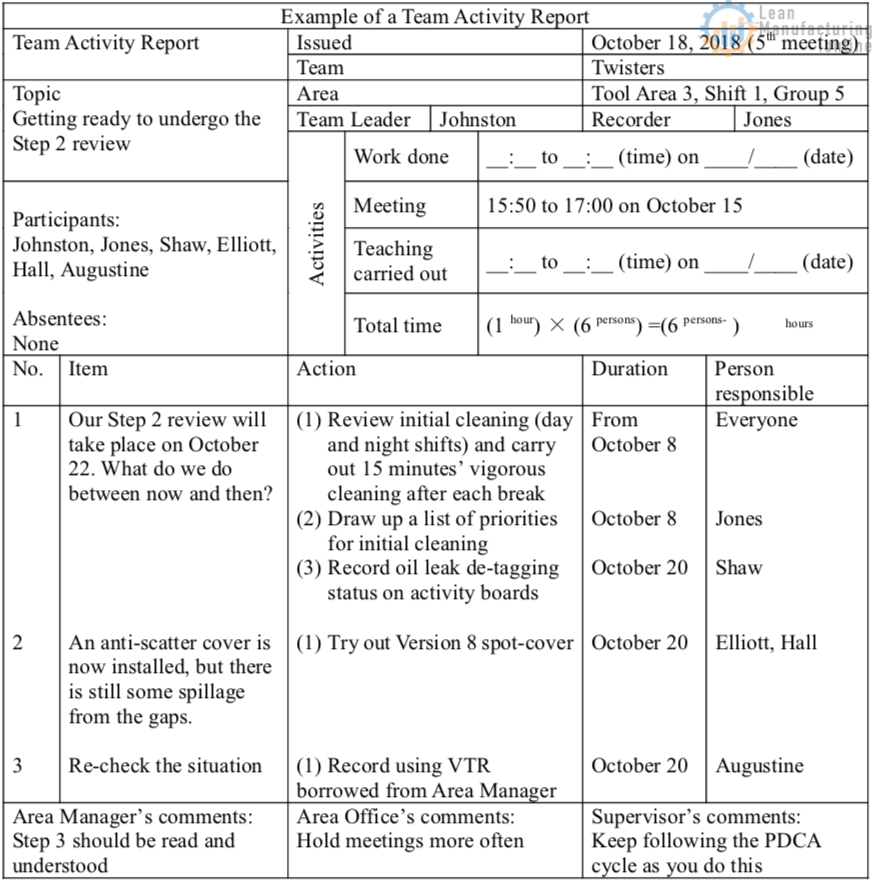
A good review also protects morale. When shortcomings are found, the conversation should focus on coaching and support. The review team and the shop-floor team should agree on remedial actions together, especially when the issue is outside the team’s control.
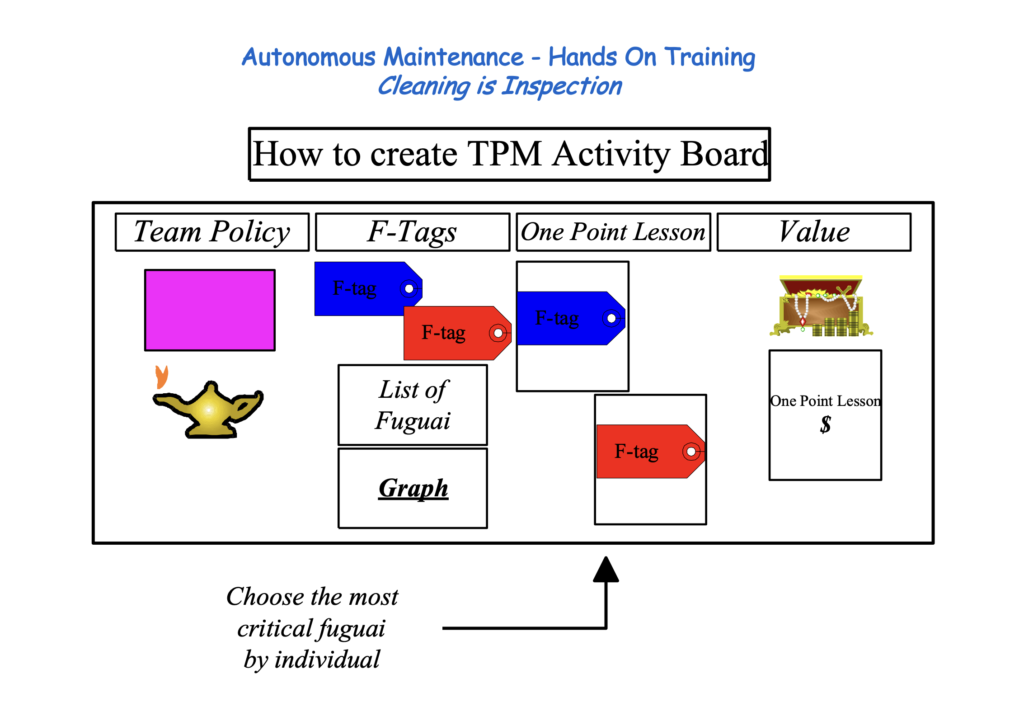
What should be on an AM review sheet?
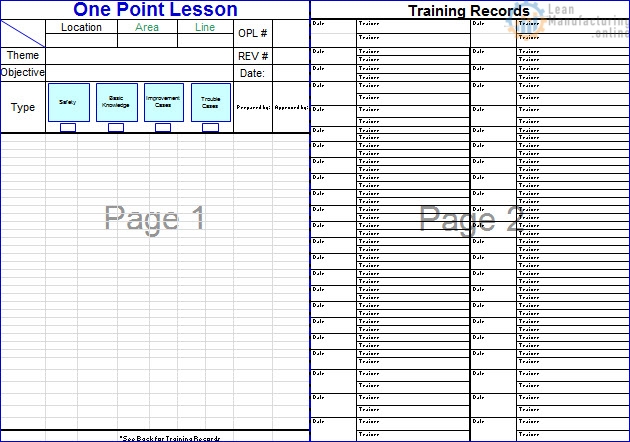
An AM review sheet should be simple enough to use at the machine but detailed enough to guide a meaningful conversation. It should not be a generic form copied from another area without adjustment.
| Review sheet section | Useful content |
|---|---|
| Team and equipment | Area, machine, team name, step, date, and reviewers. |
| Step purpose | Questions that test whether the team understands the objective. |
| Condition checks | Cleaning, inspection, lubrication, access, safety, and contamination sources. |
| Standards | Visual standards, OPLs, lubrication maps, inspection points, and ownership. |
| Abnormality management | Open F-tags, overdue actions, repeat issues, and escalation needs. |
| Decision | Pass, conditional pass, or repeat review with agreed countermeasures. |
How to conduct the review
The review should happen at the equipment whenever possible. Ask operators to show the review team the improvement points, the standards, the remaining abnormalities, and the next actions. The people doing the work should speak, not only the supervisor.
Use open questions: What abnormality was hardest to eliminate? What inspection point was added? Which source of contamination returned? Which tag needs support? What did the team learn about the equipment? These questions reveal whether the team has gained ownership.
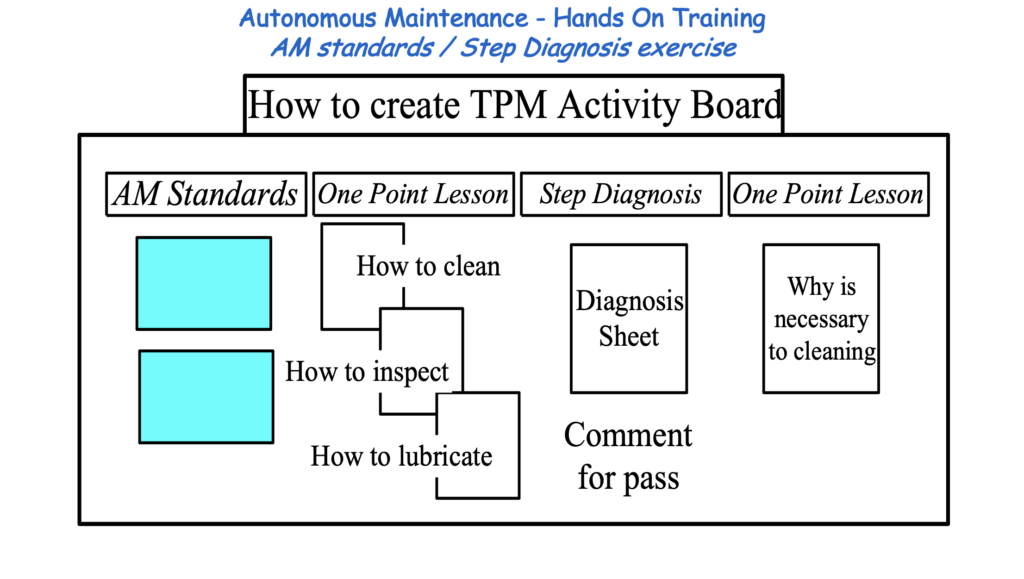
Pass, conditional pass, or follow-up?
A review should not be reduced to a sticker. Passing the review means the team has met the intent of the step and can sustain the standard. A conditional pass can be useful when minor actions remain but ownership and timing are clear. A repeat review is appropriate when the team does not yet understand the step or when equipment conditions are not stable.
| Decision | Use when | Next action |
|---|---|---|
| Pass | The step objective is met and standards are in use. | Recognize the team and move to the next step. |
| Conditional pass | Small gaps remain but are owned and scheduled. | Confirm closure by a due date. |
| Repeat review | Major gaps remain in condition, understanding, or safety. | Coach the team and review again after correction. |
| Escalate support | The team cannot remove the barrier alone. | Assign maintenance, engineering, or leadership action. |
Connect reviews to F-tags and standards
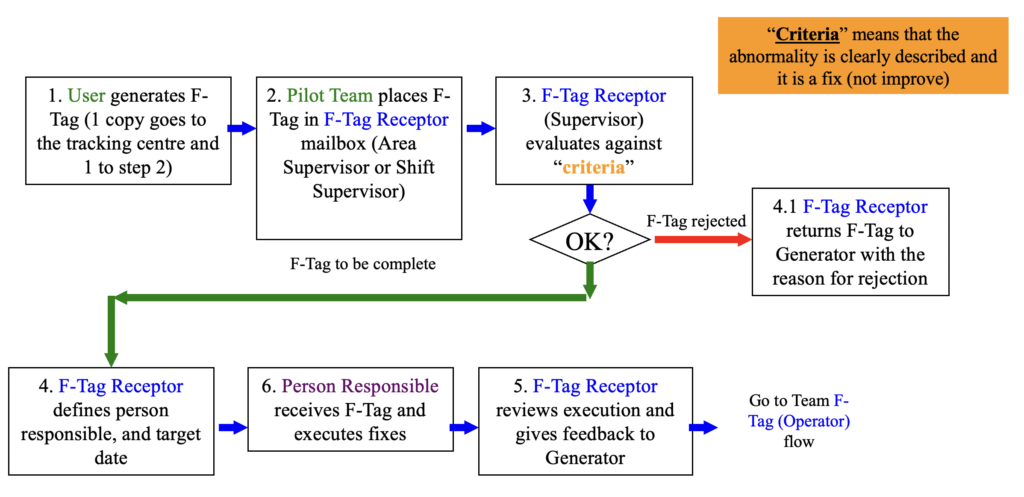
AM reviews should include the status of F-tags. Tags show whether the team can detect abnormalities and whether the organization can close them. If many old tags remain open, the issue may not be operator ownership. It may be a support-system problem.
The review should also check whether lessons were captured. One point lessons are useful when a small but important standard needs to be taught quickly, such as a lubrication point, inspection method, or abnormal condition.
Leader behavior during AM reviews
Leaders should avoid turning the review into an audit that only finds faults. The tone should be firm on standards but respectful toward the team. Ask questions, go to the equipment, compare the actual condition with the standard, and help remove obstacles.
When the review finds a gap, ask whether the problem is skill, standard, time, access, parts, maintenance support, or management follow-up. This keeps the conversation focused on the process rather than blame.
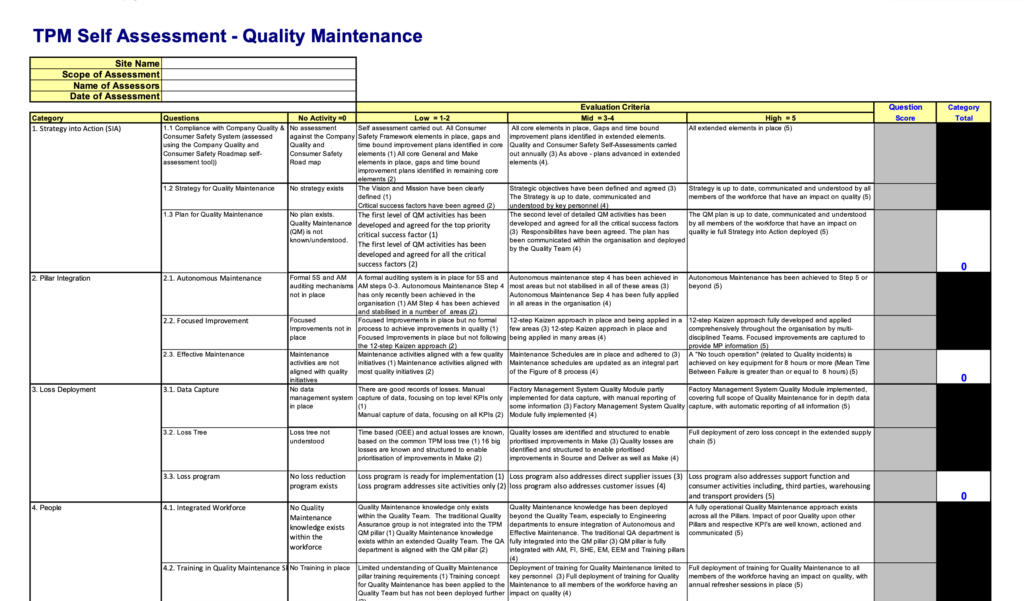
AM review checklist
Use a short checklist to keep the review consistent while leaving room for coaching. The checklist should evolve as the AM program matures.
| Question | Evidence to look for |
|---|---|
| Can the team explain the purpose of the AM step? | Clear answers from several team members. |
| Are basic conditions restored? | Clean, accessible, safe, and inspectable equipment. |
| Are standards visual and usable? | Inspection points, OPLs, tags, routes, or maps near the work. |
| Are abnormalities managed? | F-tag log with owner, priority, due date, and closure evidence. |
| Is support working? | Maintenance and leadership actions closed on time. |
| Can the gains be sustained? | Audit rhythm, coaching routine, and updated standards. |
Use AM reviews to expose barriers
An Autonomous Maintenance review is a learning checkpoint. It confirms that the team understands the step, that the equipment condition has improved, and that the support system is strong enough to sustain the new standard. When reviews are done well, they build ownership, expose barriers, and move the organization closer to zero breakdowns.

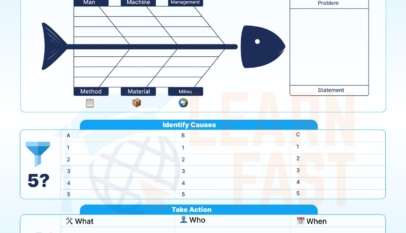



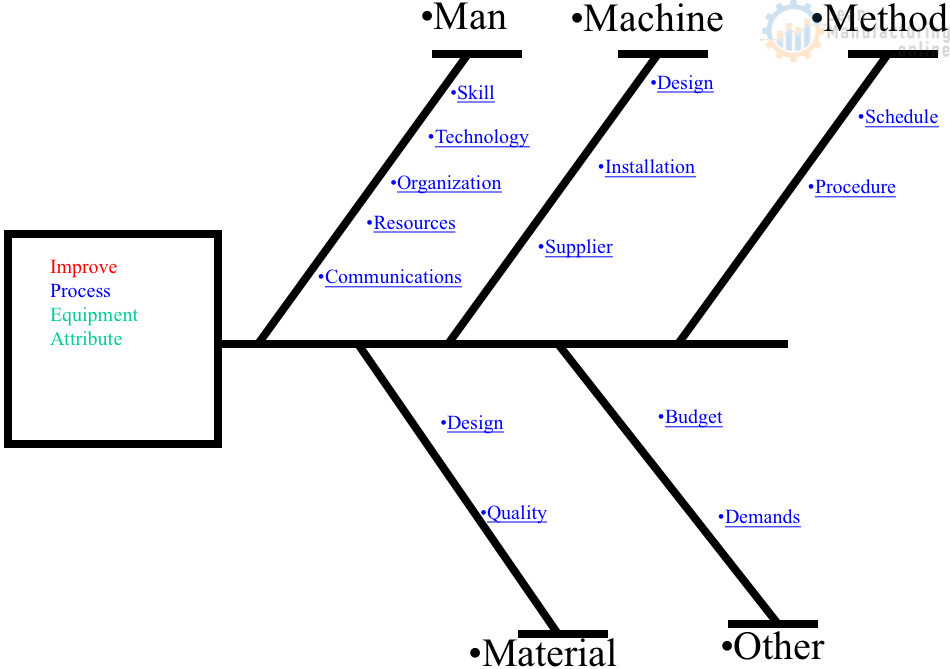
4M Analysis Process: Root Cause Guide for Manufacturing
Learn how to use 4M Analysis to find manufacturing root causes across People, Machine, Method, and Material with diagrams, examples, and checklist.