Lean Manufacturing

  • Lean Manufacturing
  • Home
  • Process Excellence
    • Lean Six Sigma
    • TPM
      • TPM Introduction
      • Change Management
      • Focused Improvement
      • Autonomous Maintenance
      • Education and Training
      • Quality
      • Safety, Health and Environment
      • Planned Maintenance
      • Early Equipment Management
    • TPS
    • Tools
      • Last Minute Travel Deals
      • 5 Why Analysis
      • Cap-Do
      • Kaizen
      • FMEA
      • One Point Lessons Directory
    • Templates
      • Machine Ledger
      • 5S Audit Checklist and Report
      • Cap-Do (PDCA)
      • One Point Lesson
      • FMEA template
      • M-P sheet (EEM) free template download
      • Why-Why Analysis
  • Free Courses
    • Lean Six Sigma White Belt Course
    • Lean Six Sigma Yellow Belt Course
    • Lean Six Sigma Green Belt Exam
    • Lean Six Sigma Black Belt Exam
    • TPM Instructor Course
    • Agile Retrospective: Continuous Improvement and Kaizen with Scrum
    • Autonomous Maintenance Facilitator
    • Planned Maintenance Facilitator
  • Submit a Post
  • Contact
Home Blog (page 57)

Blog

  • Autonomous Maintenance. Step 5: Autonomous Checking

    sensei July 5, 2021
    1 4,286
    Blog
    Autonomous Maintenance

    The aim of Step 5 is to sustain and further raise the levels of reliability, maintainability, and quality thus achieved. This entails reviewing the provisional standards for cleaning, checking, and lubricating developed so far, with the aim of working them up into a definitive set of efficient and comprehensive standards.

    Read More »
  • Autonomous Maintenance. Step 4: General Inspection

    sensei July 4, 2021
    0 15,851
    Blog
    General Inspection

    Step 4 (General Inspection) aims to give operators a thorough understanding of the functions and structure of their equipment and develop their ability to perform routine maintenance backed up by relevant logic and knowledge.

    Read More »
  • Autonomous Maintenance. Step 3: Provisional Autonomous Maintenance Standards

    sensei July 2, 2021
    0 4,498
    Blog
    Autonomous Maintenance. Step 3: Provisional Autonomous Maintenance Standards

    Aims Based on the experience gained from AM Steps 1 and 2, the purpose of Step 3 is to Sustain the level of cleanliness achieved on passing Step 1; andSustain the equipment improvements made in Step 2 to deal with contamination sources and hard-to-access areas To do this, provisional standards…

    Read More »
  • Autonomous Maintenance. Step 2: Tackling Contamination Sources and Hard-to-Access Areas

    sensei July 2, 2021
    0 7,906
    Blog
    Tackling Contamination Sources and Hard-to-Access Areas

    Aims In AM Step 2, ways are found to combat sources of dirt, leaks, and so on, and improve accessibility to areas that are hard to clean, lubricate, tighten, or inspect. This is a crucial process that nurtures the seeds of improvement, as operators find ways to improve the situation…

    Read More »
Previous page Next page

Most Popular

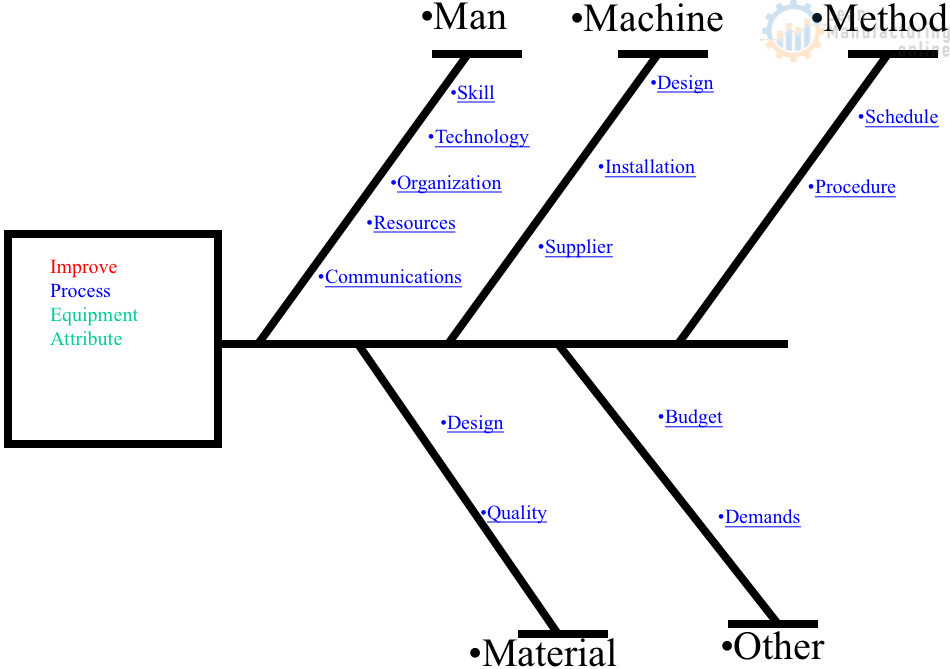
4M Analysis Process

sensei
August 29, 2018

The purpose of this procedure is to define the steps to do a 4M …

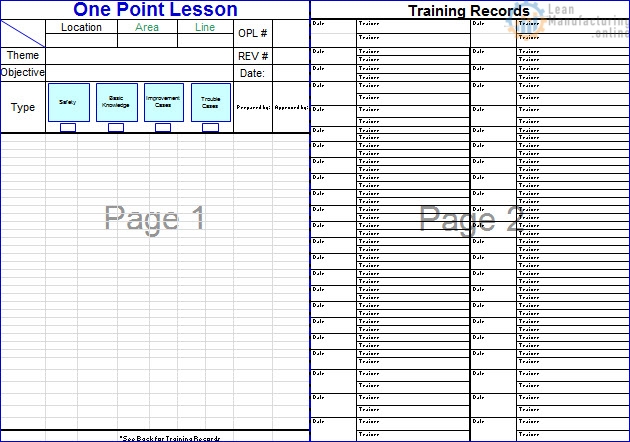
OPL – One Point Lesson Template – Free Download

sensei
November 5, 2018

PDCA – A Process Approach

sensei
January 8, 2023
5S - Sort, Set, Shine, Standardize, Sustain

5S Audit Checklist and Report

sensei
April 18, 2022

Why-Why Analysis

sensei
June 10, 2022

Recent

Free Online Certificate Courses Worth Your Time This Year

Industrial Internet of Things in Manufacturing: Uses, Architecture, and Benefits

Why Quality Starts With Constancy of Purpose

Six Sigma vs Lean Six Sigma: A Practical Guide

Blog Search

Lean Manufacturing is a methodology for producing goods that emphasizes minimizing waste and maximizing efficiency. It is a manufacturing philosophy that aims to produce goods with the least amount of resources, time and effort. Lean manufacturing aims to eliminate waste and improve the flow of materials and information throughout the production process. This approach is often used in manufacturing environments where efficiency and cost-effectiveness are critical, such as in the automotive and electronics industries.
Copyright © 2026 leanmanufacturing.online
  • Terms of Use
  • Privacy Policy
  • About Our Ads

Popular Posts

4M Analysis Process

sensei
August 29, 2018

The purpose of this procedure is to define the steps to do a 4M …

OPL – One Point Lesson Template – Free Download

sensei
November 5, 2018

PDCA – A Process Approach

sensei
January 8, 2023
5S - Sort, Set, Shine, Standardize, Sustain

5S Audit Checklist and Report

sensei
April 18, 2022

Most Popular Tools

Toyota Production system. Jidoka and Just-in-Time are two pillars of TPS.

How to Drive Lasting Change with Kaizen Mindsets

Innovation vs. Kaizen Explained

How Kaizen and PMP Work Together

Root Cause Analysis Stacking: A Game-Changer for Problem Solving