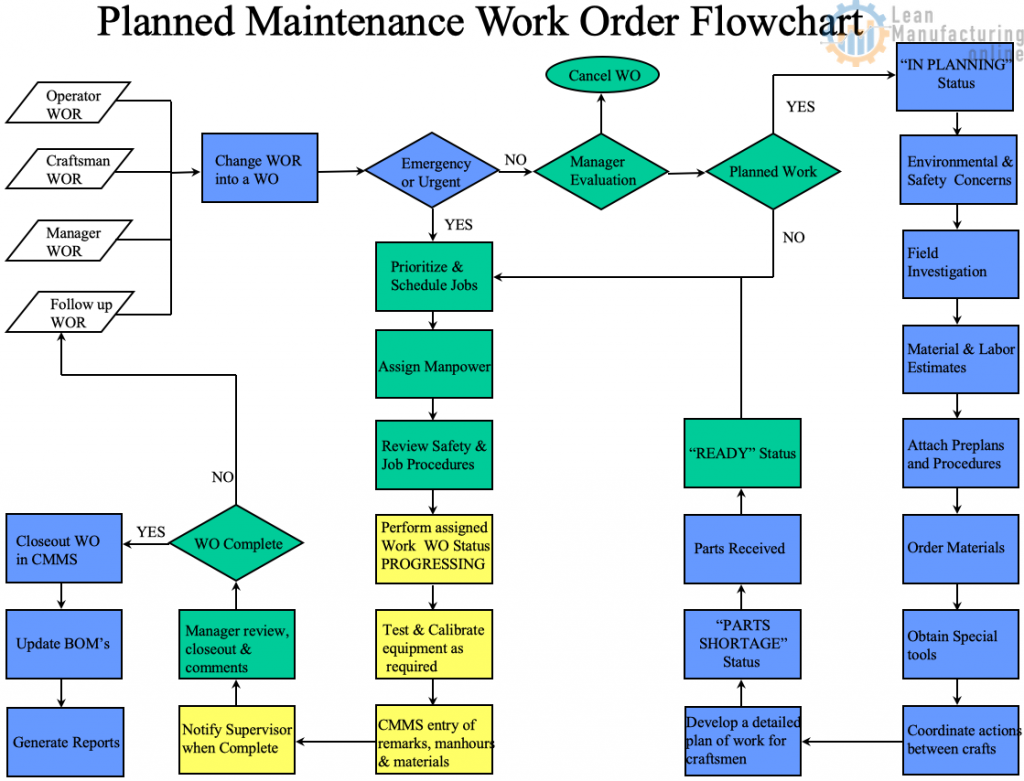
A maintenance work order is more than a job ticket. In a planned maintenance system, it is the control point that connects the problem, the equipment, the safety requirements, the parts, the labor, the inspection standard, and the history record. If the work order is vague, the work will vary. If the work order is clear, the team can execute consistently and learn from the result.
This guide focuses on mechanical monthly preventive maintenance routines, but the same logic applies to many planned maintenance tasks. The objective is simple: create, issue, execute, and close work orders in a way that improves equipment reliability instead of only recording activity.
What should a mechanical PM work order include?
A good mechanical PM work order tells the technician what equipment to work on, what condition to verify, what standard to use, what tools or parts may be needed, what safety controls apply, and how to report abnormal findings. It should be specific enough to guide the work but not so overloaded that the technician stops reading it.
| Work order field | Why it matters | Example |
|---|---|---|
| Asset and location | Prevents work on the wrong equipment. | Line 2 case packer, infeed conveyor, drive side. |
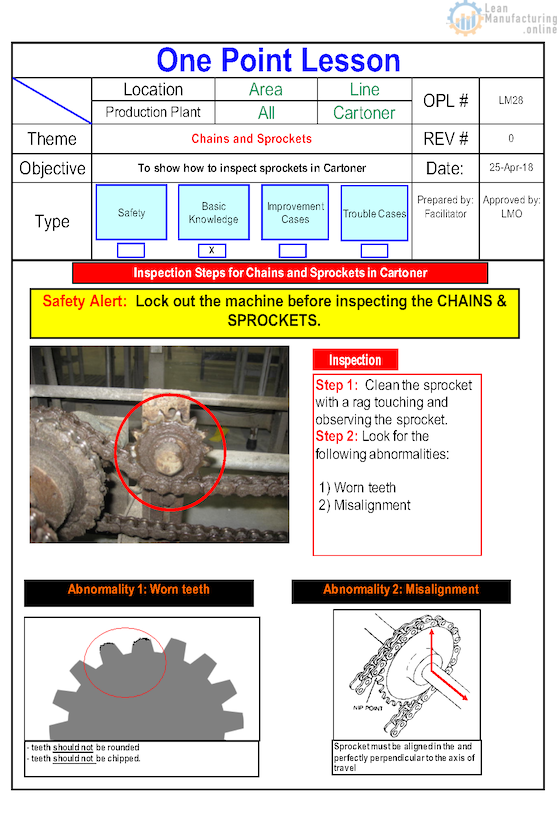
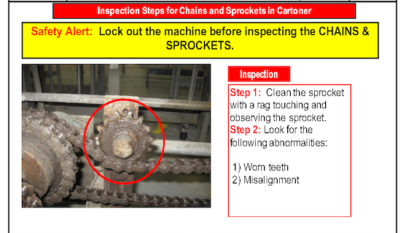
| Task scope | Defines what must be inspected, cleaned, adjusted, or replaced. | Inspect chain tension, sprocket wear, guards, and lubrication points. |
| Standard condition | Shows what acceptable looks like. | No cracked teeth, no abnormal noise, no visible looseness, correct lubrication. |
| Safety notes | Reminds the team to follow local safety procedures before work. | Follow site lockout/tagout and energy-control requirements before intervention. |
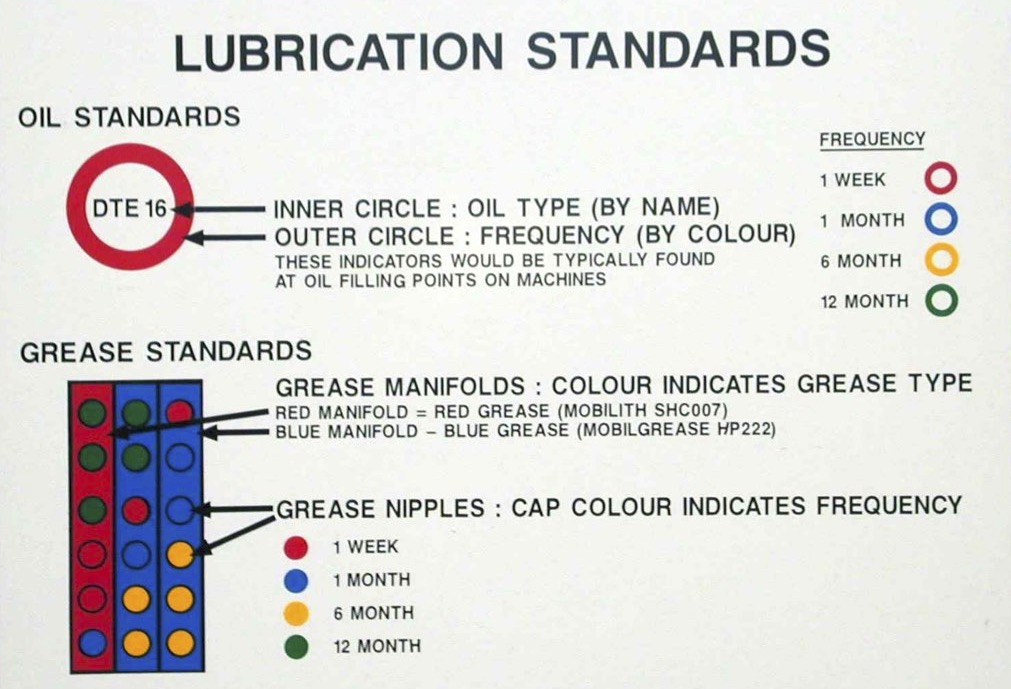
| Parts and tools | Reduces delays and repeat trips. | Grease type, tension gauge, chain links, fasteners, cleaning tools. |
| Completion notes | Creates useful equipment history. | Condition found, action taken, parts used, follow-up required. |
Step 1: Identify the work request or PM trigger
The trigger may come from a calendar-based monthly PM, a meter-based interval, an inspection finding, an operator F-tag, a breakdown analysis, or a reliability improvement plan. The work order should state the reason for the work so the technician understands the purpose.
For example, “monthly mechanical PM” is weaker than “monthly mechanical PM to check drive-train condition, lubrication points, fasteners, guards, and early signs of forced deterioration.” The second version tells the technician what the routine is trying to prevent.
Step 2: Define the scope clearly
Vague work orders create variation. One mechanic may perform a detailed inspection, while another may only do a quick visual check. A strong work order defines the inspection points, expected condition, and response when an abnormality is found.
This connects directly with systematic maintenance and planned maintenance. The goal is to convert maintenance knowledge into a repeatable routine that can be scheduled, executed, verified, and improved.
Step 3: Plan the work before issuing it
Planning means deciding what needs to be done before the technician arrives at the equipment. Check the asset history, previous failures, spare parts, access needs, tools, permit or safety requirements, and production window. A poorly planned PM often becomes a partial job, a delayed job, or a checklist exercise.
For higher-risk tasks, the work order should point the technician to the local approved procedure rather than trying to replace it. Safety-critical details such as lockout/tagout, confined space, energized work, hot work, or elevated work must follow site rules, training, and legal requirements.
| Planning check | Question to ask |
|---|---|
| History | What failures, defects, or repeat abnormalities happened on this asset? |
| Parts | Are likely replacement parts available before the job starts? |
| Tools | Are special tools, gauges, lifting aids, or cleaning tools required? |
| Access | Can the work be done safely within the planned production window? |
| Standard | Does the technician know the acceptable condition and measurement method? |
| Follow-up | What should happen if deterioration or an abnormality is found? |
Step 4: Issue and execute the work order
When the work order is issued, the technician should receive the task scope, equipment information, safety references, standard checks, and parts requirements. During execution, the technician should record actual findings, not only mark the task complete.
Useful completion notes include the condition found, measurements taken, parts replaced, lubrication applied, abnormal sounds or vibration, visible wear, and any follow-up work required. If the work order uncovers a defect that cannot be corrected immediately, create a follow-up work order or tag the abnormality.
Step 5: Record condition, not only completion
A PM program improves when the work order history contains meaningful information. “Done” is not enough. The history should show whether the equipment was normal, deteriorating, corrected, or requiring follow-up. This is how the team adjusts intervals, improves task content, and learns which assets need more attention.
Use the language of forced vs natural deterioration to separate problems caused by avoidable conditions from normal wear. This makes the PM history more useful for reliability improvement.
Step 6: Close the loop after completion
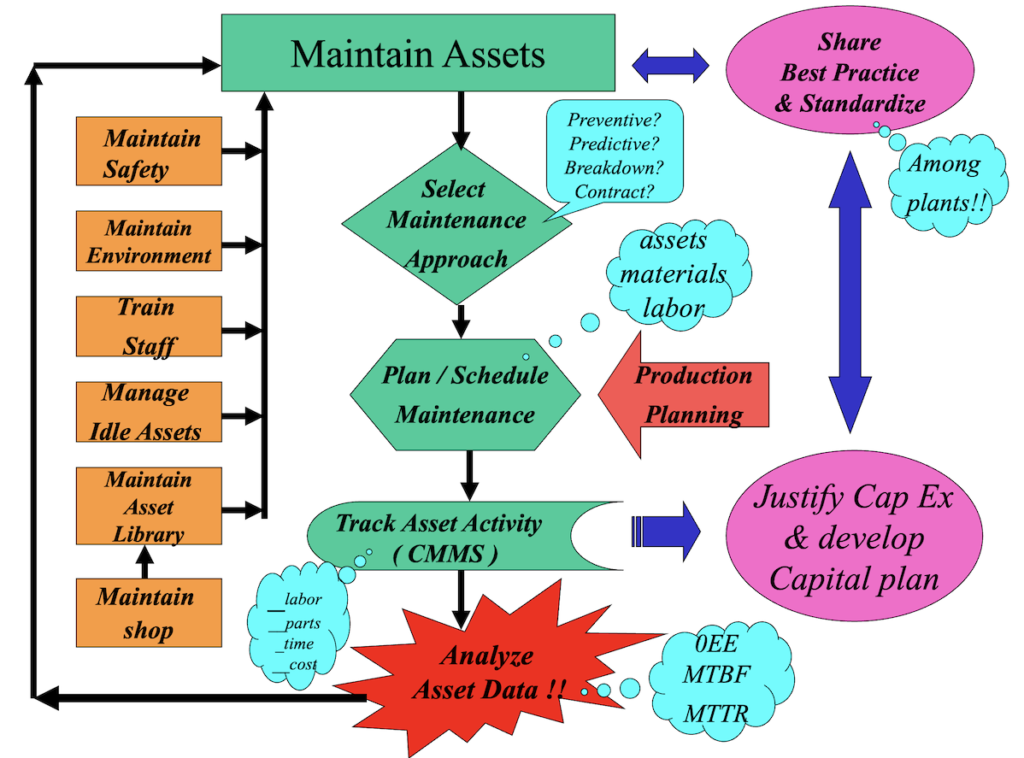
Closure is more than changing status in the CMMS. The supervisor, planner, or reliability owner should review whether the task was completed as planned, whether follow-up is required, whether parts were consumed, and whether the PM task should be improved.
If repeated abnormalities are found, connect the work order to equipment breakdown causes, sporadic and chronic breakdown thinking, or an M-P sheet for equipment-management improvement.
| Closure question | Why it matters |
|---|---|
| Was the PM completed as planned? | Confirms schedule compliance and execution discipline. |
| Were abnormalities found? | Turns inspection into prevention. |
| Were parts used? | Improves spare-parts planning and cost visibility. |
| Is follow-up work needed? | Prevents defects from being discovered and then forgotten. |
| Should the PM task change? | Keeps the PM program learning from real equipment condition. |
Connect PM work orders with operators
Good maintenance systems connect operator checks with mechanic routines. Operators often detect small abnormalities first: leaks, noise, looseness, missing guards, poor cleaning condition, or product buildup. F-tags and Autonomous Maintenance reviews can feed better information into planned work orders.
Common work order mistakes
- Using vague task descriptions such as “check machine.”
- Issuing work without parts, tools, or production window confirmed.
- Recording only completion instead of condition found.
- Closing abnormalities without follow-up ownership.
- Using PM routines that never change despite repeated failures.
- Allowing the CMMS to become paperwork instead of a reliability-learning system.
Record condition, not just completion
A mechanical PM work order should protect equipment condition, guide safe execution, and create useful history. When the scope is clear, the standard is visible, the work is planned, and follow-up is reviewed, work orders become more than maintenance administration. They become a practical engine for reliability improvement.
Track the results with practical manufacturing KPIs such as PM completion, schedule compliance, follow-up backlog, MTBF, breakdown frequency, and repeat defects.



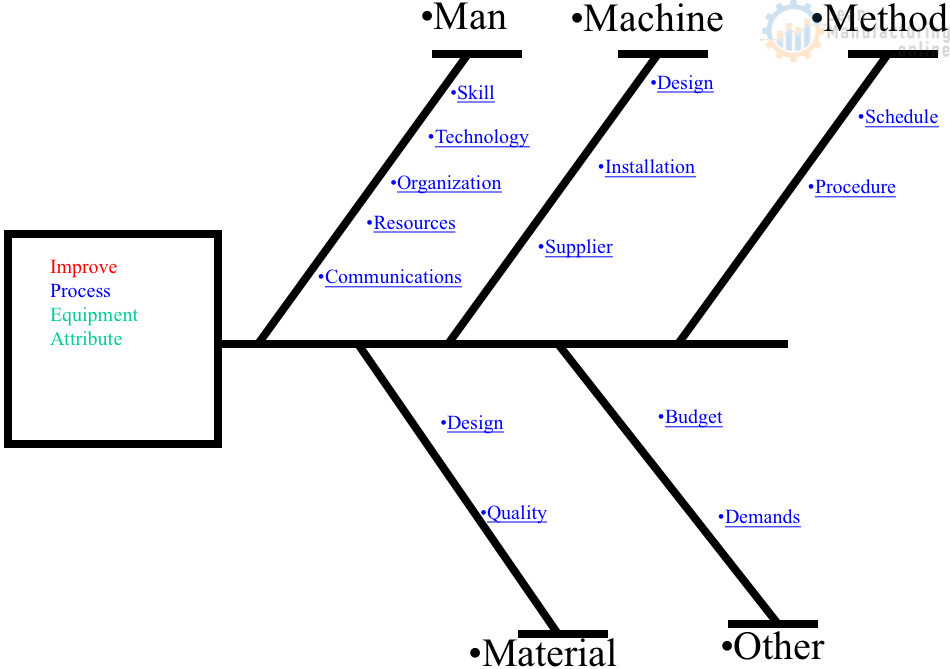
4M Analysis Process: Root Cause Guide for Manufacturing
Learn how to use 4M Analysis to find manufacturing root causes across People, Machine, Method, and Material with diagrams, examples, and checklist.