When problems occur in business operations—whether in manufacturing, service, or quality processes—the ability to solve them effectively determines success. Multiple structured problem-solving approaches exist, each with unique strengths. Today, we’ll explore five popular frameworks: PDCA, DMAIC, 8D, A3, and QRQC. Understanding these will help you choose the right tool for your situation.
1. The Foundation: PDCA (Plan-Do-Check-Act)
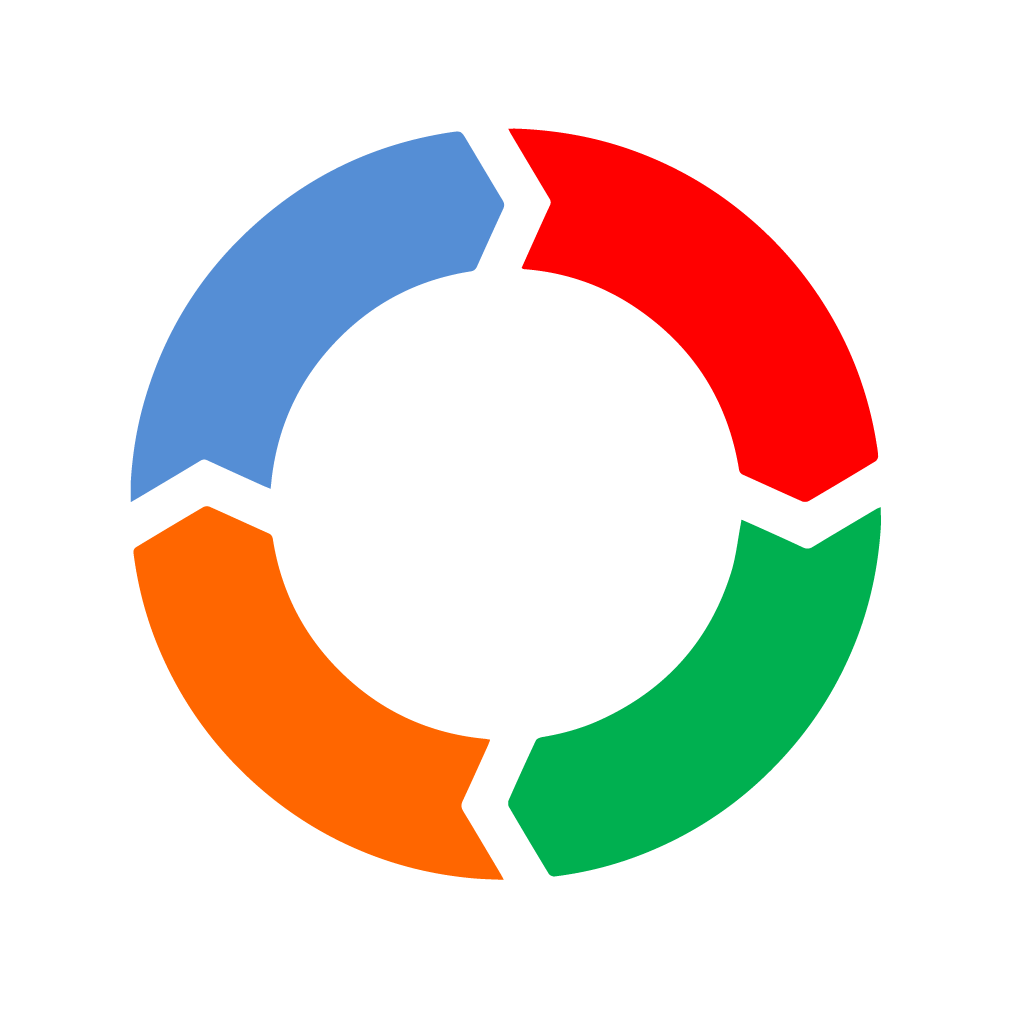
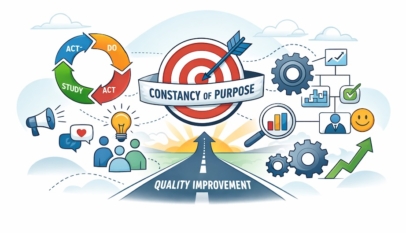
The PDCA cycle is one of the earliest and most widely applied methods for continuous improvement. It follows a simple logic:
- Plan: Identify the problem, analyze root causes, and define actions.
- Do: Implement solutions on a small scale.
- Check: Measure the effectiveness of the actions taken.
- Act: Standardize improvements or adjust if necessary.
PDCA is best for incremental improvements and iterative cycles, making it a cornerstone of Lean philosophy.
2. DMAIC: The Six Sigma Approach
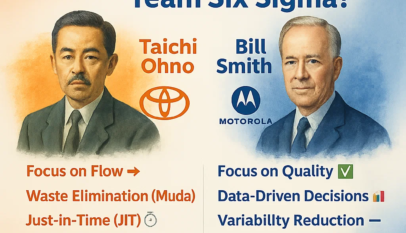
DMAIC stands for Define, Measure, Analyze, Improve, Control, and is central to Six Sigma. Unlike PDCA, which emphasizes experimentation, DMAIC is highly data-driven:
- Define: Scope the problem and align with business goals.
- Measure: Collect data to understand current performance.
- Analyze: Identify root causes with statistical tools.
- Improve: Implement and optimize solutions.
- Control: Sustain improvements through monitoring and standardization.
DMAIC is ideal for complex, data-heavy problems where precision matters.
3. 8D: The Team-Oriented Problem Solver
Originally developed by Ford, the 8 Disciplines (8D) method focuses on team-based problem solving:
- Start by forming the right team and defining the problem.
- Protect the customer with immediate corrective actions.
- Dig deep into root causes, then implement permanent fixes.
- Verify results and take preventive measures to avoid recurrence.
8D stands out for its customer-focused urgency and structured documentation, making it common in automotive and aerospace industries.
4. A3 Thinking: Lean’s Visual Storytelling
The A3 method, named after the size of the paper (A3 sheet), simplifies problem-solving by capturing the entire process on a single page. It emphasizes:
- Problem description
- Objective setting
- Root cause analysis
- Corrective actions
- Verification and standardization
A3 is perfect for Lean environments, encouraging visual communication and clarity.
5. QRQC: Quick Response Quality Control
Speed matters when quality issues impact production. QRQC is about immediate reaction and rapid containment:
- Identify the problem on the spot.
- Form a response team.
- Address customer impact quickly.
- Determine causes and implement fixes immediately.
- Standardize learnings to prevent recurrence.
QRQC thrives in high-speed manufacturing environments where downtime is costly.
Key Tools Supporting These Methods
Regardless of which methodology you choose, tools make the difference:
✔ Kick-off meetings to align teams
✔ SMART objectives for clarity
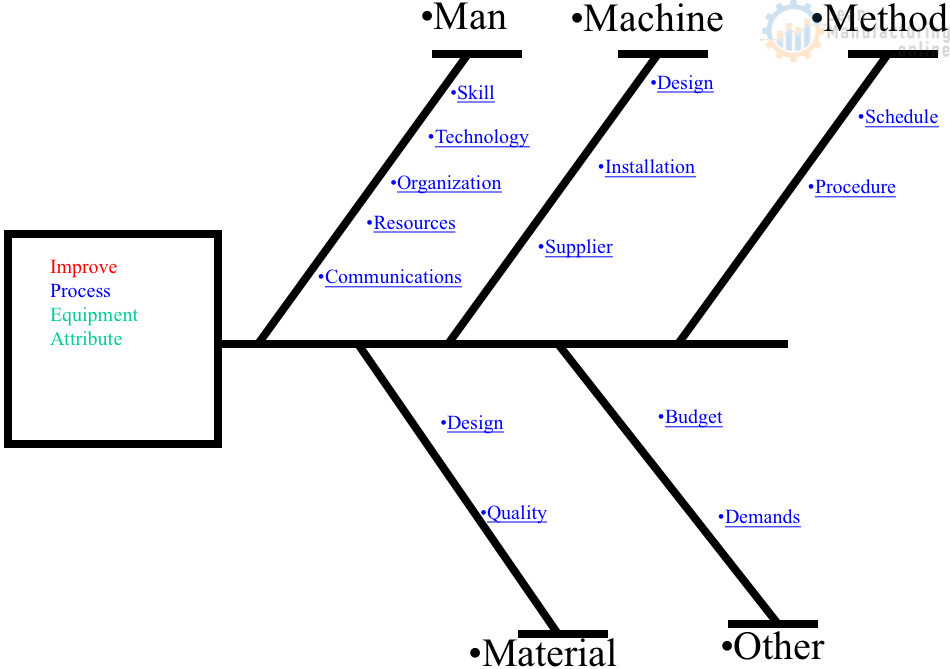
✔ 5 Whys and Ishikawa diagrams for root cause analysis
✔ Pareto charts for prioritization
✔ Impact/Feasibility matrices for solution evaluation
✔ Standard work and training for sustainability
When to Use Each Method
- PDCA: Continuous improvement cycles, small-scale tests.
- DMAIC: Data-intensive projects and process optimization.
- 8D: Critical problems requiring structured team involvement.
- A3: Lean operations and visual communication.
- QRQC: Immediate, shop-floor-level quality responses.
The right choice depends on your problem complexity, speed requirements, and data availability.
Every methodology serves a purpose. Knowing when and how to use each one empowers your team to act decisively and effectively, ensuring both short-term fixes and long-term improvements.
✅ Want downloadable templates, process maps, and high-resolution charts? Join our WhatsApp channel here:
https://zbk.li/learnfast



4M Analysis Process
The purpose of this procedure is to define the steps to do a 4M …


Excelente tus comentarios sobre el uso de estas Metodología.
saludos
Good
Looks like there is a copy&paste error in the table. The description for PDCA and 8D are identical but won’t match the PDCA approach.
Otherwise, thanks a lot!
Thanks for the comment. The issue has been corrected