Lockout Tagout, often shortened to LOTO, is a safety system used to help protect people from hazardous energy during maintenance, cleaning, repair, setup, troubleshooting, and other non-routine work. The purpose is to prevent unexpected startup, unexpected movement, or the release of stored energy while work is being performed.
Important: this page is a high-level manufacturing safety overview. It is not a lockout procedure. LOTO must be performed only by trained and authorized people following the site-specific procedure, local legal requirements, equipment-specific instructions, and approved Health & Safety rules.
LOTO connects strongly with Safety F-Tags, Safety One Point Lessons, and daily management because all three systems make risk visible before harm occurs.
What does Lockout Tagout mean?
Lockout Tagout means controlling hazardous energy so equipment cannot be started, moved, energized, or released unexpectedly while people are working on it. A lockout device helps physically control an energy-isolating point. A tagout device communicates that the equipment or energy-isolating point must not be operated.
In practice, the exact method depends on the machine, energy sources, local regulations, and company procedure. That is why equipment-specific LOTO procedures are essential.
Why LOTO matters in manufacturing
Manufacturing equipment can contain multiple energy sources. Some are obvious, such as electrical power. Others are less visible, such as stored pressure, gravity, springs, thermal energy, hydraulic pressure, pneumatic pressure, chemical energy, rotating parts, or raised machine components.
The risk is not only the normal power source. The risk is any energy that can injure a person if it is released unexpectedly.
Common hazardous energy types
| Energy type | Manufacturing example | Why it matters |
|---|---|---|
| Electrical | Motors, panels, disconnects, drives, heaters. | Can create shock, arc flash, unexpected motion, or restart. |
| Mechanical | Rotating shafts, belts, chains, gears, moving parts. | Can move, pinch, crush, cut, or pull in. |
| Pneumatic | Compressed air lines, cylinders, actuators. | Stored pressure can move parts suddenly. |
| Hydraulic | Hydraulic lifts, presses, clamps, cylinders. | Pressure or gravity can create severe movement. |
| Thermal | Hot surfaces, ovens, heaters, steam, chilled systems. | Can burn, freeze, or release stored heat. |
| Gravity / stored energy | Raised loads, springs, counterweights, flywheels. | Energy can release after the main power is off. |
LOTO is not just a lock
A lock is only one visible part of the system. A strong LOTO program also includes equipment-specific procedures, authorization rules, training, communication, verification, supervision, periodic review, and a clear response when procedures are missing or unclear.

Authorized and affected people
LOTO systems usually separate people by role. An authorized person is trained and permitted by the organization to apply LOTO according to the procedure. An affected person may operate or work near the equipment and must understand that locked or tagged equipment must not be used. Other people in the area must also respect the lockout condition.
The wording may vary by country or company. The important point is that only authorized and trained people should perform LOTO work.
Equipment-specific procedures
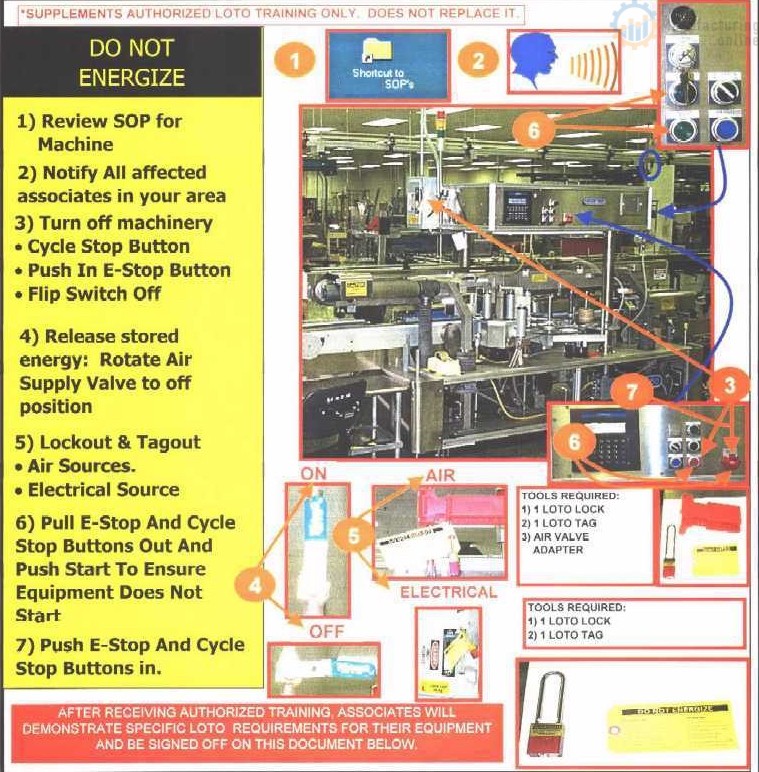
Generic awareness is not enough for real work. Each machine or process may have different energy sources, isolation points, stored-energy risks, verification requirements, and restart rules. Equipment-specific procedures help remove guesswork.
When a procedure is missing, unclear, or different from the actual equipment, the work should be escalated to the correct supervisor, maintenance, engineering, or Health & Safety owner before proceeding.
Decision charts and LOTO awareness
Decision charts can help teams recognize when formal LOTO review is required. They are useful during cleaning, inspection, unjamming, troubleshooting, maintenance, changeover, and non-routine work where the risk may not be obvious.
A decision chart should point workers toward the approved site process. It should not encourage shortcuts or replace qualified review.

Locked and tagged disconnects
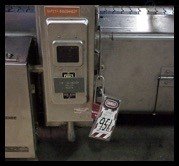
Electrical disconnects and other energy-isolating devices must be handled according to the approved procedure. A locked and tagged disconnect visually tells the team that the equipment is controlled and must not be operated.
The tag should communicate who owns the lockout condition and why the equipment must remain out of service.
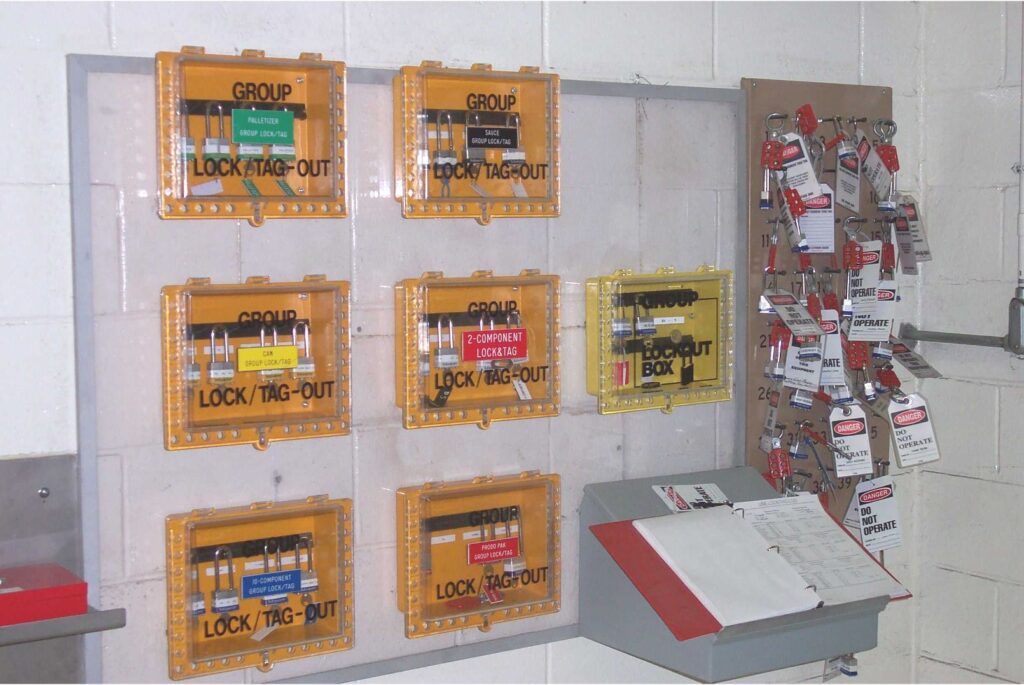
Group lockout situations
Group lockout is used when more than one person or trade is involved in the work. These situations require strong coordination because responsibility, communication, and release rules become more complex.
A group lockout board or lock box can support the process, but the site procedure must define how it is used, who controls it, and how each worker remains protected.
LOTO, F-tags, and Safety OPLs
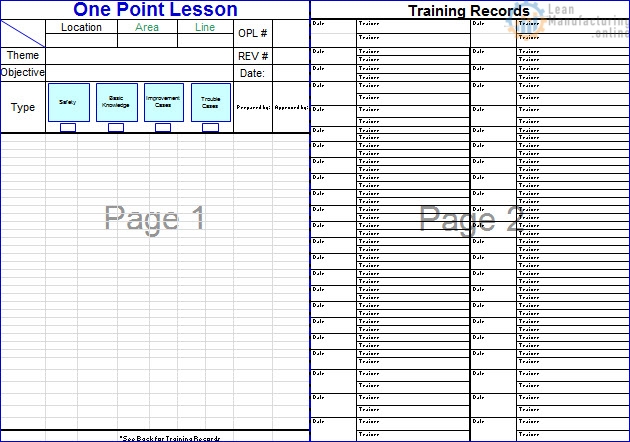
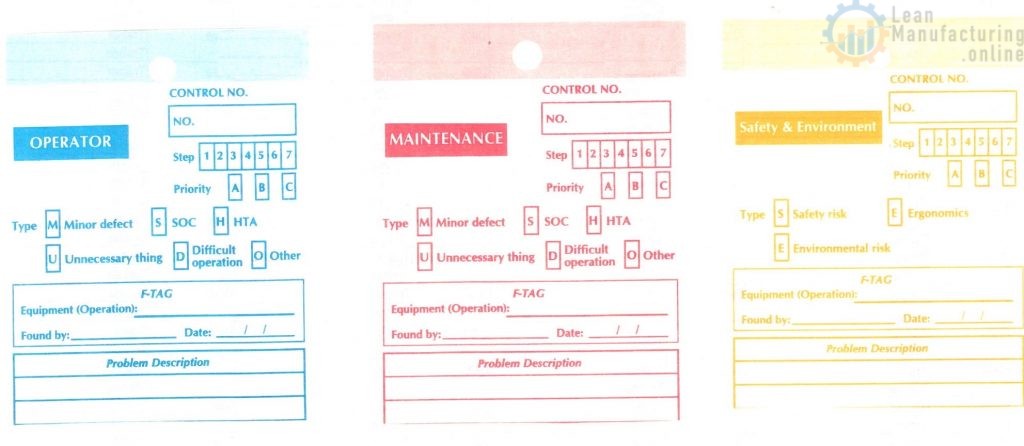
LOTO, F-tags, and One Point Lessons are different tools. LOTO controls hazardous energy. F-tags make abnormalities visible and track corrective actions. A One Point Lesson can communicate one small safety learning point.
They should support each other, but they should not be confused. A Safety F-tag is not a lockout. A visual OPL is not an authorization to perform LOTO. A lockout procedure is not optional training material.
When to escalate
Escalate when the energy source is unclear, the equipment does not match the procedure, a lockout point is missing or damaged, stored energy may remain, the task changes, more people join the work, or the person doing the work is not authorized for the procedure.
Escalation is not a delay. It is part of controlling risk.

LOTO review checklist for leaders
- Are equipment-specific LOTO procedures available and current?
- Are authorized people trained and clearly identified?
- Are affected people told when equipment is locked out?
- Are all relevant energy sources considered, including stored energy?
- Is verification defined in the approved procedure?
- Are locks, tags, hasps, boards, and lock boxes controlled and available?
- Are exceptions, missing procedures, or unclear conditions escalated?
- Are periodic reviews completed and documented?
Common LOTO system weaknesses
- Assuming one disconnect controls all energy sources
- Using generic instructions instead of equipment-specific procedures
- Ignoring stored or residual energy
- Allowing untrained people to perform lockout
- Removing locks or tags without following the site procedure
- Not communicating with affected workers
- Restarting equipment without proper release and verification
- Failing to update procedures after equipment changes
How LOTO supports Lean and TPM
LOTO supports Autonomous Maintenance, Planned Maintenance, Gemba Walks, and visual safety management. When teams improve equipment reliability, clean equipment, inspect abnormalities, and remove defects, they must also control the safety risks created by that work.
If a LOTO issue repeats, use structured problem solving such as Why-Why Analysis or 4M Analysis to understand why the system failed.
Treat LOTO as a safety system
Lockout Tagout is a critical hazardous energy control system. The visible lock and tag are important, but the real protection comes from trained people, equipment-specific procedures, correct isolation, communication, verification, and disciplined release. Treat LOTO as a formal safety system, not a paperwork exercise.





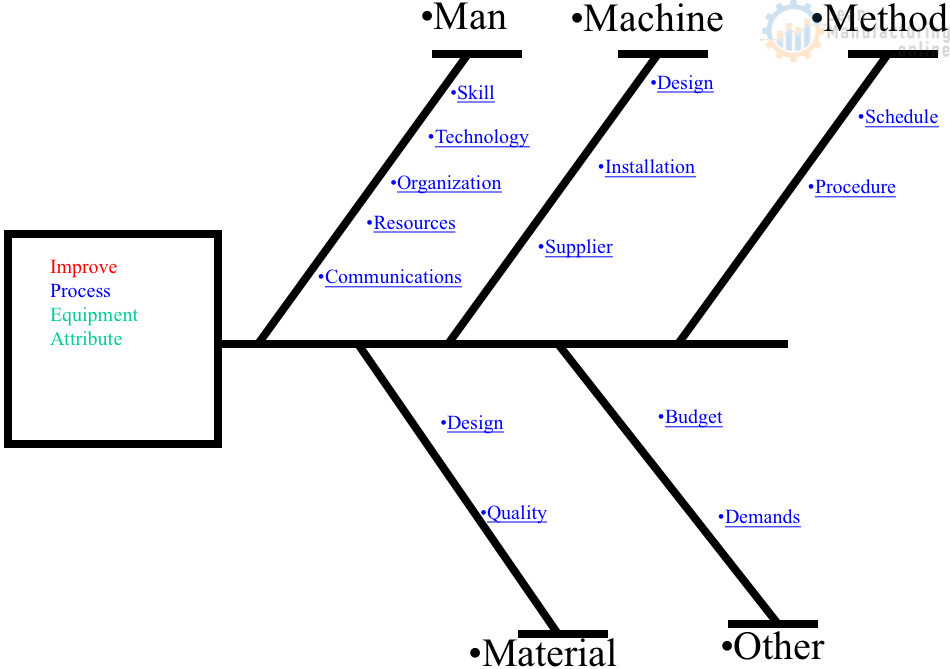
4M Analysis Process: Root Cause Guide for Manufacturing
Learn how to use 4M Analysis to find manufacturing root causes across People, Machine, Method, and Material with diagrams, examples, and checklist.