
A manufacturing skill matrix is a visual tool that shows which people can perform which tasks, at what level, and where training gaps exist. It is one of the simplest ways to connect people development with daily management, staffing coverage, cross-training, and operational stability.
The matrix should not be a decorative spreadsheet. It should help leaders answer practical questions: Who can run this machine? Who can train others? Where is the biggest coverage risk? Which skill gap should we close next? Which training plan supports safety, quality, delivery, and cost?
Skill matrices work especially well with Autonomous Maintenance, Planned Maintenance, One Point Lessons, and daily Gemba routines.

What is a manufacturing skill matrix?
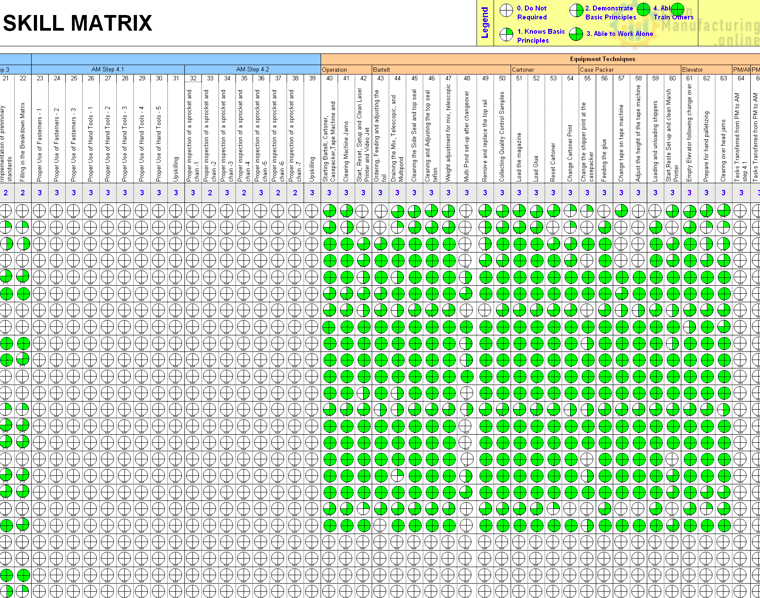
A manufacturing skill matrix is a table that compares required skills against current employee capability. Rows usually represent people, roles, workstations, or machines. Columns represent skills, tasks, standards, equipment, or certifications. The cells show the current level of competence.
The best matrices are simple, visible, and action-oriented. They show today’s reality and point directly to the next training action.
What should the matrix include?
| Element | Purpose | Example |
|---|---|---|
| Skill or task | Defines what must be learned. | Operate filler, complete changeover, inspect belt, perform basic cleaning. |
| Required level | Shows the target for the role. | Operator level 3, trainer level 4, maintenance support level 2. |
| Actual level | Shows current demonstrated ability. | Can perform with support, can work alone, can train others. |
| Owner | Clarifies who verifies the skill. | Team leader, trainer, supervisor, mechanic, quality lead. |
| Training action | Turns the gap into a plan. | OPL review, hands-on practice, shadowing, qualification check. |
Step 1: Describe the skill matrix
Start by defining the scope. Decide whether the matrix is for a line, department, machine group, maintenance team, quality team, or full site. Do not mix too many levels into one view. A useful matrix is specific enough to support decisions.
For example, a packaging line matrix may include startup, normal operation, changeover, cleaning, basic troubleshooting, safety checks, quality checks, and escalation rules.

Step 2: Define skill levels clearly
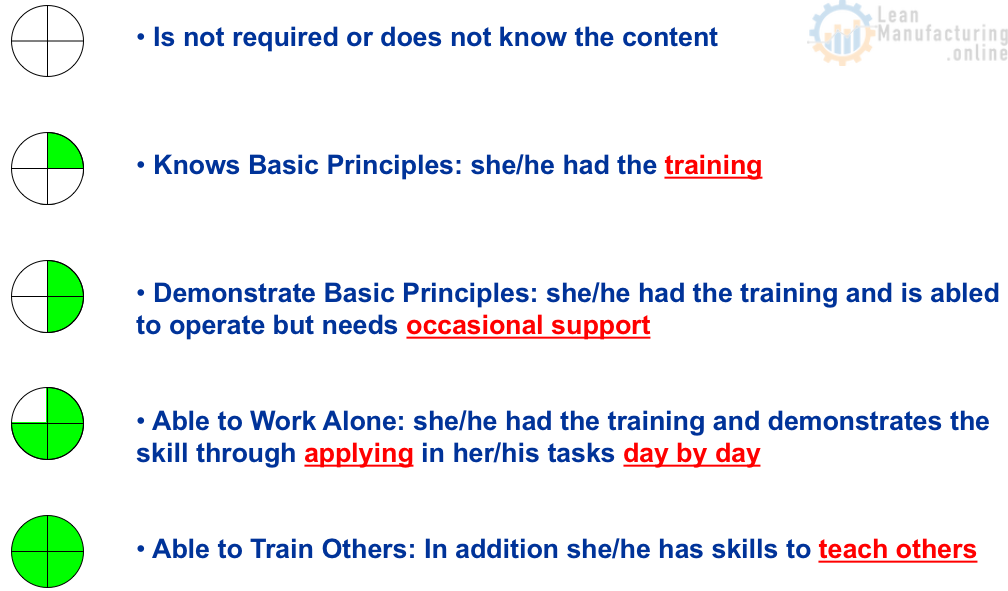
Skill levels must be defined before people are assessed. Without clear definitions, the matrix becomes subjective. A practical four-level system is often enough:
| Level | Meaning | Evidence needed |
|---|---|---|
| 0 — Not trained | Has not been trained or is not allowed to perform the task. | No qualification record or no demonstrated ability. |
| 1 — Basic knowledge | Understands the basic principle but needs close support. | Can explain the purpose, risks, and standard. |
| 2 — Can perform with support | Can perform the task with coaching or supervision. | Observed performing the task with help. |
| 3 — Can work alone | Can perform safely and correctly without support. | Demonstrates the task to standard. |
| 4 — Can train others | Can teach, coach, and verify others. | Approved trainer or subject matter expert. |
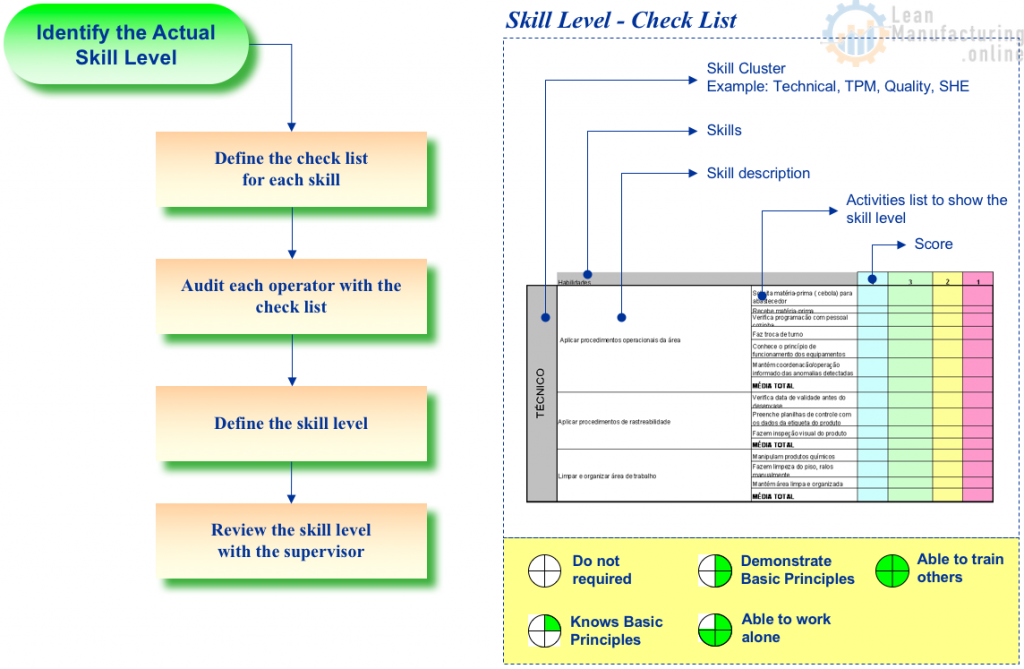
Step 3: Identify the actual skill level
Do not rate people by memory or opinion. Assess skill by observing the work, checking the standard, asking the person to explain key points, and confirming that safety and quality requirements are understood.
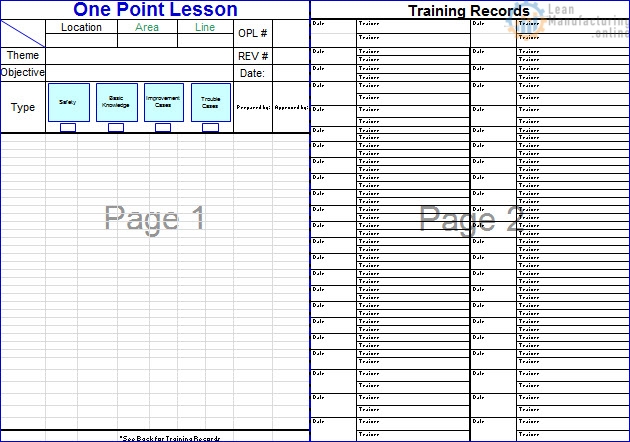
Use One Point Lesson examples to support one small learning point at a time. Use Safety One Point Lessons for critical safety reminders.
Step 4: Build the training plan
The matrix is only useful when it creates action. After the gap is visible, decide who needs training, what skill is required, who will train, which standard or OPL will be used, when the training will happen, and how the skill will be verified.
A good training plan should focus on the most important gaps first. Prioritize safety-critical tasks, quality-critical tasks, bottleneck equipment, single-point-of-failure skills, and workstations where only one person is qualified.

Example: using the matrix for coverage risk
Imagine a line with five operators and four critical machines. If only one operator can run Machine 3 and that person is absent, the line is exposed. The skill matrix makes that risk visible before it becomes a downtime problem.
| Question | What the matrix shows | Action |
|---|---|---|
| Who can run the machine alone? | Level 3 or higher. | Confirm coverage for each shift. |
| Who can train others? | Level 4. | Use them as trainer or coach. |
| Where is the biggest gap? | Tasks with many level 0, 1, or 2 ratings. | Add to the training plan. |
| Where is the biggest business risk? | Critical tasks with low backup coverage. | Prioritize cross-training. |
Skill matrix ownership
The supervisor or area owner should own the matrix, but the training system needs shared ownership. Operators, trainers, team leaders, maintenance, quality, safety, and HR may all have a role depending on the skill type.
The rule is simple: the person who signs off a skill must be competent to judge that skill.
Skill matrix review cadence
Review the matrix during normal management routines. A monthly review may work for stable areas, but fast-changing areas may need weekly review. After new equipment, new products, new standards, turnover, or a quality event, review the matrix immediately.
Gaps discovered during a Gemba Walk should feed back into the matrix and training plan.
How the matrix supports TPM
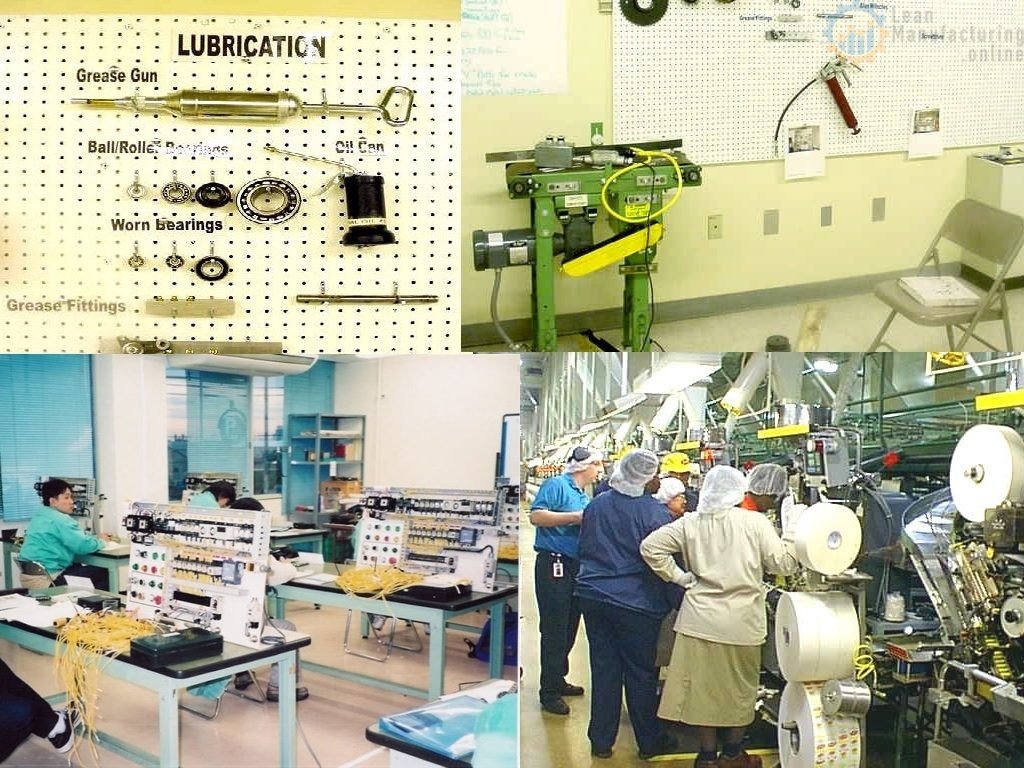
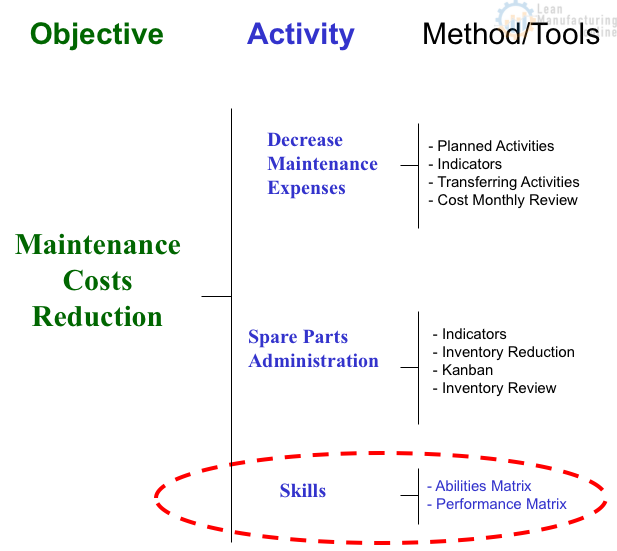
In TPM, skill development is not separate from equipment performance. Operators need skills for cleaning, inspection, lubrication awareness, abnormality detection, and escalation. Maintenance teams need deeper technical skills for troubleshooting, planned maintenance, and equipment restoration.
A skill matrix helps align the training plan with real equipment losses, safety risks, quality issues, and improvement priorities.
Common mistakes
- Too many skills: the matrix becomes impossible to maintain.
- Unclear levels: people interpret ratings differently.
- No verification: the matrix shows confidence instead of competence.
- No training plan: gaps are visible but never closed.
- No owner: nobody updates the matrix after changes.
- No link to business needs: training is done, but not where the risk is highest.
- Using it as a blame tool: the purpose is development, coverage, and capability.
Implementation checklist
- Define the area, process, or team covered by the matrix.
- List only the skills that matter for safety, quality, delivery, cost, and flexibility.
- Define skill levels clearly before assessment.
- Assess actual capability through observation and demonstration.
- Identify gaps between required level and actual level.
- Prioritize high-risk gaps first.
- Create a training plan with owner and due date.
- Use OPLs, coaching, shadowing, and hands-on practice.
- Verify skill after training.
- Review the matrix regularly in daily or weekly management routines.

Connecting skill gaps to problem solving
If the same mistakes repeat, do not only retrain. Use Why-Why Analysis or 4M Analysis to understand whether the issue is training, method, machine condition, material, standard clarity, or supervision.
The skill matrix should also connect to manufacturing KPIs. Track training completion, qualification coverage, single-skill dependency, absenteeism risk, quality defects related to skill gaps, and downtime related to incorrect operation.
Turn skill data into action
A manufacturing skill matrix is not just a training record. It is a management system for capability. When used well, it shows current skill coverage, highlights risk, guides cross-training, supports TPM and OPLs, and helps leaders build a stronger, more flexible manufacturing team.







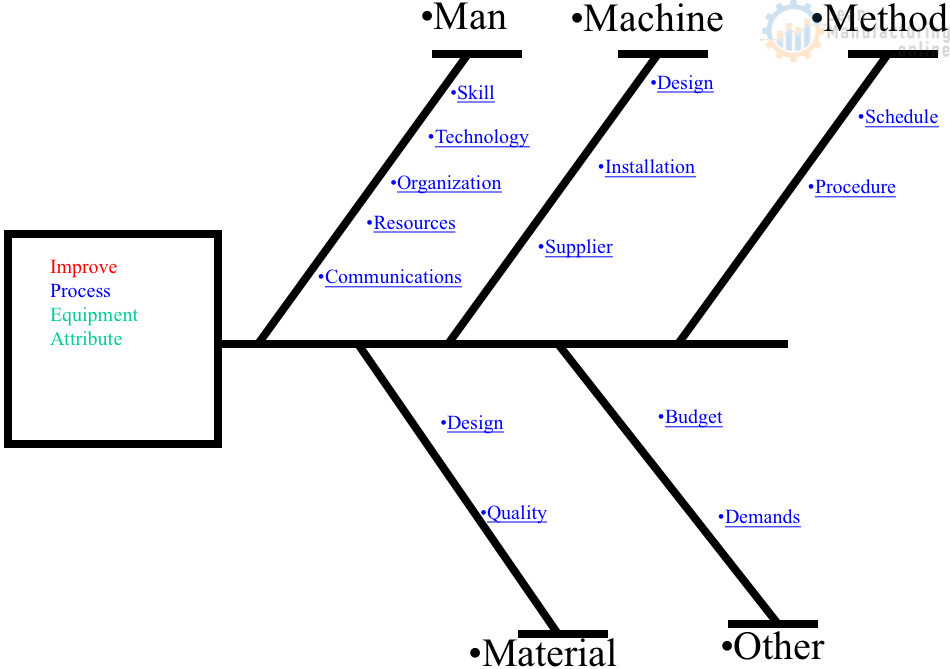
4M Analysis Process: Root Cause Guide for Manufacturing
Learn how to use 4M Analysis to find manufacturing root causes across People, Machine, Method, and Material with diagrams, examples, and checklist.



We have required the skill metric impelemetation for employees