One Point Lessons are most useful when teams can see practical examples. This page collects manufacturing OPL examples and template ideas that can be used for maintenance, safety, inspection, problem solving, 5S, and operator training.
For the full explanation of what an OPL is and how to create one, start with the main guide: What Are One Point Lessons?. This page is the supporting examples library.
How to use these OPL examples
Do not copy an OPL only because it looks good. Use the format and visual thinking, then adapt the content to your own equipment, risks, standards, and team knowledge. A strong OPL should teach one point, use a clear visual, and be easy to explain at the workstation.
| OPL example type | Best use | Typical manufacturing topic |
|---|---|---|
| Maintenance task | Teach a repeatable equipment task. | Lubrication, grease cartridge replacement, belt inspection. |
| Inspection standard | Show normal vs. abnormal condition. | Chain wear, belt tracking, loose guards, leaks. |
| Safety OPL | Close a safety knowledge gap. | LOTO, PPE, air gun use, electrical panel safety. |
| Problem-solving OPL | Share one lesson learned from a defect or breakdown. | 5 Why, root cause, countermeasure, recurrence prevention. |
| 5S / visual standard | Make the correct condition obvious. | Tool storage, oil room setup, cleaning points, label standards. |
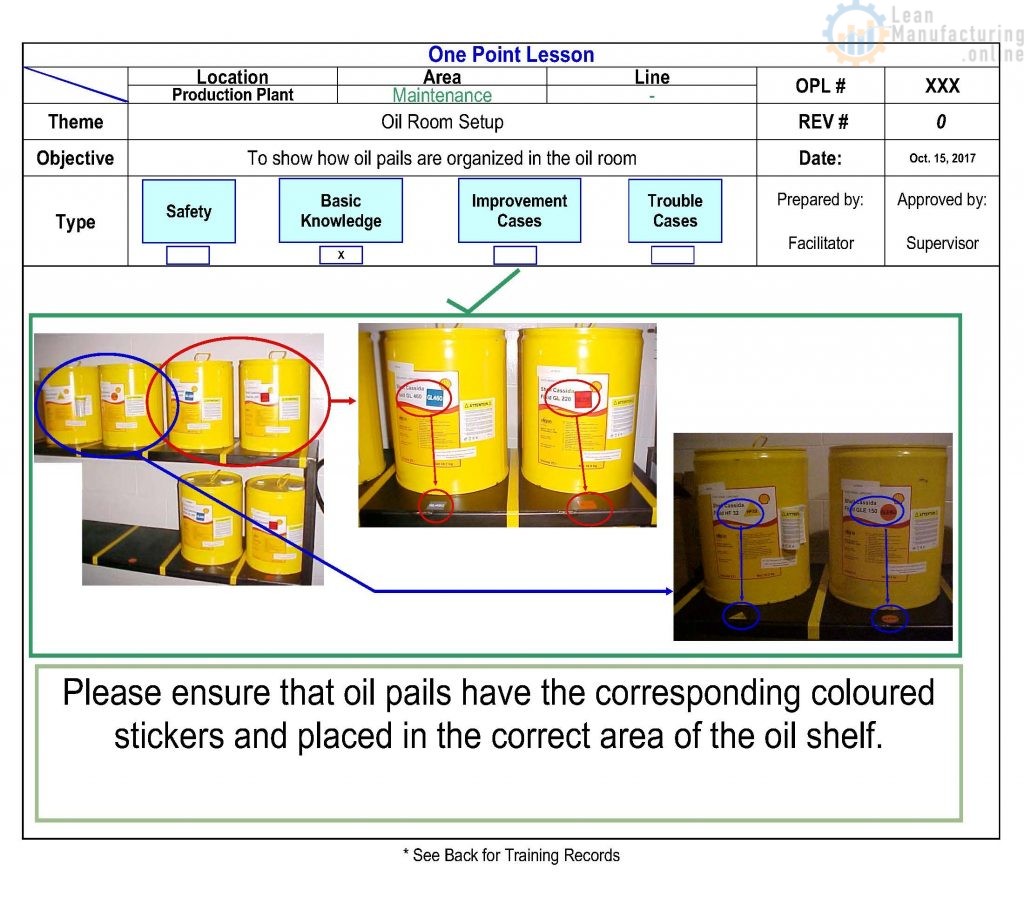
Example 1: Oil room setup OPL
An oil room setup OPL is a good example of a visual 5S standard. It can show where lubricant containers belong, how they should be labeled, and what the correct arrangement looks like. This type of OPL helps prevent contamination, wrong lubricant selection, and poor storage habits.
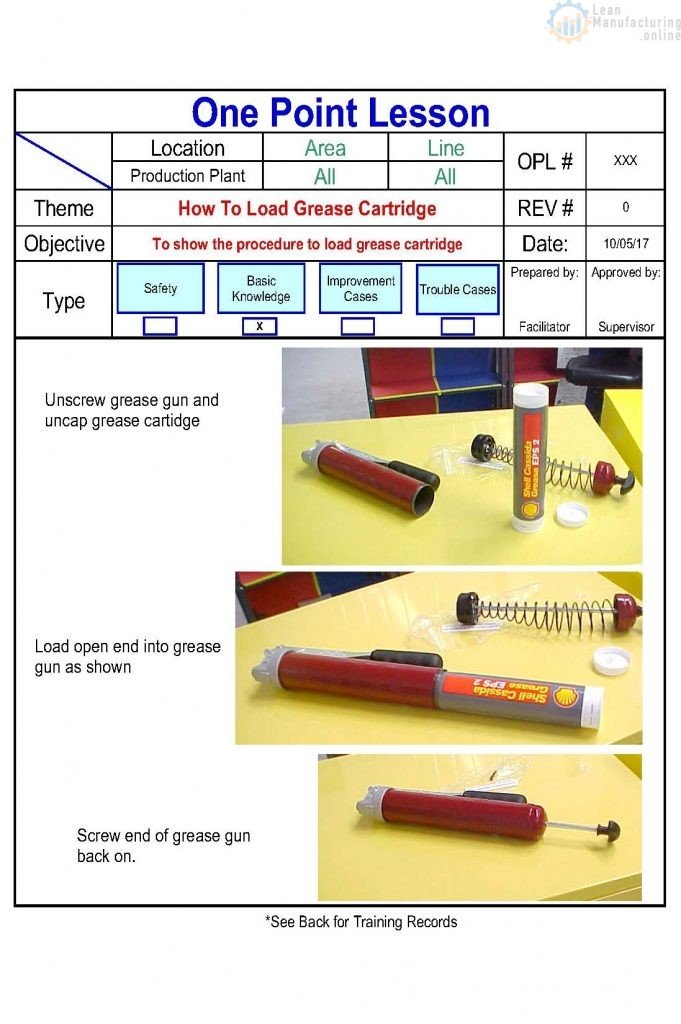
Example 2: Grease cartridge replacement OPL
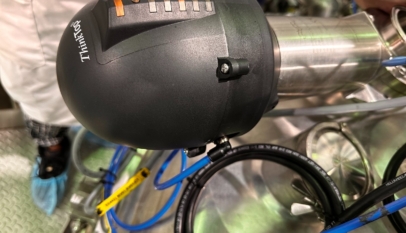
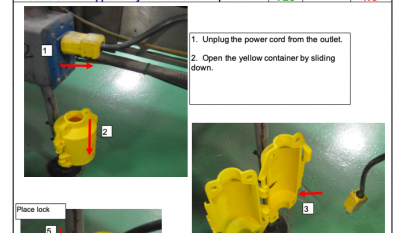
This is a practical maintenance task example. The lesson should show the exact cartridge, correct installation method, inspection point, and any mistake that causes leakage, contamination, or poor lubrication. This fits well with Autonomous Maintenance because operators often take over basic cleaning, inspection, and lubrication routines.
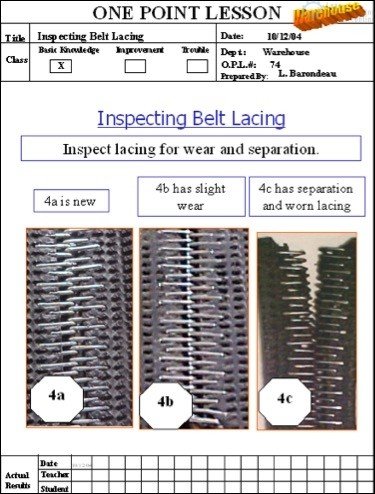
Example 3: Conveyor belt inspection OPL
An inspection OPL should help the operator know what normal looks like and what abnormal looks like. For a conveyor belt, the OPL can show inspection points, tracking condition, surface damage, tension, debris, or misalignment. The best visual lessons use arrows, circles, and short labels instead of long paragraphs.
Example 4: Chains and sprockets inspection OPL
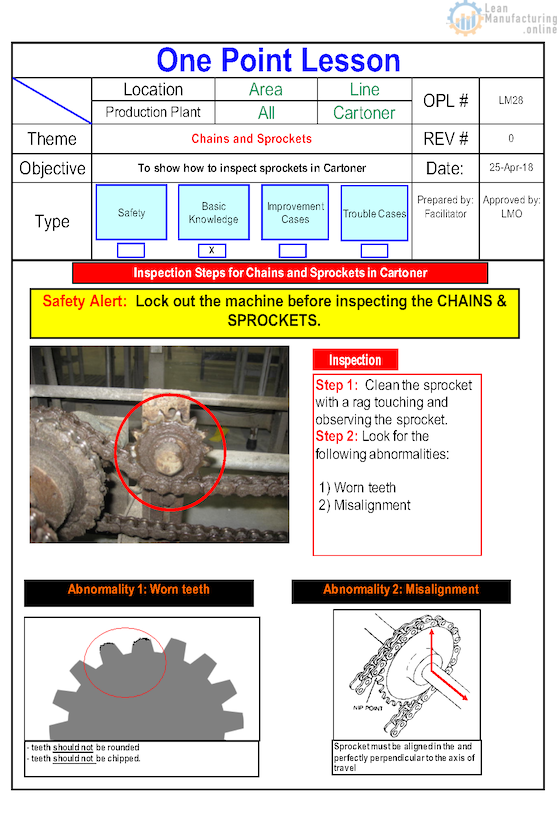
Chains and sprockets are good OPL topics because the abnormal condition may be easy to miss without a visual. A useful lesson can show wear marks, lubrication condition, alignment, tension, guarding, and the point at which the issue must be escalated to maintenance.
Example 5: 5 Why root cause analysis OPL
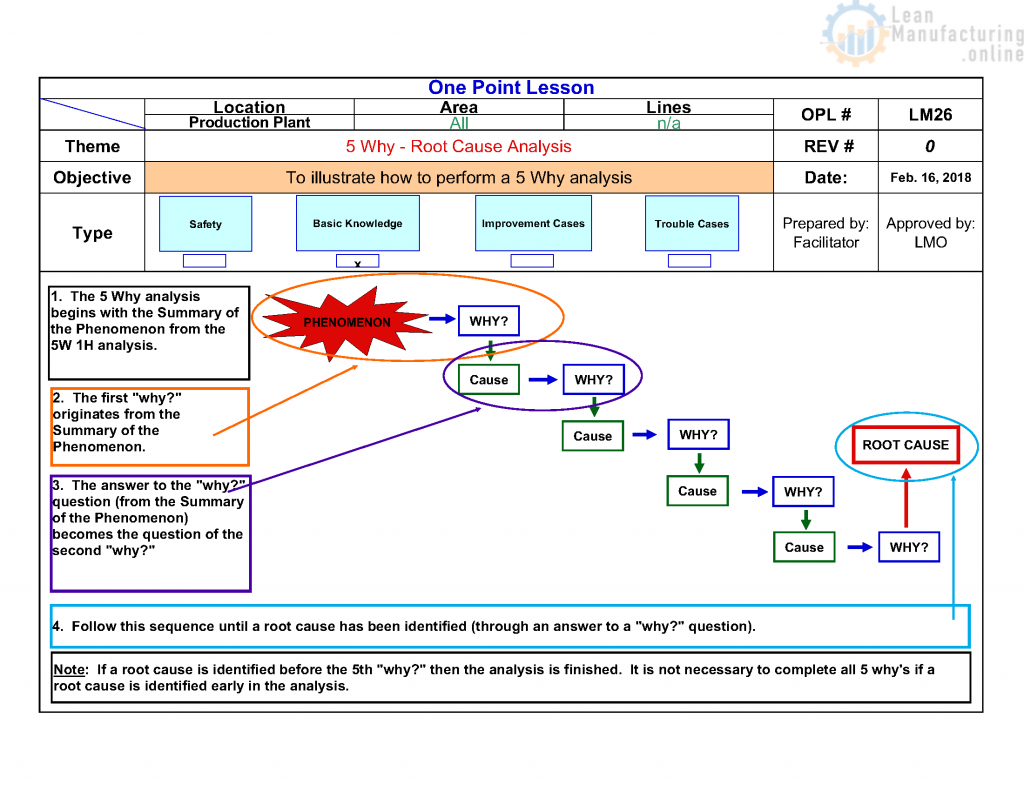
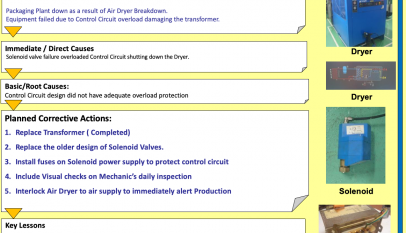
OPLs are not only for physical work instructions. They can also capture a short problem-solving lesson. After a recurring defect or breakdown, the team can create one OPL that explains the problem, the root cause, and the specific check or standard that prevents recurrence.
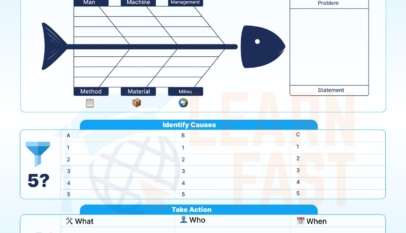
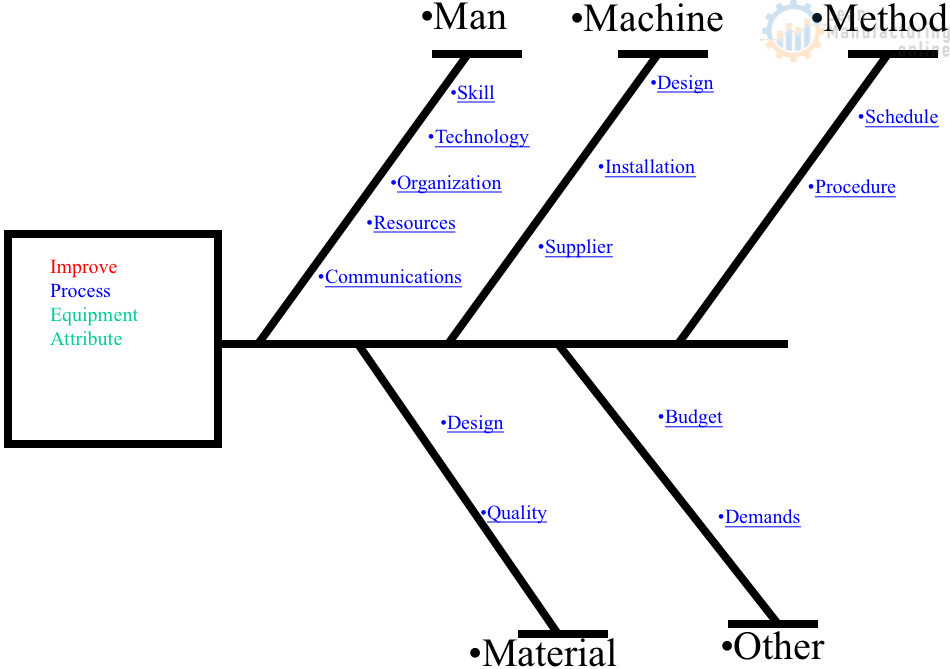
For deeper problem solving, connect the lesson to Why-Why Analysis and 4M Analysis.
Example 6: Blank OPL template
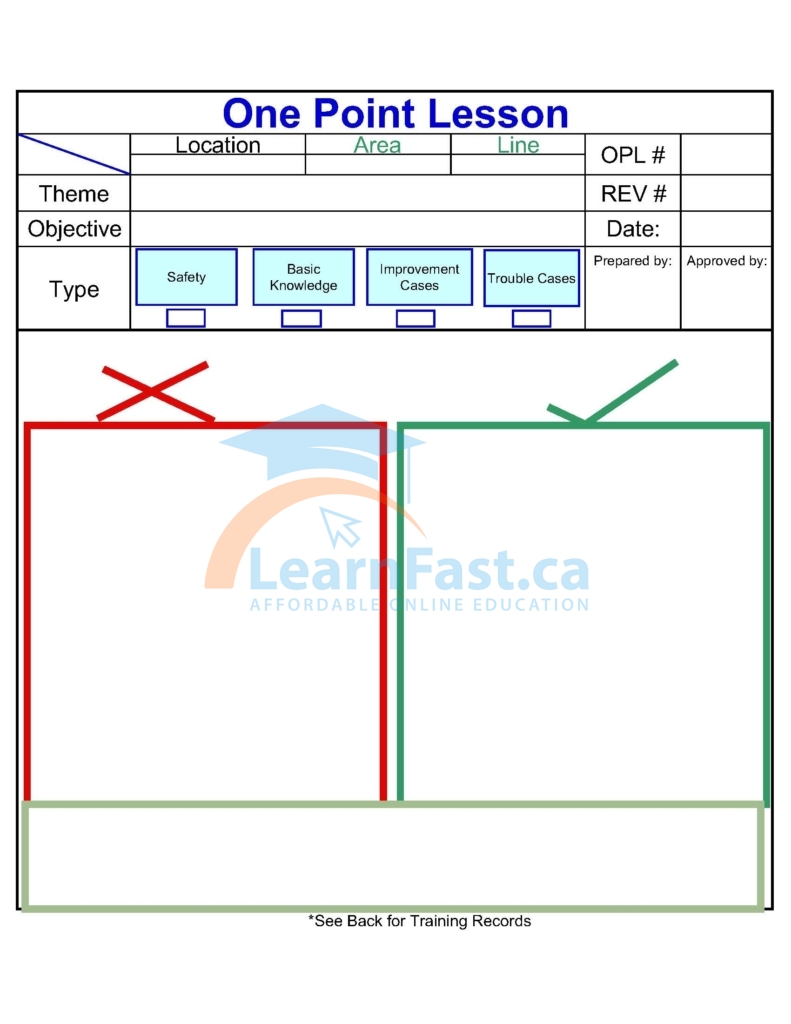
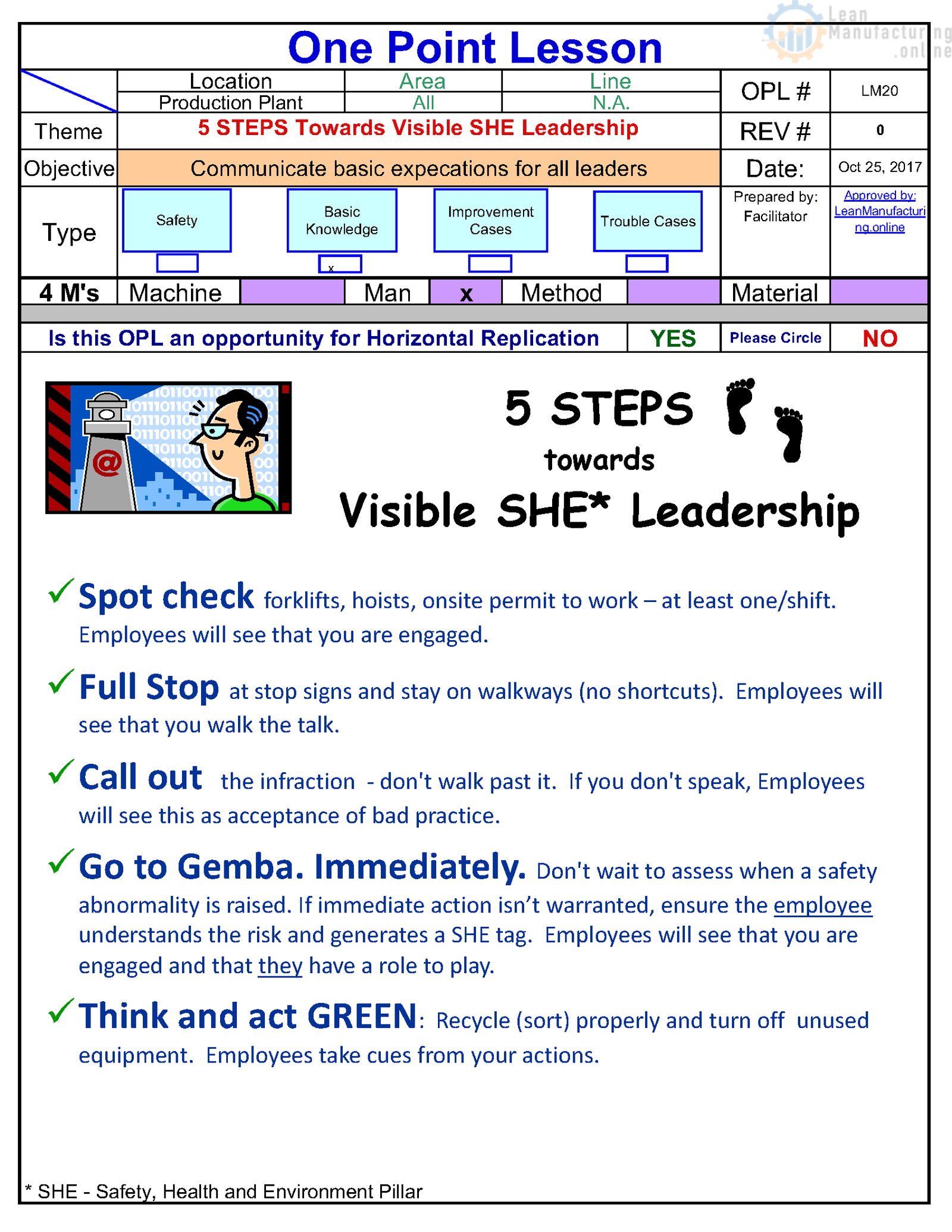
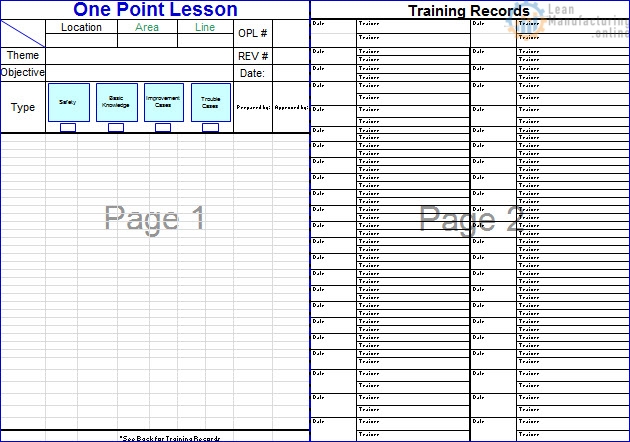
A template keeps the document consistent. The format should make it easy to capture the theme, objective, visual, key point, owner, date, and training confirmation. The template should not become complicated. If it takes too long to complete, people will avoid using it.
What every OPL example should include
- Theme: one short topic such as “how to inspect belt tracking.”
- Objective: why the lesson matters.
- Visual: photo, sketch, marked-up image, or before/after comparison.
- Standard: the correct condition, method, limit, or decision rule.
- Abnormal condition: what to look for and when to react.
- Owner: who created or verified the lesson.
- Training record: who was trained and when.
How many OPLs should a team create?
The goal is not to create a large binder of documents. The goal is to capture important knowledge that improves safety, quality, reliability, and standard work. A good starting point is to create OPLs for repeated mistakes, recent incidents, common questions, critical inspection points, and small tasks that are done differently across shifts.
Where to use OPLs in Lean and TPM
OPLs support Autonomous Maintenance, Planned Maintenance, Gemba Walks, standard work, safety training, quality control, and daily management. They are especially useful when knowledge must move quickly from one person to the rest of the team.
For safety-related examples, see Safety One Point Lessons, Lockout Tagout LOTO, and Safety F-Tags.
Checklist for choosing the right OPL example
- Does the example teach only one point?
- Can a supervisor or team member explain it in five minutes?
- Is the visual large enough and clear enough to teach from?
- Does it show the correct standard, not only the problem?
- Is the lesson specific to the equipment, product, tool, or workplace?
- Was the technical content reviewed by the right owner?
- Does the lesson connect to a real safety, quality, delivery, cost, or reliability need?
Adapt the examples to your process
One Point Lesson examples are powerful because they make small lessons visible. The best OPLs are simple, visual, and directly connected to the work. Use these examples as a starting point, then adapt them to the actual risks, equipment, and standards in your own process.

4M Analysis Process: Root Cause Guide for Manufacturing
Learn how to use 4M Analysis to find manufacturing root causes across People, Machine, Method, and Material with diagrams, examples, and checklist.