Six Sigma is a data-driven approach for reducing variation, defects, rework, and process instability. In manufacturing, it helps teams understand why a process misses requirements and what must change so the result becomes more predictable.
The practical value of Six Sigma is not the terminology. The value is the discipline: define the problem clearly, use reliable data, verify root causes, improve the process, and control the new standard so the gains do not disappear.

What is Six Sigma?
Six Sigma focuses on reducing process variation and preventing defects. It uses statistical thinking, process knowledge, and structured problem solving to improve quality and performance. In simple terms, Six Sigma asks: what does the customer need, how is the process performing, what creates variation, and how do we control the result?
It is often used together with Lean. Lean helps improve flow and remove waste. Six Sigma helps reduce variation and defects. When used together, Lean Six Sigma can improve speed, quality, cost, delivery, and customer satisfaction.
| Focus area | Lean question | Six Sigma question |
|---|---|---|
| Customer value | What work creates value? | What requirement must be met consistently? |
| Waste | Where do we see waiting, motion, overprocessing, inventory, or rework? | Which defects or variation create the biggest losses? |
| Flow | Where does the process stop or slow down? | Where does the process become unstable or unpredictable? |
| Problem solving | How can the team improve the standard? | Which causes are verified by data and process evidence? |
DMAIC is the main improvement roadmap
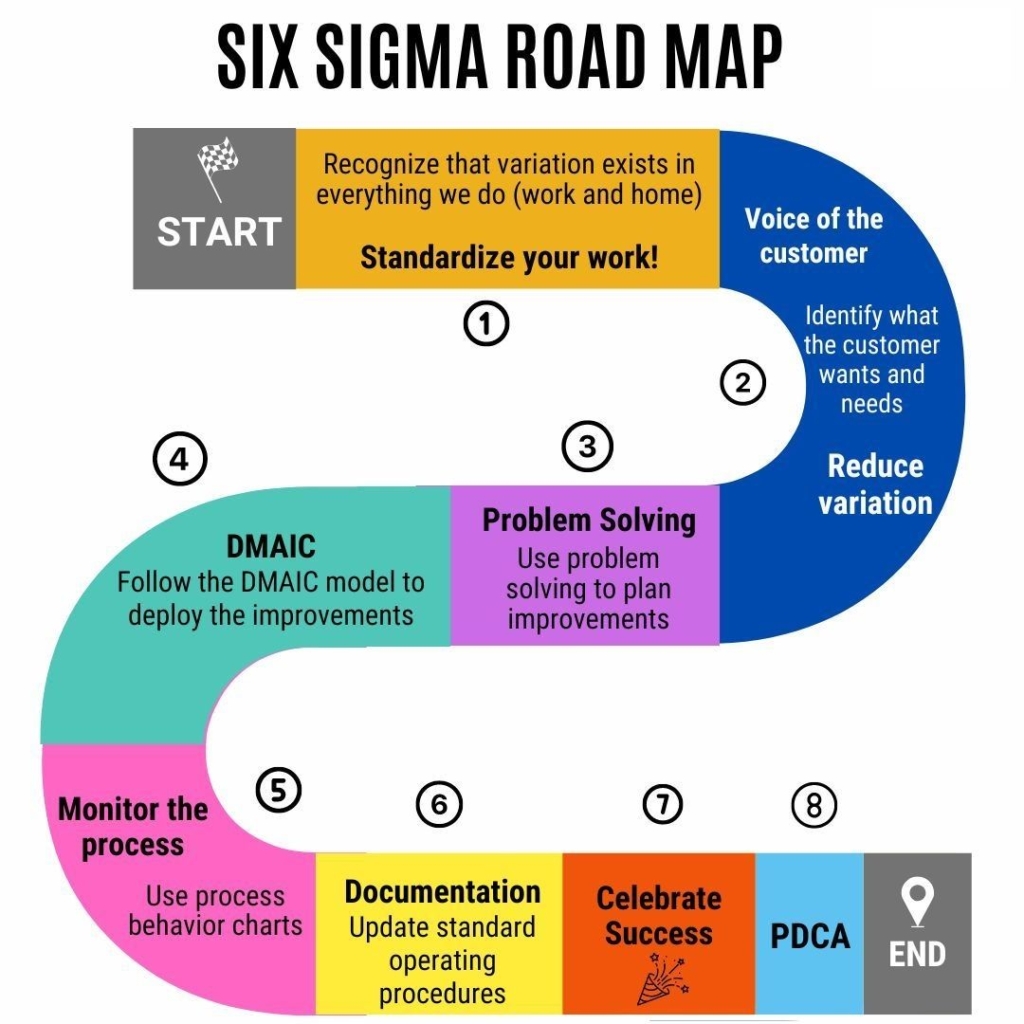
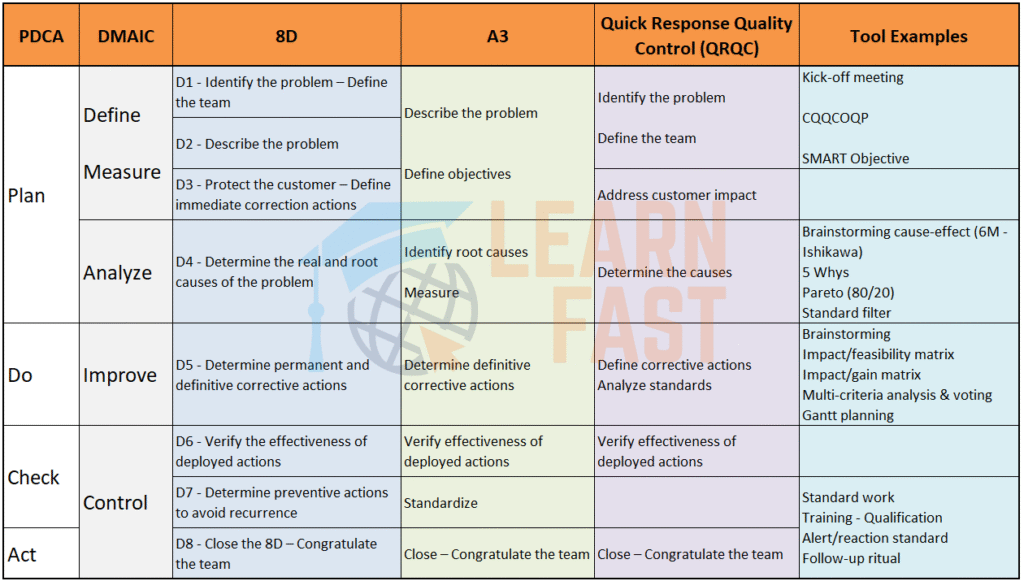
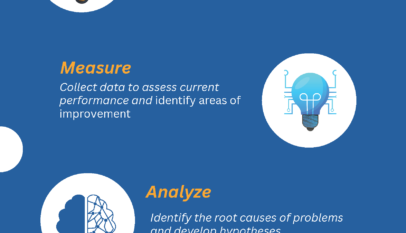
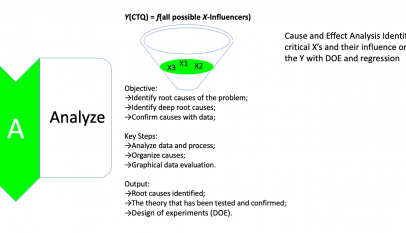
The most common Six Sigma roadmap is DMAIC: Define, Measure, Analyze, Improve, and Control. DMAIC is useful when the problem is important, repeated, measurable, and not already solved by a known standard.
Define clarifies the business and customer problem. Measure confirms the baseline. Analyze verifies the causes. Improve tests countermeasures. Control protects the result with standards, KPIs, audits, and reaction plans.
Six Sigma metrics
Six Sigma teams often use metrics that describe defects, variation, capability, and customer impact. The metric should match the decision being made. For example, a defect-rate metric may help prioritize quality problems, while process capability can help show whether a stable process can meet a specification.
| Metric | What it helps explain | Watch-out |
|---|---|---|
| Defect rate | How often output fails a requirement. | Define the defect clearly before counting. |
| DPMO | Defects per million opportunities. | Opportunity counting must be consistent. |
| Yield | How much output passes without defect or rework. | Hidden rework can make yield look better than reality. |
| SPC signals | Whether the process shows common or special cause variation. | Do not confuse control limits with specification limits. |
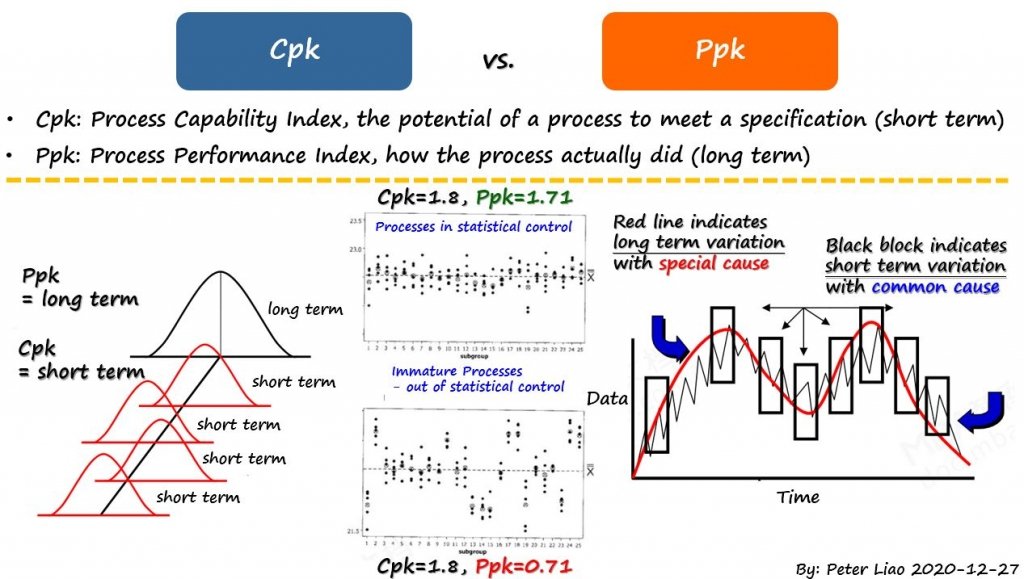
| Cpk / Ppk | Whether the process can meet specification limits. | Capability is weak if measurement or stability is not understood. |
Measurement comes before analysis
Six Sigma depends on trustworthy data. If the measurement system is weak, the team may chase the wrong cause or argue about numbers that are not reliable. This is why measurement systems evaluation is a core part of good Six Sigma work.
Before analyzing results, ask whether the measurement method is repeatable, reproducible, accurate, stable, and understood by the people using it. A simple measurement problem can look like a process problem.

SPC and process capability
SPC helps teams understand process stability. It separates routine variation from signals that deserve investigation. Process capability then helps show whether the process can meet customer or engineering requirements.
Use Cpk vs Ppk carefully. A capability number is not a magic score. It must be interpreted with the process context, measurement quality, sampling method, and stability of the data.

Six Sigma tools used in manufacturing
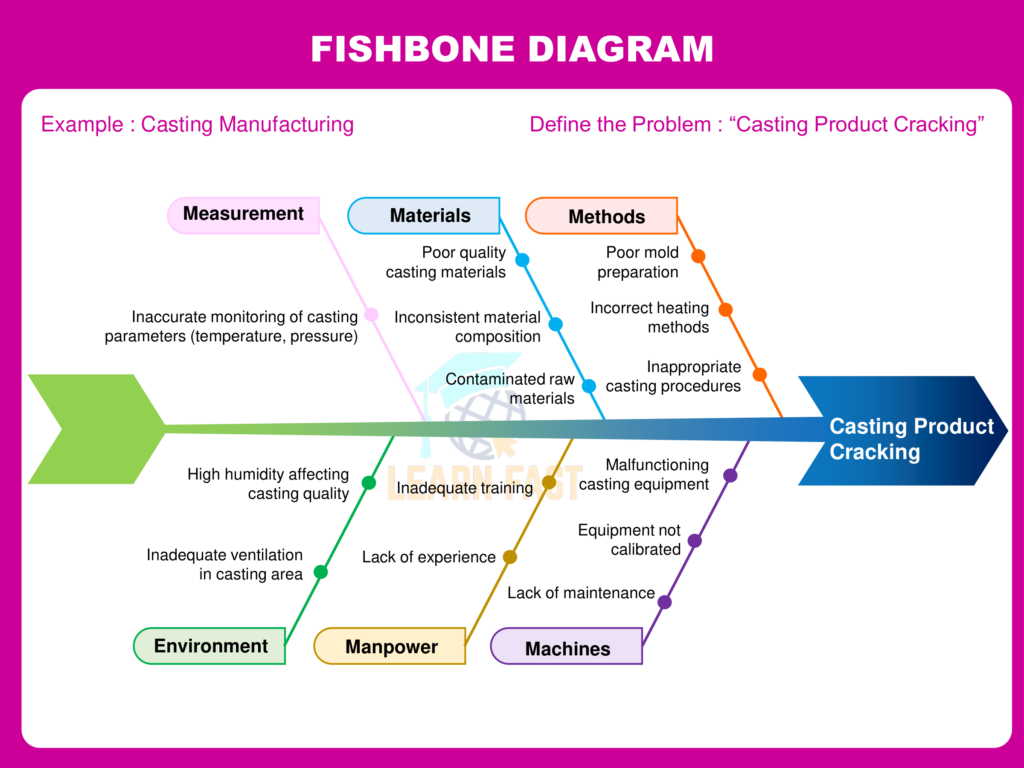
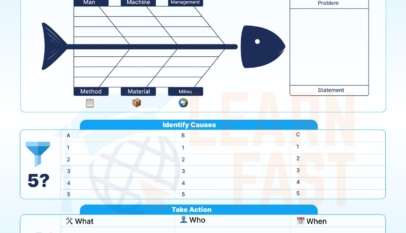
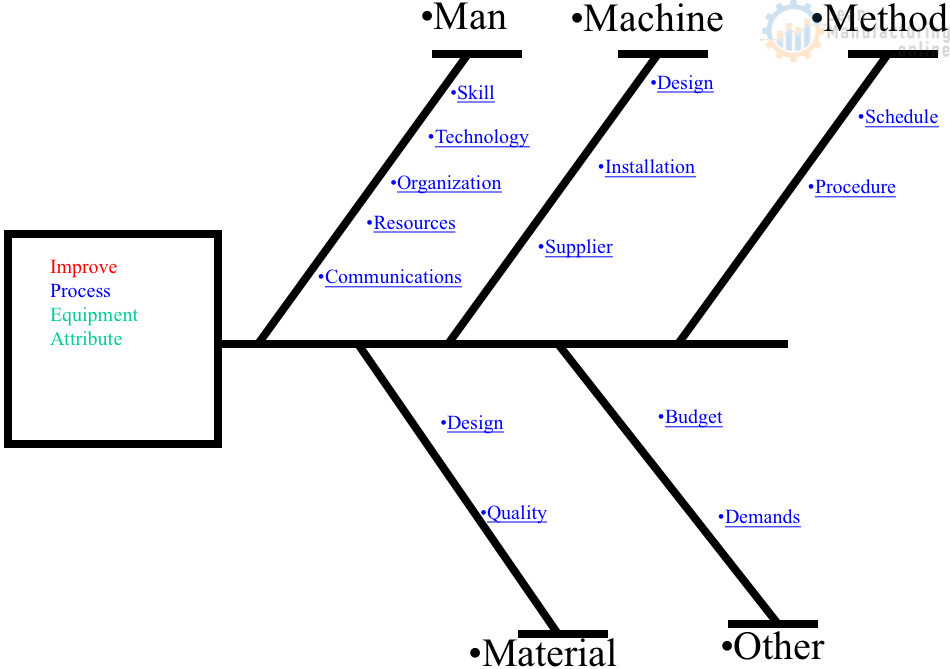
Six Sigma tools should be selected because they help answer a real process question. A Pareto chart can help choose where to focus. A fishbone diagram can organize possible causes. A process map can reveal handoffs and decision points. A control chart can show stability. Capability analysis can show whether specifications can be met.
When the problem is a repeated quality issue, connect Six Sigma to quality root cause analysis, 4M analysis, quality inspections and audits, and supplier quality management.

| Tool | Best use | Common mistake |
|---|---|---|
| Pareto chart | Prioritize the biggest defect or loss categories. | Using broad categories that hide the real pattern. |
| Fishbone diagram | Structure possible causes by method, machine, material, people, measurement, environment. | Treating brainstormed causes as verified causes. |
| Control chart | Detect special cause signals and stability problems. | Reacting to every up-and-down movement as a problem. |
| Capability analysis | Compare process performance to specification requirements. | Ignoring whether the process is stable first. |
| Control plan | Define how the improved process will be maintained. | Writing the plan but not using it in daily management. |
Six Sigma roles
Six Sigma programs often use roles such as Yellow Belt, Green Belt, Black Belt, Champion, and process owner. The titles matter less than the responsibilities. Someone must sponsor the project, someone must lead the analysis, and someone must own the process after the improvement is complete.
A Lean Six Sigma Green Belt usually supports improvement projects while staying close to the process. A Black Belt typically leads more complex projects and coaches others. The process owner must sustain the result after the project team leaves.
Where Six Sigma fits in daily operations
Six Sigma should not be separate from daily management. Inspection findings, supplier nonconformances, customer complaints, scrap trends, downtime losses, and repeated KPI misses can all become Six Sigma opportunities when the problem is measurable and the cause is not obvious.
Use manufacturing KPIs to choose important problems, the 1-10-100 rule to think about prevention cost, and continuous improvement to keep smaller improvements moving without turning every issue into a large project.
Common Six Sigma mistakes
- Using Six Sigma language without changing how problems are solved.
- Starting with a solution before the problem is measured and understood.
- Skipping measurement-system checks and trusting unreliable data.
- Using too many tools instead of choosing the tool that answers the current question.
- Closing projects before control plans, training, KPIs, and reaction plans are working.
- Trying to use a large DMAIC project for every small issue, even when a quick Kaizen is enough.
Use Six Sigma when variation is the problem
Six Sigma is strongest when a process is important, repeated, measurable, and affected by variation or defects. Use it when the organization needs more than a reminder, checklist, or one-time correction. The goal is a process that performs predictably, meets requirements, and stays controlled after the project is finished.



4M Analysis Process: Root Cause Guide for Manufacturing
Learn how to use 4M Analysis to find manufacturing root causes across People, Machine, Method, and Material with diagrams, examples, and checklist.